Introduction
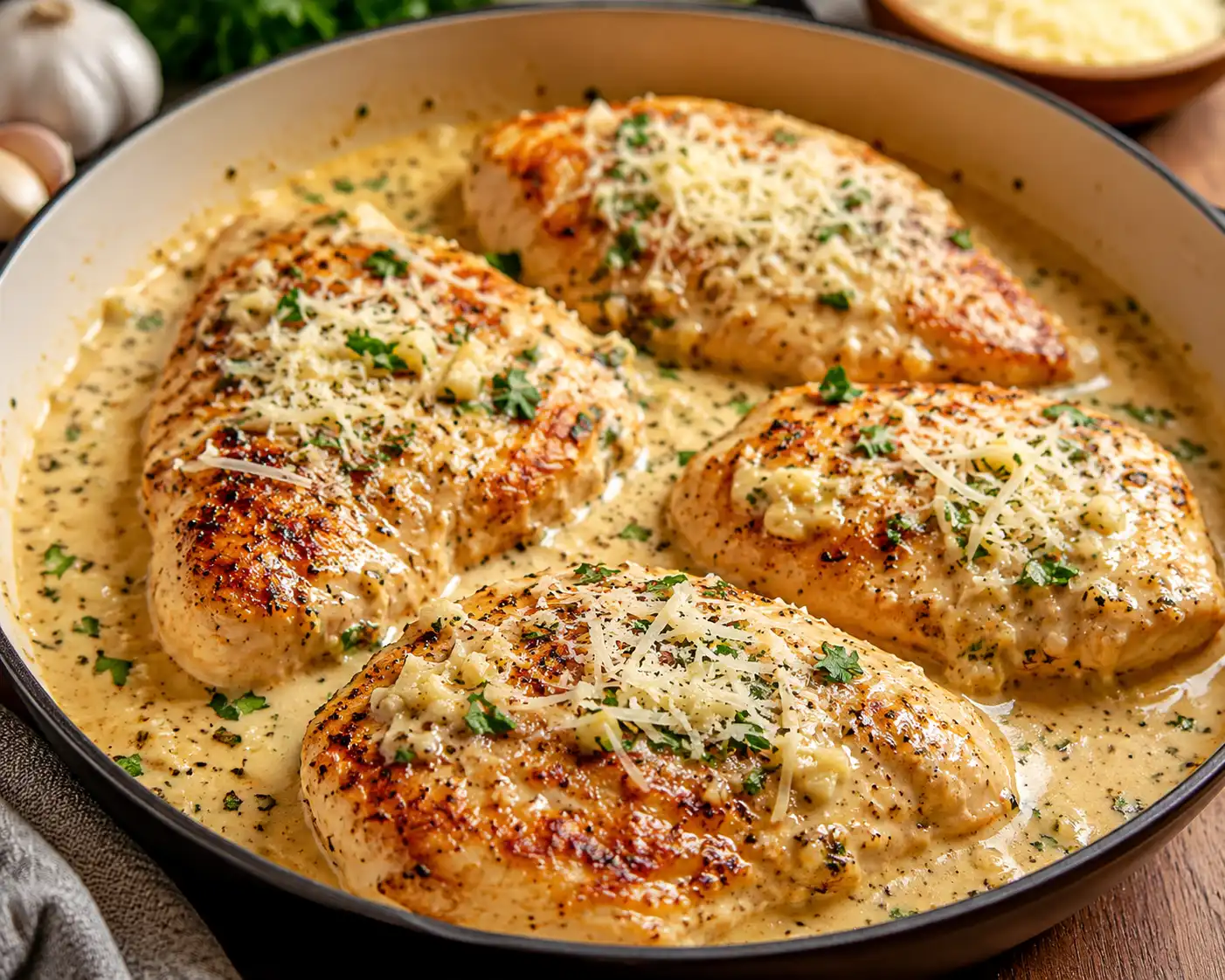
Welcome to the ultimate culinary guide for creating the most decadent, flavorful, and comforting dish known to home cooks and professional chefs alike: Creamy Garlic Parmesan Chicken. This recipe is not merely a method of cooking poultry; it is an experience that transforms simple ingredients into a luxurious meal that rivals high-end restaurant offerings. Imagine biting into a tender, juicy chicken breast that has been seared to golden perfection, only to be smothered in a velvety, rich sauce infused with the pungent aroma of roasted garlic and the salty, nutty depth of aged Parmesan cheese. Whether you are planning a romantic dinner for two, hosting a family gathering, or simply seeking a way to elevate a mundane weeknight dinner, this dish delivers consistent satisfaction.
The allure of this recipe lies in its simplicity combined with its profound depth of flavor. It bridges the gap between quick preparation and gourmet presentation. The sauce, often the star of the show, clings to every fiber of the chicken, ensuring that each bite is moist and bursting with savory goodness. Beyond the chicken itself, this dish serves as a versatile centerpiece that pairs beautifully with a myriad of sides, from fluffy mashed potatoes to al dente pasta or crisp seasonal vegetables. As you delve into this comprehensive guide, you will discover not just how to make this dish, but the science, history, and artistry behind every step, ensuring your success in the kitchen every single time.
The History
To truly appreciate Creamy Garlic Parmesan Chicken, one must understand the historical lineage of its core components. The use of garlic in cooking dates back thousands of years, with evidence suggesting its use in Ancient Egypt, China, and India not only for flavor but for medicinal properties. In Mediterranean cuisine, garlic became a staple, revered for its ability to enhance almost any savory dish. As trade routes expanded, garlic found its way into European kitchens, becoming indispensable in Italian cooking.
Parmesan cheese, specifically Parmigiano-Reggiano, has a history just as rich. Originating in the Emilia-Romagna region of Italy during the Middle Ages, this hard, granular cheese was developed by monks who needed a cheese that could be stored for long periods. Its production was strictly regulated, ensuring quality that persists to this day. The combination of garlic and cheese in Italian-American cuisine evolved significantly during the 20th century. As Italian immigrants settled in the United States, they adapted their traditional recipes to available ingredients, often creating richer, creamier versions of classic dishes to suit American palates.
The specific iteration of Creamy Garlic Parmesan Chicken is a modern classic born from this fusion. It draws on the Italian tradition of pollo al parmigiano, though traditionally that involves breading and baking with tomato sauce. The creamy white sauce version is a testament to the American love for rich gravies and Alfredo-style preparations. Over the last few decades, this dish has become a staple in casual dining chains and home kitchens alike, symbolizing comfort, abundance, and the universal love for the combination of dairy, aromatics, and protein.
Ingredients Breakdown
Understanding the role of each ingredient is crucial for mastering this recipe. This is not just a list; it is an explanation of how chemistry and flavor profiles interact to create the final dish.
- Chicken Breasts or Thighs: The foundation of the dish. Chicken breasts are leaner and provide a large surface area for searing, but they can dry out if overcooked. Chicken thighs are more forgiving due to higher fat content, offering juicier results. For this recipe, breasts are often preferred for their elegant presentation, but thighs are an excellent alternative for robust flavor.
- Fresh Garlic: Pre-minced jarred garlic lacks the volatile oils that give fresh garlic its punch. Fresh cloves, when sautéed in butter, undergo the Maillard reaction, releasing sweet, nutty aromatics that powdered garlic simply cannot replicate. The quantity can be adjusted based on your tolerance, but fresh is non-negotiable for quality.
- Heavy Cream: This is the vehicle for the sauce’s texture. Heavy cream contains a high fat content (usually above 36%), which prevents it from curdling when heated. It provides the luxurious mouthfeel that defines this dish. Substitutes like milk often result in a thinner sauce that may separate under high heat.
- Parmesan Cheese: The soul of the sauce. Pre-grated Parmesan often contains anti-caking agents like cellulose, which can prevent the cheese from melting smoothly, leading to a grainy texture. Buying a block of Parmigiano-Reggiano and grating it yourself ensures a silky, homogeneous sauce that integrates perfectly with the cream.
- Butter and Olive Oil: A combination of fats is used for cooking the chicken. Olive oil adds a fruity note and raises the smoke point slightly, while butter adds richness and aids in browning the chicken skin to a golden crisp.
- Herbs and Seasonings: Italian seasoning, dried oregano, or fresh parsley add color and earthy notes that cut through the richness of the cream. Salt and black pepper are essential to amplify the natural flavors of the chicken and cheese.
- Chicken Broth: Often used to deglaze the pan, chicken broth lifts the flavorful browned bits (fond) from the bottom of the skillet, incorporating them into the sauce for an added layer of savory depth.
Step-by-Step Recipe
Preparing this dish is a journey through texture and temperature control. Follow this narrative guide to understand the flow of cooking.
Phase 1: Preparation and Seasoning
Begin by removing your chicken from the refrigerator at least 20 minutes before cooking. Cooking cold chicken can lead to uneven cooking, where the outside burns before the inside is safe. Pat the chicken completely dry with paper towels; moisture is the enemy of browning. If there is water on the surface, the chicken will steam instead of sear. Season both sides generously with salt and pepper. This early seasoning allows the salt to penetrate the meat slightly, enhancing flavor throughout rather than just sitting on the surface.
Phase 2: The Sear
Heat your skillet over medium-high heat. Add a combination of olive oil and butter. Once the butter foams and subsides, carefully lay the chicken into the pan. Do not overcrowd the pan; if the pieces touch, they will steam. Sear for 5-7 minutes per side until a deep golden-brown crust forms. This crust is flavor. Once browned, remove the chicken and set it aside on a plate. It does not need to be fully cooked through at this stage, as it will finish in the sauce.
Phase 3: Building the Aromatics
In the same pan, do not wipe out the browned bits. Add a bit more butter if the pan is dry. Toss in your minced garlic. Sauté for only about one minute. Garlic burns easily, and burnt garlic tastes bitter. You want it fragrant and lightly golden. This is the moment the kitchen will start to smell incredible.
Phase 4: Creating the Sauce
Pour in the chicken broth to deglaze the pan. Use a wooden spoon to scrape up the fond from the bottom. Let this simmer for a minute to reduce slightly. Lower the heat to medium-low and pour in the heavy cream. Bring to a gentle simmer, not a rolling boil. Gradually whisk in the grated Parmesan cheese. Stir constantly until the cheese melts and the sauce thickens. If the heat is too high, the cream may split.
Phase 5: Combining and Finishing
Return the chicken to the skillet, nestling it into the sauce. Spoon the sauce over the chicken. Let it simmer gently for another 5-10 minutes. This allows the chicken to finish cooking through while absorbing the sauce’s flavor. Check the internal temperature to ensure it reaches 165°F (74°C). Garnish with fresh parsley and serve immediately while the sauce is warm and fluid.
Tips
To ensure perfection every time, consider these professional tips and troubleshooting tricks.
- Pound the Chicken: Chicken breasts are often uneven in thickness. Place them between plastic wrap and gently pound the thicker end until the breast is uniform. This ensures even cooking so you don’t end up with dry thin ends and raw thick centers.
- Room Temperature Ingredients: Allow your cream and cheese to come closer to room temperature before adding them to the hot pan. Adding ice-cold cream to a hot skillet can sometimes cause shocking and separation.
- Low and Slow for Sauce: Once the cream is added, reduce the heat. High heat is the enemy of dairy-based sauces. A gentle simmer allows the sauce to reduce and thicken without curdling.
- Grate Your Own Cheese: Reiterating the importance of this step: pre-shredded cheese contains starches that make the sauce grainy. Invest in a microplane or box grater for the smoothest texture.
- Rest the Chicken: After removing the chicken from the pan, let it rest for a few minutes before slicing. This allows the juices to redistribute throughout the meat, keeping it moist.
- Sauce Too Thin? If your sauce isn’t thickening, let it simmer longer to reduce, or create a slurry with a teaspoon of cornstarch and cold water, whisking it in gradually.
- Sauce Too Thick? Simply add a splash of chicken broth or milk to loosen the consistency to your liking.
- Cleanup: Soak your pan immediately after serving. Burnt cheese and cream can harden like cement if left to cool completely in the pan.
Variations and Customizations
This recipe is a canvas for your culinary creativity. Here are several ways to customize the dish to fit different dietary needs or flavor preferences.
- Add Vegetables: Sauté spinach, kale, or broccoli florets in the sauce during the last few minutes of cooking. Sun-dried tomatoes add a sweet tang that complements the salty Parmesan beautifully.
- Mushroom Lover’s: Slice cremini or button mushrooms and sauté them with the garlic. They add an earthy umami flavor that deepens the profile of the sauce.
- Spicy Kick: Add red pepper flakes or a dash of cayenne pepper to the sauce. You can also use Cajun seasoning on the chicken before searing for a blackened effect.
- Pasta Integration: Serve the chicken over fettuccine, penne, or linguine. You can toss the pasta directly in the sauce before plating for a complete one-pan meal experience.
- Low-Carb/Keto: This recipe is naturally low-carb. Ensure you serve it with cauliflower mash or zucchini noodles instead of pasta or potatoes to maintain ketosis.
- Dairy-Free Option: Substitute heavy cream with full-fat coconut milk and use nutritional yeast or a vegan Parmesan alternative. The flavor profile will change slightly but will remain creamy and rich.
- White Wine Deglaze: Replace half of the chicken broth with a dry white wine like Pinot Grigio. The acidity cuts through the fat and adds sophistication to the sauce.
- Bacon Bits: Crispy bacon crumbles sprinkled on top add a smoky saltiness that pairs exceptionally well with garlic and cream.
Health Considerations and Nutritional Value
While this dish is indulgent, understanding its nutritional profile helps you fit it into a balanced diet. The primary source of protein is the chicken, which is excellent for muscle repair and satiety. A standard serving of chicken breast provides high-quality protein with essential amino acids. However, the sauce contributes significant calories due to the heavy cream and butter.
Caloric Density: This is a calorie-dense meal. A single serving can range from 500 to 700 calories depending on portion size and sauce quantity. For weight management, consider measuring the cream or using a light version, though the texture may vary.
Fat Content: The dish is high in saturated fats from the dairy and butter. While dietary guidelines have evolved regarding saturated fat, those with specific heart conditions should consume in moderation. Using olive oil predominantly instead of butter can improve the fat profile.
Carbohydrates: Without pasta or bread, the carbohydrate count is very low, making it suitable for low-carb diets. The carbs come primarily from the garlic and trace amounts in the cream and cheese.
Sodium: Parmesan cheese and chicken broth are high in sodium. To reduce salt intake, use low-sodium broth and reduce the amount of added salt during seasoning, relying on the cheese for salinity.
Micronutrients: Parmesan cheese is rich in calcium and phosphorus, essential for bone health. Garlic offers antioxidants and potential immune-boosting properties. Adding green vegetables increases the vitamin content, adding Vitamin K, Vitamin C, and fiber.
Ingredients
- 4 boneless, skinless chicken breasts (about 1.5 lbs)
- 1 teaspoon salt (divided)
- 1/2 teaspoon black pepper (divided)
- 1 teaspoon Italian seasoning
- 2 tablespoons olive oil
- 2 tablespoons unsalted butter
- 6 cloves garlic, minced
- 1 cup chicken broth (low sodium preferred)
- 1 cup heavy cream
- 1 cup Parmesan cheese, freshly grated
- 1/4 cup fresh parsley, chopped (for garnish)
- 1/2 teaspoon red pepper flakes (optional)
Directions
- Pat the chicken breasts dry with paper towels and season both sides with 1/2 teaspoon salt, 1/4 teaspoon pepper, and Italian seasoning.
- Heat olive oil and 1 tablespoon of butter in a large skillet over medium-high heat.
- Add chicken to the skillet and cook for 5-7 minutes per side until golden brown and cooked through (internal temperature of 165°F). Remove chicken and set aside.
- In the same skillet, add the remaining butter and minced garlic. Sauté for 1 minute until fragrant, being careful not to burn.
- Pour in the chicken broth and scrape the bottom of the pan to release browned bits. Simmer for 2 minutes.
- Reduce heat to medium-low. Stir in the heavy cream and bring to a gentle simmer.
- Gradually whisk in the Parmesan cheese until melted and the sauce is smooth. Season with remaining salt and pepper.
- Return the chicken to the skillet and spoon the sauce over the top. Simmer for 3-5 minutes to thicken.
- Garnish with fresh parsley and red pepper flakes before serving warm.
FAQ
Can I freeze Creamy Garlic Parmesan Chicken?
While you can freeze it, dairy-based sauces can sometimes separate upon thawing and reheating. If you must freeze, cool completely, store in an airtight container for up to 3 months, and reheat slowly on the stove while whisking.
Can I use milk instead of heavy cream?
You can, but the sauce will be thinner. To compensate, mix 1 tablespoon of cornstarch with 2 tablespoons of cold milk and whisk it into the simmering sauce to help thicken it.
Why is my sauce grainy?
This usually happens if the heat is too high when adding the cheese or if pre-shredded cheese with anti-caking agents was used. Always grate fresh and keep heat low.
How do I store leftovers?
Store in an airtight container in the refrigerator for up to 3 days. Reheat gently on the stove or in the microwave, adding a splash of milk to restore creaminess.
Can I make this gluten-free?
Yes, this recipe is naturally gluten-free as long as you ensure your chicken broth and any side dishes (like pasta) are certified gluten-free.
What sides go best with this?
Mashed potatoes, roasted asparagus, steamed broccoli, garlic bread, or any type of pasta work wonderfully to soak up the extra sauce.
Indulge in the rich, velvety comfort of this classic dish.
Perfect for any occasion, it brings gourmet flavor to your home table.