Introduction
There are few culinary experiences that rival the comfort of a warm, freshly baked breakfast treat on a lazy weekend morning. Among the pantheon of beloved morning dishes, two stand out as absolute icons: the fluffy, spiced perfection of a cinnamon roll and the custard-soaked richness of French toast. But what happens when you decide that choosing between them is simply too difficult? You create Cinnamon Roll French Toast Bites, a hybrid masterpiece that combines the best elements of both worlds into bite-sized portions of pure indulgence. This dish is not merely a recipe; it is an experience designed to elevate your brunch game, delight your guests, and satisfy even the most demanding sweet tooth.
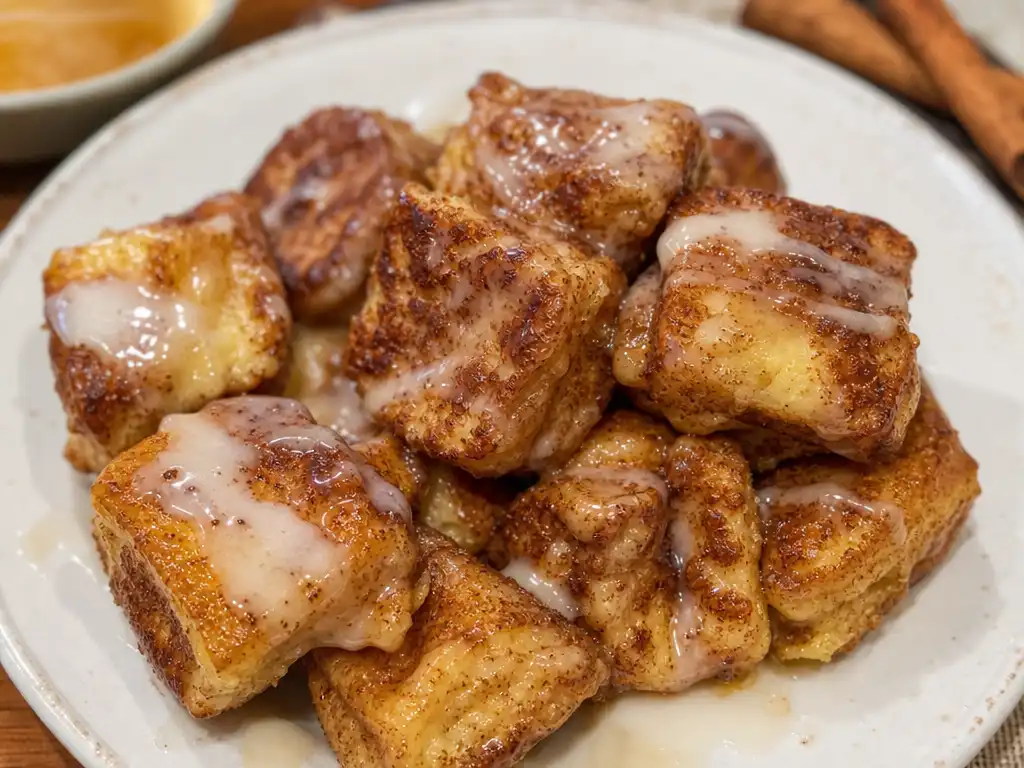
Imagine sinking your teeth into a cube of bread that has been soaked in a vanilla-infused egg custard, fried to a golden crisp, and then tossed in a buttery cinnamon sugar coating before being drizzled with a creamy cream cheese glaze. The texture is a complex interplay of crispy edges, soft custard-like interiors, and the chewy sweetness reminiscent of a classic cinnamon bun. Whether you are preparing a special holiday breakfast, hosting a bridal shower, or simply treating your family to something extraordinary on a Sunday, these bites offer a level of sophistication that belies their ease of preparation. They are shareable, manageable, and utterly irresistible, making them the ultimate crowd-pleaser in the realm of breakfast desserts.
The History
To truly appreciate the Cinnamon Roll French Toast Bite, one must understand the lineage of its parent dishes. French toast, known historically as “pain perdu” or “lost bread” in France, dates back to the Roman Empire. The earliest recorded recipe appears in a collection from the 4th or 5th century known as Apicius, where it was described as bread soaked in milk and eggs, then fried in oil or honey. It was originally a practical solution for using up stale bread that would otherwise be wasted, transforming hard loaves into something soft and edible through the magic of custard soaking. Over centuries, it evolved from a frugal necessity into a beloved breakfast staple across Europe and eventually America, gaining popularity as a sweet dish served with syrup and fruit.
The cinnamon roll, on the other hand, has its roots in Sweden, where it is known as “kanelbulle.” The tradition of sweetened breads flavored with spices dates back to the Vikings, but the modern cinnamon roll as we know it began to take shape in the 1920s. It gained massive popularity in the United States during the 1950s, particularly in the Midwest, where the combination of yeast dough, cinnamon, sugar, and cream cheese frosting became a bakery standard. The fusion of these two histories represents a modern culinary trend known as “hybrid desserts,” which gained significant traction in the 2010s with the rise of social food culture. Chefs and home cooks began experimenting with combining favorite flavors to create novel experiences, leading to creations like the cronut and the muffin top. The Cinnamon Roll French Toast Bite is a natural evolution of this trend, honoring the frugality of French toast while embracing the indulgent flavor profile of the Scandinavian-inspired cinnamon roll.
Ingredients Breakdown
Understanding the role of each component in this recipe is crucial for achieving the perfect texture and flavor balance. The foundation of this dish is the bread. While any bread can technically be used, the structure is vital. Thick-cut Texas Toast or a high-quality brioche is preferred because these breads have a higher fat and egg content within the dough itself, allowing them to absorb the custard without disintegrating. Stale bread is actually advantageous here, as it is less likely to become mushy when soaked.
The custard mixture is the heart of the French toast element. Eggs provide the protein structure that coagulates during cooking, creating a firm exterior while keeping the inside soft. Milk or heavy cream adds richness and liquidity; using a combination of both ensures a creamy interior without being too heavy. Vanilla extract is non-negotiable for depth of flavor, while a pinch of salt is essential to contrast the sweetness and enhance the overall taste profile.
The defining characteristic comes from the cinnamon sugar coating. Granulated sugar provides the crunch and sweetness, while ground cinnamon offers the warm, aromatic spice that defines the “cinnamon roll” aspect. Some recipes include nutmeg or cardamom for complexity. Finally, the glaze ties everything together. A mixture of cream cheese, powdered sugar, and a splash of milk mimics the classic frosting found on cinnamon rolls, adding a tangy creaminess that cuts through the sugar of the coating.
Step-by-Step Recipe
Creating these bites is a process that requires attention to detail but is straightforward enough for cooks of all skill levels. The journey begins with preparation. You must start by cutting your bread into uniform cubes, typically around 1 to 1.5 inches in size. Uniformity ensures even cooking, so every bite is perfectly golden rather than some being burnt and others soggy. Once cut, prepare your workstation with three distinct stations: one for the custard soak, one for the cinnamon sugar coating, and one for the cooking surface.
Next, whisk together your custard mixture in a shallow bowl. Ensure the eggs are fully beaten and the spices are evenly distributed. Dip each bread cube into the mixture, allowing it to soak for about 10 to 15 seconds per side. You want the bread to absorb the liquid but not fall apart. Immediately after soaking, roll the cube in the cinnamon sugar mixture, pressing gently to ensure the coating adheres to all sides. This double-coating method is what creates the signature crust.
Heat a large skillet or griddle over medium heat. Add a generous amount of butter or a neutral oil with a high smoke point. Once the butter is foaming but not browning, add the coated cubes in a single layer. Do not overcrowd the pan, as this will lower the temperature and steam the bread instead of frying it. Cook for 2 to 3 minutes per side, turning carefully with tongs until all sides are a deep golden brown. Once cooked, transfer them to a wire rack to cool slightly before drizzling with the cream cheese glaze. Serving them warm allows the glaze to melt slightly into the crevices of the bites.
Tips
- Bread Selection: Use day-old bread. Fresh bread is too soft and will absorb too much custard, leading to a mushy interior. If you only have fresh bread, leave the slices out on the counter for a few hours to dry out.
- Oil Temperature: Maintain a consistent medium heat. If the pan is too hot, the cinnamon sugar will burn before the inside is cooked. If it is too cool, the bites will absorb too much oil and become greasy.
- Coating Adhesion: To help the cinnamon sugar stick better, you can lightly brush the soaked bread with melted butter before rolling it in the sugar mixture.
- Batch Cooking: Keep cooked batches warm in a 200°F (95°C) oven on a baking sheet while you finish frying the remaining batches. This ensures everyone eats at the same time.
- Glaze Consistency: If your glaze is too thick, add milk one teaspoon at a time. If it is too thin, add more powdered sugar. You want it thick enough to coat but thin enough to drizzle.
- Utensils: Use tongs rather than a fork for flipping. Forks can pierce the bread, causing the custard to leak out during cooking.
- Cleaning: Burnt sugar can be difficult to clean from pans. Soak your skillet in warm soapy water immediately after cooking to prevent sticking.
Variations and Customizations
The beauty of this recipe lies in its versatility. For those looking to reduce sugar intake, you can substitute the granulated sugar in the coating with a monk fruit or erythritol blend that measures cup-for-cup like sugar. For a dairy-free version, swap the cow’s milk for almond or oat milk, use a vegan butter substitute for frying, and create the glaze using dairy-free cream cheese and coconut cream.
Flavor variations can also transform the dish. Add a teaspoon of orange zest to the custard for a bright, citrusy note that pairs beautifully with cinnamon. For a decadent twist, stuff the bread cubes with a small piece of cream cheese before soaking them, creating a stuffed French toast bite experience. You can also experiment with the spice profile by adding ground ginger, cloves, or allspice to the cinnamon sugar mix for a “pumpkin spice” vibe.
Toppings offer another avenue for customization. Instead of a cream cheese glaze, try a maple butter syrup, a chocolate ganache drizzle, or a simple dusting of powdered sugar. Fresh berries, sliced bananas, or chopped pecans can be added on top for texture and freshness. For a savory-sweet approach, incorporate crispy bacon bits into the serving platter, allowing guests to combine the salty crunch with the sweet bread.
Health Considerations and Nutritional Value
It is important to acknowledge that Cinnamon Roll French Toast Bites are a indulgent treat rather than a health food. The primary sources of calories come from the refined carbohydrates in the bread, the sugar in the coating and glaze, and the fats used in frying and the cream cheese. A standard serving size, approximately 6 to 8 bites, can range from 400 to 600 calories depending on the size of the bread cubes and the amount of glaze used.
However, there are ways to mitigate the nutritional impact. Using whole grain or whole wheat bread can increase the fiber content, which helps regulate blood sugar spikes. Reducing the amount of sugar in the coating by half and relying on the natural sweetness of the vanilla and cinnamon can also lower the glycemic load. Incorporating protein into the meal, such as serving alongside Greek yogurt or eggs, can help balance the macronutrients and keep you fuller for longer.
For those monitoring cholesterol, using egg whites instead of whole eggs in the custard mixture can reduce saturated fat intake. Additionally, baking the bites instead of frying them is a viable option. Arrange the coated cubes on a parchment-lined baking sheet, spray lightly with cooking oil, and bake at 375°F (190°C) for 15 to 20 minutes, turning halfway through. This method significantly reduces the fat content while still achieving a desirable texture.
Ingredients
- For the French Toast Bites:
- 1 loaf of thick-cut white bread, brioche, or Texas Toast (approximately 12 slices)
- 4 large eggs
- 1 cup whole milk
- 2 tablespoons heavy cream
- 1 teaspoon vanilla extract
- 1/2 teaspoon ground cinnamon
- 1/4 teaspoon nutmeg
- 1/4 teaspoon salt
- For the Cinnamon Sugar Coating:
- 1/2 cup granulated sugar
- 1 tablespoon ground cinnamon
- 1/4 teaspoon ground ginger (optional)
- For Frying:
- 4 tablespoons unsalted butter
- 2 tablespoons vegetable oil
- For the Cream Cheese Glaze:
- 4 ounces cream cheese, softened
- 1 cup powdered sugar
- 1 teaspoon vanilla extract
- 2 to 3 tablespoons milk
Directions
- Prepare the Bread: Cut the bread slices into 1-inch cubes. If the bread is very fresh, spread the cubes on a baking sheet and let them air dry for 30 minutes to prevent sogginess.
- Make the Custard: In a wide, shallow bowl, whisk together the eggs, whole milk, heavy cream, vanilla extract, 1/2 teaspoon cinnamon, nutmeg, and salt until fully combined and frothy.
- Prepare the Coating: In a separate shallow bowl or plate, mix the granulated sugar, 1 tablespoon cinnamon, and ginger until evenly distributed.
- Soak and Coat: Working in batches, dip the bread cubes into the egg mixture, ensuring all sides are coated. Let them soak for 10 seconds. Remove and immediately roll them in the cinnamon sugar mixture, pressing lightly to adhere.
- Heat the Pan: Place a large skillet or griddle over medium heat. Add the butter and oil, swirling to coat the bottom of the pan. Wait until the butter foams.
- Cook the Bites: Place the coated bread cubes in the skillet in a single layer, ensuring they are not touching. Cook for 2 to 3 minutes per side, turning with tongs, until all sides are golden brown and crispy.
- Keep Warm: Transfer cooked bites to a wire rack set over a baking sheet. Place in a 200°F (95°C) oven to keep warm while you cook the remaining batches.
- Make the Glaze: While the bites cook, beat the softened cream cheese, powdered sugar, and vanilla extract in a small bowl. Add milk one tablespoon at a time until the desired drizzling consistency is reached.
- Serve: Arrange the warm French toast bites on a serving platter. Drizzle generously with the cream cheese glaze. Serve immediately while warm.
FAQ
Can I make these ahead of time?
Yes, you can prepare the bread cubes and the custard mixture the night before. Store them separately in the refrigerator. In the morning, coat and fry them fresh for the best texture. You can also freeze the cooked bites without glaze for up to one month.
How do I reheat leftovers?
The best way to reheat leftovers is in an oven or toaster oven at 350°F (175°C) for 5 to 10 minutes. This restores the crispiness. Microwaving is not recommended as it will make the bites chewy and soggy.
Can I use gluten-free bread?
Absolutely. Gluten-free bread works well, but choose a sturdy variety that won’t fall apart when soaked. You may need to reduce the soaking time slightly as some gluten-free breads absorb liquid faster.
Why did my coating fall off?
This usually happens if the bread is too wet or the pan isn’t hot enough. Ensure you shake off excess custard before rolling in sugar, and make sure the butter is hot before adding the bread.
Can I make this vegan?
Yes. Use flax eggs (1 tablespoon ground flaxseed mixed with 3 tablespoons water per egg) for the custard, plant-based milk, vegan butter for frying, and dairy-free cream cheese for the glaze.
What is the best bread to use?
Brioche, Challah, or Texas Toast are the top choices due to their richness and structure. Sourdough can be used for a tangier flavor profile but may require a longer soak time.
Summary
Cinnamon Roll French Toast Bites combine the custard richness of French toast with the spiced sweetness of cinnamon rolls for the ultimate brunch treat.
Easy to customize and perfect for sharing, these golden bites deliver a comforting blend of crispy edges and soft, flavorful interiors.