Introduction
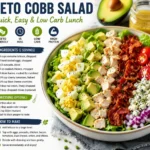
Embarking on a ketogenic lifestyle often raises the question of how to maintain variety, satisfaction, and convenience in your daily meals, particularly when time is of the essence. The Keto Cobb Salad stands as a monumental solution for those seeking quick low carb lunches that do not compromise on flavor or nutritional density. This iconic dish is more than just a mixture of greens and proteins; it is a meticulously balanced meal designed to keep you in ketosis while providing sustained energy throughout the afternoon. Unlike many salad options that rely on hidden sugars in dressings or carb-heavy croutons, the Cobb salad is naturally aligned with low-carb principles when constructed correctly. Its robust combination of healthy fats, high-quality proteins, and fibrous vegetables creates a satiety signal that prevents the mid-afternoon cravings often associated with restrictive dieting. Whether you are a seasoned keto veteran or just beginning your low-carb journey, mastering this recipe ensures you have a reliable, delicious, and health-promoting meal ready in minutes.
Furthermore, the versatility of the Cobb salad allows it to fit seamlessly into meal prep routines, making it an ideal candidate for batch cooking on weekends. The distinct layers of ingredients not only provide a visually stunning presentation but also allow for customizable textural experiences in every bite. From the creaminess of avocado to the crunch of bacon and the tenderness of grilled chicken, each component plays a vital role in the overall macro profile of the dish. In this comprehensive guide, we will explore every facet of the Keto Cobb Salad, from its rich historical origins to a detailed nutritional breakdown, ensuring you have all the knowledge required to perfect this staple of the low-carb community.
The History
The origins of the Cobb Salad are as rich and layered as the dish itself, tracing back to the golden age of Hollywood dining in the 1930s. It was invented by Robert Howard Cobb, the owner of the famous Brown Derby restaurant in Los Angeles, California. Legend has it that the creation was born out of necessity and late-night hunger. According to the most popular account, late one night in 1937, Cobb was rummaging through the restaurant’s kitchen for a bite to eat after closing. He gathered leftovers from the refrigerator, including lettuce, hard-boiled eggs, chicken, bacon, cheese, tomatoes, and avocado, and chopped them all into small pieces. He then tossed them together with a French dressing he had on hand.
The dish was an instant hit, first among the restaurant staff and soon after among the celebrity clientele that frequented the Brown Derby. It quickly became a signature item on the menu, symbolizing the glamour and indulgence of the era while inadvertently creating a prototype for high-protein, moderate-carb eating that would resonate decades later with the ketogenic community. Over the years, the recipe has evolved, with variations appearing in restaurants across the globe. However, the core identity of the Cobb remains rooted in its specific arrangement of ingredients, often presented in rows or layers to showcase the variety of colors and textures. Understanding this history adds a layer of appreciation to the meal, connecting modern keto dieters with a culinary classic that has stood the test of time.
Ingredients Breakdown
To truly optimize the Cobb Salad for a ketogenic diet, it is essential to understand the role each ingredient plays in your macronutrient intake. This breakdown ensures you are not just eating salad, but fueling your body appropriately.
Leafy Greens
The foundation of any salad, the greens provide bulk and fiber with minimal net carbs. Iceberg lettuce offers crunch, while romaine provides nutrients like Vitamin A. For a keto twist, spinach or arugula can be used to increase micronutrient density without spiking insulin.
Protein Sources
Grilled chicken breast is the traditional choice, offering lean protein essential for muscle maintenance. However, the keto diet benefits from higher fat content, so leaving the skin on the chicken or opting for thigh meat can improve the fat-to-protein ratio. Hard-boiled eggs are another powerhouse, providing choline and high-quality fats along with protein.
Healthy Fats
Avocado is the star fat source in a Cobb salad, rich in monounsaturated fats and potassium. Bacon adds savory flavor and saturated fat, which is acceptable and encouraged on keto for energy. Cheese, typically Roquefort or blue cheese, adds tanginess and additional fat content.
Low-Carb Vegetables
Tomatoes and chives are used sparingly due to their natural sugar content. While they add essential vitamins and flavor complexity, portion control is key to maintaining ketosis. Red onion can be included for a bite, but should be soaked in water to reduce pungency and carbs.
The Dressing
Traditional Cobb dressing can be high in sugar. A keto version relies on olive oil, vinegar, mayonnaise, or sour cream bases. Avoiding high-fructose corn syrup and added sugars is critical to keeping the meal low-carb.
Step-by-Step Recipe
Creating the perfect Keto Cobb Salad requires attention to detail in preparation and assembly. Follow this detailed guide to ensure every component is cooked and prepped to perfection.
Step 1: Protein Preparation
Begin by seasoning your chicken breasts or thighs with salt, pepper, and paprika. Grill or pan-sear them in olive oil or butter until fully cooked through, ensuring an internal temperature of 165°F. Allow the meat to rest before dicing it into uniform cubes. Simultaneously, boil your eggs until hard-boiled, cool them in an ice bath, peel, and chop them roughly.
Step 2: Cooking the Bacon
While the chicken rests, cook your bacon strips in a skillet or oven until crispy. Drain them on paper towels to remove excess grease, then crumble or chop them into bite-sized pieces. Retaining some of the bacon fat can be useful for making a homemade dressing later.
Step 3: Vegetable Prep
Wash and dry your lettuce thoroughly. Wet greens can dilute the dressing and make the salad soggy. Chop the lettuce into bite-sized pieces. Dice the avocado just before serving to prevent oxidation and browning. Chop the tomatoes and chives finely.
Step 4: Making the Dressing
In a small jar or bowl, combine extra virgin olive oil, red wine vinegar, a teaspoon of Dijon mustard, salt, pepper, and a splash of water to emulsify. Alternatively, mix mayonnaise with sour cream and herbs for a creamy variant. Whisk vigorously until smooth.
Step 5: Assembly
Arrange the bed of greens on a large platter or individual bowls. Row the chopped chicken, eggs, bacon, avocado, tomatoes, and cheese in distinct lines across the top of the greens. This traditional presentation allows diners to mix the ingredients as they please. Drizzle the dressing over the top just before serving.
Tips
- Prevent Sogginess: If meal prepping, store the dressing in a separate container and only dress the salad immediately before eating to maintain the crunch of the lettuce and bacon.
- Avocado Care: To keep avocado green during meal prep, leave the pit in the storage container or brush the diced pieces with a little lemon juice to slow down oxidation.
- Batch Cooking: Cook a large batch of chicken and bacon on Sunday to use for lunches throughout the week. Hard-boiled eggs can also be prepped in advance and stored in the shell.
- Flavor Boost: Add a pinch of garlic powder or onion powder to your chicken seasoning to deepen the savory profile without adding carbs.
- Cheese Selection: Opt for aged cheeses like Parmesan or sharp Cheddar if you are sensitive to mold, as they contain less lactose than softer cheeses like blue cheese.
Variations and Customizations
The beauty of the Cobb Salad lies in its adaptability. While the classic recipe is beloved, there are numerous ways to customize it to fit specific dietary needs or flavor preferences within the ketogenic framework.
Dairy-Free Keto Cobb
For those avoiding dairy, simply omit the blue cheese or substitute it with a dairy-free almond-based cheese. Ensure the bacon is sugar-cured to avoid hidden carbs, and use a vinaigrette based on olive oil rather than creamy dressings that might contain milk solids.
Seafood Variation
Swap the chicken for grilled salmon or shrimp. This increases the omega-3 fatty acid content, providing additional anti-inflammatory benefits. Smoked salmon can also be used for a luxurious twist, though care should be taken to check the sugar content in the curing process.
Vegetarian Keto Option
Replace the chicken and bacon with tempeh or fried halloumi cheese. Use smoked paprika to mimic the smoky flavor of bacon. Increase the number of eggs and add hemp seeds for additional protein and fat.
Spicy Kick
Add sliced jalapeños or a dash of cayenne pepper to the dressing. You can also use a spicy mayo made from sugar-free hot sauce mixed with mayonnaise for a creamy, fiery coating.
Seasonal Twists
In the summer, add fresh cucumbers or radishes for extra crunch. In the winter, consider adding roasted Brussels sprouts or warm bacon dressing to make the salad more comforting and calorically dense.
Health Considerations and Nutritional Value
Understanding the nutritional profile of the Keto Cobb Salad is crucial for managing your daily macronutrient limits. This salad is inherently high in fat and protein, making it an excellent tool for maintaining ketosis.
Macronutrient Balance
A standard serving of Keto Cobb Salad typically contains between 5 to 8 grams of net carbohydrates, depending on the portion size of tomatoes and the type of dressing used. The fat content usually ranges from 40 to 60 grams, primarily from avocado, bacon, oil, and cheese. Protein content is substantial, often exceeding 30 grams per serving, which supports muscle repair and satiety.
Micronutrients
This salad is nutrient-dense. The leafy greens provide Vitamin K, Vitamin A, and folate. Avocados are an excellent source of potassium, often containing more than bananas. Eggs provide choline, which is vital for brain health. The variety of colors in the vegetables ensures a range of antioxidants are consumed.
Caloric Density
Be aware that keto foods are calorically dense. While this is beneficial for energy, those looking to lose weight should monitor portion sizes, particularly regarding oils, nuts, and cheeses. The high satiety factor usually prevents overeating, but mindful serving is recommended.
Sodium Content
Bacon, cheese, and dressings can be high in sodium. For individuals monitoring blood pressure, consider using low-sodium bacon, reducing added salt in the dressing, and increasing the proportion of fresh vegetables to balance electrolyte intake.
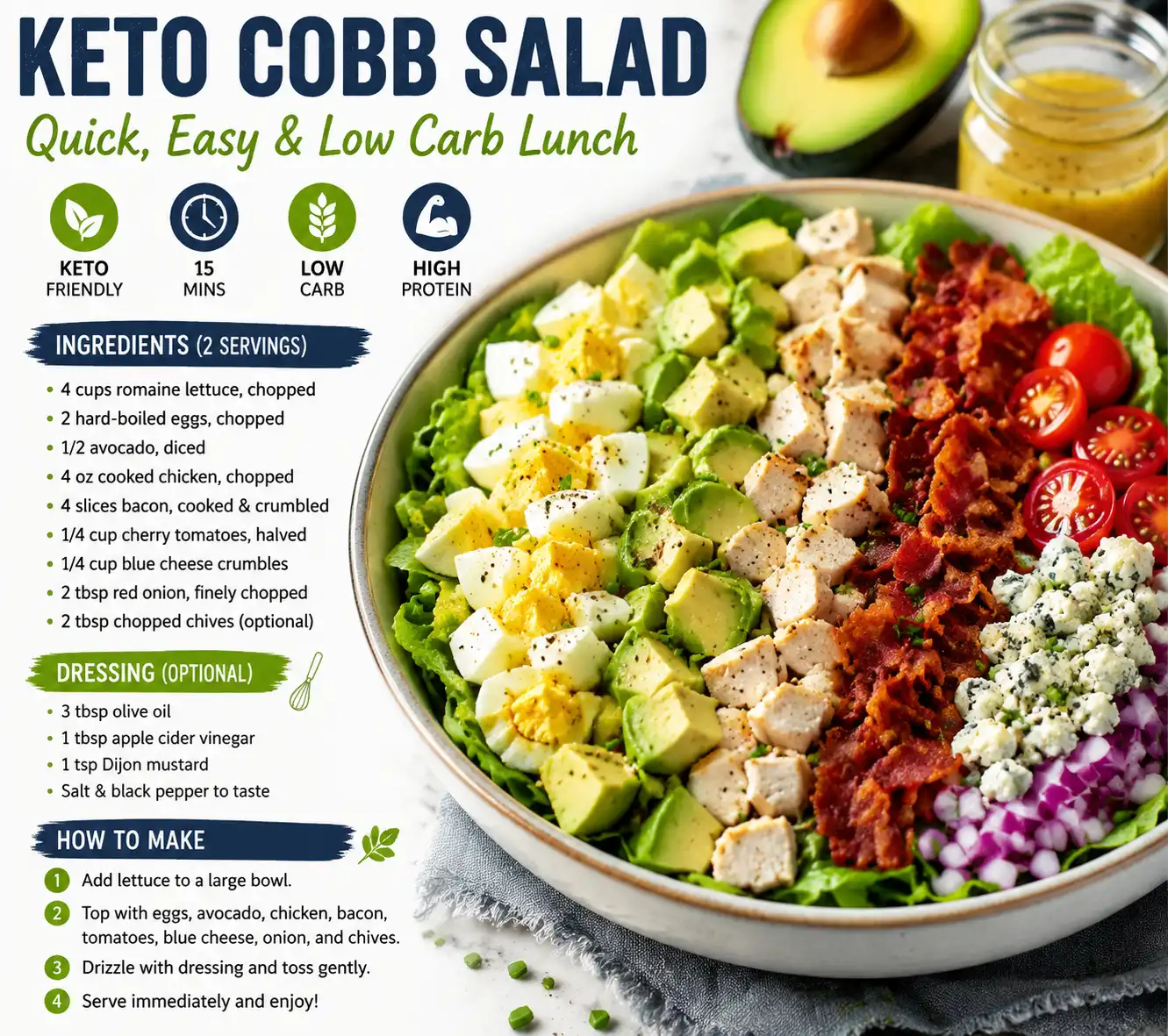
Ingredients
- 4 cups mixed salad greens (romaine, iceberg, or spinach)
- 2 large chicken breasts, cooked and diced
- 6 strips of bacon, cooked crisp and crumbled
- 2 hard-boiled eggs, chopped
- 1 large ripe avocado, diced
- 1 cup cherry tomatoes, halved
- 1/2 cup blue cheese or Roquefort, crumbled
- 2 tablespoons fresh chives, chopped
- 1/4 cup red onion, finely diced (optional)
- For the Dressing:
- 1/3 cup extra virgin olive oil
- 2 tablespoons red wine vinegar
- 1 teaspoon Dijon mustard (sugar-free)
- Salt and black pepper to taste
- 1 clove garlic, minced (optional)
Directions
- Prepare the Proteins: Season the chicken breasts with salt and pepper. Cook in a skillet over medium-high heat with 1 tablespoon of oil until golden brown and cooked through (about 6-7 minutes per side). Let rest for 5 minutes, then dice into small cubes. Boil the eggs for 9-10 minutes, cool in ice water, peel, and chop.
- Cook the Bacon: Fry the bacon strips in a pan until crispy. Remove from heat, drain on paper towels, and crumble into bits.
- Prepare the Vegetables: Wash and dry the salad greens thoroughly. Tear into bite-sized pieces if necessary. Halve the cherry tomatoes, dice the avocado, and chop the chives and red onion.
- Make the Dressing: In a small jar, combine the olive oil, red wine vinegar, Dijon mustard, minced garlic, salt, and pepper. Seal the jar and shake vigorously until the dressing is emulsified and creamy.
- Assemble the Salad: Divide the greens between two large serving bowls. Arrange the chicken, bacon, eggs, avocado, tomatoes, cheese, and chives in neat rows over the top of the greens.
- Serve: Drizzle the dressing over the salad immediately before serving. Toss gently at the table to combine all ingredients evenly.
FAQ
Can I eat Cobb Salad every day on Keto?
Yes, you can, but variety is key for micronutrient intake. Rotating your greens and protein sources ensures you get a broad spectrum of vitamins and minerals while preventing food boredom.
Is blue cheese keto-friendly?
Yes, blue cheese is very low in carbohydrates and high in fat, making it an excellent choice for ketogenic diets. Just ensure you are not sensitive to histamines or mold.
How long does this salad keep in the fridge?
Prepped ingredients can last 3-4 days in airtight containers. However, once dressed, the salad should be consumed within 24 hours to avoid wilting. Keep avocado separate until ready to eat.
What dressing is best for weight loss on Keto?
A simple vinaigrette with olive oil and vinegar is often better for weight loss than creamy dressings, as it is easier to measure calories. However, creamy dressings may provide better satiety for some individuals.
Can I use store-bought rotisserie chicken?
Yes, this is a great time-saver. Just check the ingredient label to ensure the chicken was not injected with sugar solutions or glazed with high-carb sauces.
How do I increase the fat content further?
Add a handful of macadamia nuts, increase the amount of avocado, or drizzle additional extra virgin olive oil over the top before serving.
Summary
The Keto Cobb Salad is a nutrient-dense, high-satiety meal perfect for maintaining ketosis with minimal preparation time.
Customize the proteins and fats to fit your macros while enjoying a classic dish rooted in culinary history.