Introduction
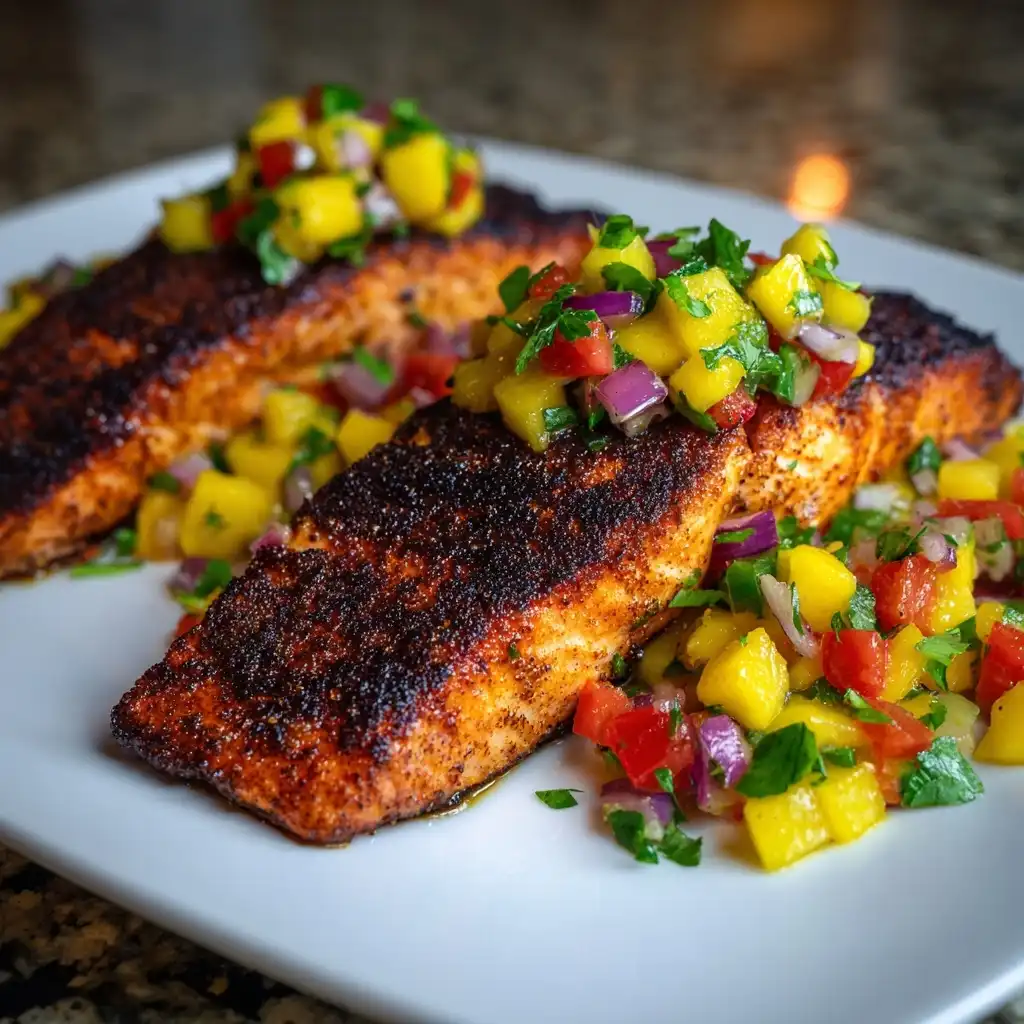
Blackened salmon with mango salsa is a vibrant, restaurant-quality dish that marries bold, smoky flavors with bright, tropical sweetness—perfect for weeknight elegance or weekend entertaining. This culinary pairing showcases the natural richness of wild-caught salmon, seared to a crisp, deeply seasoned crust using the classic blackening technique, then balanced by a fresh, zesty mango salsa that adds acidity, crunch, and aromatic complexity. Far from just a flavor sensation, it’s a celebration of texture contrast—the tender, flaky interior of the fish against the caramelized, almost charred exterior; the cool juiciness of ripe mango against red onion’s sharp bite and cilantro’s herbal lift. Whether you’re seeking a nutritious yet indulgent dinner, a protein-packed lunch option, or a visually stunning centerpiece for guests, this dish delivers on every front without demanding professional kitchen skills.
The History
The origins of blackening trace back to 1970s New Orleans, where legendary chef Paul Prudhomme revolutionized Cajun cuisine at his iconic K-Paul’s Louisiana Kitchen. Frustrated by the limitations of traditional frying and grilling, Prudhomme developed the blackening method as a way to intensify flavor while preserving moisture: he coated fish (often redfish, then later catfish and salmon) in a robust spice blend—including paprika, cayenne, thyme, oregano, garlic powder, onion powder, salt, and black pepper—then cooked it in an extremely hot cast-iron skillet with generous amounts of butter until the spices formed a dark, aromatic crust. Though “blackened” refers to the deep mahogany-to-nearly-black hue of the spice crust—not actual burning—it quickly became synonymous with fiery, soulful Southern cooking.
Salmon, however, was not part of Prudhomme’s original repertoire; its inclusion reflects the evolution of blackening beyond regional boundaries and into modern American fusion cuisine. As sustainable seafood awareness grew in the 1990s and 2000s, chefs began applying the blackening technique to heart-healthy, omega-3-rich salmon—a fish prized for its buttery texture and ability to hold up under high heat. Meanwhile, mango salsa emerged from broader Latin American and Caribbean culinary traditions—where fresh fruit salsas have long served as cooling counterpoints to spicy, grilled, or fried proteins. The marriage of blackened salmon and mango salsa gained traction in coastal California and Florida restaurants in the early 2000s, driven by farm-to-table movements, global ingredient accessibility, and health-conscious diners craving both indulgence and nutrition. Today, it stands as a hallmark of contemporary American bistro fare—bridging heritage technique, seasonal produce, and mindful eating.
Ingredients Breakdown
For the Blackened Salmon:
• Salmon fillets: Skin-on or skinless, center-cut Atlantic or wild-caught Pacific (Sockeye, Coho, or King) salmon—4–6 oz each, ~1-inch thick. Skin-on yields extra crispness and structural integrity during searing; skinless offers easier portioning. Look for firm, moist flesh with a clean ocean scent and vibrant pink-orange hue.
• Unsalted butter: 2 tbsp, clarified or whole—clarified butter has a higher smoke point (~450°F), essential for achieving true blackening without burning. Regular butter adds richer dairy notes but requires careful temperature control.
• Blackening spice blend: A carefully balanced mix where smoked paprika provides depth and color, cayenne lends controlled heat (adjustable), garlic and onion powders offer savory umami, dried thyme and oregano contribute earthy warmth, and freshly ground black pepper adds floral pungency. Salt is crucial—not only for seasoning but for drawing out surface moisture to ensure optimal crust formation.
• Neutral high-smoke-point oil: Such as avocado, grapeseed, or refined peanut oil—1 tsp per fillet—to preheat the pan and initiate rapid sear.
For the Mango Salsa:
• Ripe but firm mangoes: 1½ cups finely diced (about 1 large Ataulfo or 1½ medium Tommy Atkins). Ripeness is critical: too soft = mushy salsa; too green = tart and fibrous. Look for slight give near the stem and sweet, floral aroma.
• Red bell pepper: ½ cup small dice—adds sweetness, crunch, and visual pop without overwhelming heat.
• Red onion: ¼ cup finely minced—provides sharp allium bite; soaking in cold water for 5 minutes mellows its intensity.
• Fresh cilantro: ⅓ cup chopped leaves and tender stems—bright, citrusy, and herbaceous; stems add extra flavor.
• Jalapeño or serrano pepper: 1 small, seeded and finely minced (retain 1–2 seeds for heat)—adds clean, vegetal heat that complements rather than competes.
• Lime juice: 3 tbsp freshly squeezed—essential acidity to balance mango’s sugar and brighten all components.
• Honey or agave nectar: 1 tsp—optional but recommended to round out acidity and enhance mango’s natural sweetness without cloying.
• Sea salt: ¼ tsp fine sea salt—enhances every flavor note and helps draw out juices for cohesion.
Optional Garnishes & Enhancements:
• Micro cilantro or edible flowers (e.g., nasturtiums) for refined presentation
• Crumbled queso fresco or feta for creamy-salty contrast
• Toasted pepitas or slivered almonds for nutty crunch
• Pickled red onions for tangy brightness
• A drizzle of chili-lime crema (sour cream + lime zest + chipotle purée)
Step-by-Step Recipe
- Prep the salmon: Pat fillets *extremely* dry with paper towels—this is non-negotiable for crust development. Place on a wire rack over a tray and refrigerate uncovered for 15–30 minutes to further dehydrate the surface.
- Toast and grind spices (optional but highly recommended): In a dry skillet over medium-low heat, toast whole cumin seeds (½ tsp), coriander seeds (½ tsp), and black peppercorns (1 tsp) for 1–2 minutes until fragrant. Cool, then pulse with other dry spices in a spice grinder or mortar and pestle for a more complex, aromatic blend.
- Season generously: Coat both sides of each fillet evenly with 1½ tsp blackening spice per 6 oz fillet, pressing firmly to adhere. Let rest at room temperature for 10 minutes—this allows spices to bloom and surface moisture to reabsorb slightly.
- Preheat the skillet: Place a heavy 12-inch cast-iron skillet over medium-high heat for 5 minutes. Add neutral oil and swirl to coat. Heat until shimmering but not smoking (~375°F). Test with a sprinkle of spice—if it sizzles instantly and turns fragrant, it’s ready.
- Clarify the butter: While pan heats, melt butter in a small saucepan over low heat. Skim off milk solids from the surface, then carefully pour golden liquid (clarified butter) into a heatproof bowl, leaving milky residue behind.
- Blacken the salmon: Carefully place fillets in hot skillet, presentation-side down (skin-side up if skin-on). Press gently with a spatula for 10 seconds to ensure full contact. Cook undisturbed for 2–2½ minutes until deep mahogany crust forms. Flip and cook second side 1½–2 minutes for medium doneness (internal temp 125–130°F). Baste continuously with clarified butter during last 45 seconds for sheen and richness.
- Rest before serving: Transfer salmon to a clean plate, tent loosely with foil, and rest 3–4 minutes—this allows residual heat to gently finish cooking and juices to redistribute.
- Prepare the salsa: While salmon rests, combine all salsa ingredients in a non-reactive bowl. Gently fold (don’t stir vigorously) to avoid crushing mango. Taste and adjust: more lime for brightness, honey for balance, salt for depth, or jalapeño for heat. Let sit 5–10 minutes for flavors to meld.
- Plate with intention: Spoon ⅓–½ cup salsa onto center of warm plate. Place rested salmon diagonally atop salsa. Garnish with extra cilantro, lime wedge, and optional toppings. Serve immediately.
Tips
- Dryness is destiny: Moisture is the enemy of crust. Pat fillets *three times*: once upon removal from packaging, again after seasoning, and a final time right before placing in pan.
- Cast iron is mandatory: Its thermal mass retains heat steadily—critical for instantaneous sear and even blackening. Non-stick or stainless steel will fail under this technique.
- Smoke management: Turn on exhaust fan to maximum, open windows, and consider using a splatter screen *after* initial sear (not during) to reduce airborne particles without compromising crust formation.
- Don’t overcrowd: Cook no more than two fillets at once in a 12-inch skillet. Crowding drops pan temperature, causing steaming instead of searing.
- Resist flipping early: If the fish sticks, it’s not ready. Wait until it releases naturally—forcing it tears the crust.
- Temperature precision: Use an instant-read thermometer inserted horizontally into thickest part. For medium-rare: 120–125°F; medium: 125–130°F; medium-well: 130–135°F. Salmon continues cooking 5°F post-removal.
- Salsa timing matters: Prepare no more than 30 minutes ahead—mango softens and releases liquid over time. If making ahead, store components separately and combine just before serving.
- Spice freshness counts: Ground spices lose potency in 3–6 months. Buy whole spices and grind as needed—or refresh your pantry every 4 months for maximum impact.
- Butter basting finesse: Use a spoon to repeatedly ladle hot clarified butter over the top of the salmon during final 30–45 seconds—this self-bastes the surface, enriching flavor and glossing the crust.
- Resting isn’t optional: Skipping rest causes precious juices to flood the plate instead of staying locked inside the fish—resulting in drier, less flavorful bites.
Variations and Customizations
Dietary Adaptations:
• Gluten-Free: Ensure all spices are certified GF (some blends contain wheat fillers); use tamari instead of soy sauce if adding umami depth.
• Dairy-Free/Vegan Option: Replace butter with refined coconut oil or avocado oil; omit butter basting or use vegan “butter” with high smoke point. For plant-based “salmon,” try marinated and blackened king oyster mushrooms or hearts of palm.
• Low-Sodium: Reduce added salt by half and boost flavor with lemon zest, smoked salt (used sparingly), nutritional yeast, or mushroom powder.
Flavor Twists:
• Asian-Inspired: Swap mango for diced Fuji apple or Asian pear; replace lime with yuzu juice; add grated ginger, toasted sesame oil, and scallions; use gochujang-spiked blackening rub.
• Caribbean Jerk Fusion: Infuse blackening spice with allspice, cinnamon, and brown sugar; add grilled pineapple and scotch bonnet to salsa; garnish with toasted coconut flakes.
• Mediterranean Twist: Substitute roasted red peppers and kalamata olives for bell pepper and onion; add crumbled feta, lemon zest, and oregano to salsa; use za’atar in spice blend.
• Smoky Chipotle: Add 1 tsp chipotle powder to spice rub; include roasted corn and black beans in salsa; finish with crumbled cotija.
Protein Swaps:
• Blackened Shrimp: Use large, peeled, deveined shrimp (tails on for presentation); reduce cook time to 1.5–2 minutes total.
• Blackened Mahi-Mahi: Leaner and firmer—excellent for stronger spice profiles; pairs beautifully with pineapple-jalapeño salsa.
• Blackened Tofu Steaks: Extra-firm tofu pressed 30+ minutes, marinated in tamari-ginger-miso paste, then blackened; serve with mango-avocado salsa.
Serving Style Innovations:
• Grain Bowl Base: Serve over cilantro-lime quinoa, forbidden black rice, or farro with quick-pickled vegetables.
• Taco Format: Flake blackened salmon into warm blue corn tortillas with mango salsa, pickled red cabbage, and chipotle crema.
• Appetizer Skewers: Cube salmon and mango, alternate on skewers with red onion and jalapeño, brush with spice-oil glaze, and grill briefly.
• Salad Topper: Place warm salmon over baby arugula, shaved fennel, and avocado; drizzle with mango-lime vinaigrette.
Health Considerations and Nutritional Value
Blackened salmon with mango salsa is widely regarded as a nutritional powerhouse—balancing premium protein, heart-healthy fats, antioxidant-rich produce, and functional phytonutrients. A standard 6-oz serving of wild-caught salmon provides approximately 34g of complete, bioavailable protein—containing all nine essential amino acids crucial for muscle synthesis, immune function, and tissue repair. Its standout feature is its rich omega-3 fatty acid content: ~1,700–2,000 mg of EPA and DHA per serving, clinically shown to reduce systemic inflammation, lower triglycerides, support cognitive resilience, and improve endothelial function. Wild salmon also contains significantly higher levels of astaxanthin—a rare carotenoid antioxidant responsible for its pink hue—that crosses the blood-brain barrier to protect neurons and reduce oxidative stress.
The mango salsa contributes substantial micronutrient density: one cup of mango delivers over 100% of the daily value (DV) for vitamin C (immune modulation and collagen synthesis), 35% DV for vitamin A (via beta-carotene for vision and epithelial integrity), and notable folate, potassium, and digestive enzymes like amylase and magneferin. Red bell pepper adds lycopene and additional vitamin C; red onion contributes quercetin (a potent anti-inflammatory flavonoid); jalapeño supplies capsaicin, which may modestly increase thermogenesis and satiety signaling. Lime juice enhances non-heme iron absorption from plant components and provides citric acid for metabolic support.
From a metabolic perspective, this dish is inherently low-glycemic and insulin-friendly—naturally free of refined carbs and added sugars (when honey is used minimally). Its high satiety index—driven by protein, healthy fat, and fiber from mango and vegetables—supports appetite regulation and stable blood glucose. However, health-conscious preparation is key: using clarified butter in moderation (rather than excessive oil or butter baths), avoiding pre-made spice blends laden with sodium or anti-caking agents (like silicon dioxide), and selecting sustainably sourced seafood (MSC- or ASC-certified) to minimize mercury and PCB exposure. For those managing hypertension, chronic kidney disease, or on anticoagulant therapy, consult a registered dietitian regarding optimal portion sizes, sodium limits, and vitamin K considerations (though mango and salmon are low in K, spinach garnishes would elevate it).
Calorically, a well-portioned plate (6 oz salmon + ¾ cup salsa + 1 tsp clarified butter) clocks in around 420–480 calories—making it ideal for weight maintenance or mindful gain. It’s naturally gluten-free, paleo-compliant, and Whole30-friendly (with minor modifications like omitting honey), and aligns seamlessly with Mediterranean, DASH, and MIND dietary patterns—all associated with reduced cardiovascular and neurodegenerative disease risk.
Ingredients
For the Blackened Salmon:
- 4 (6 oz) skin-on or skinless salmon fillets, center-cut, ~1-inch thick
- 2 tbsp unsalted butter, clarified (see tip below)
- 1 tsp avocado oil or other high-smoke-point neutral oil
- 2 tbsp blackening spice blend (see recipe below)
Homemade Blackening Spice Blend (makes ~¼ cup):
- 2 tbsp smoked paprika
- 1 tbsp garlic powder
- 1 tbsp onion powder
- 1½ tsp dried thyme
- 1½ tsp dried oregano
- 1½ tsp freshly ground black pepper
- 1 tsp cayenne pepper (adjust to taste—½ tsp for mild, 2 tsp for fiery)
- 1 tsp mustard powder
- 1 tsp celery seed, ground
- 1 tsp kosher salt (or ¾ tsp fine sea salt)
For the Mango Salsa:
- 1½ cups finely diced ripe mango (about 1 large Ataulfo or 1½ medium Tommy Atkins)
- ½ cup finely diced red bell pepper
- ¼ cup finely minced red onion, soaked in cold water 5 minutes and drained
- ⅓ cup chopped fresh cilantro (leaves and tender stems)
- 1 small jalapeño or serrano pepper, seeded and finely minced
- 3 tbsp freshly squeezed lime juice (about 1½ limes)
- 1 tsp raw honey or agave nectar (optional but recommended)
- ¼ tsp fine sea salt, plus more to taste
For Serving (Optional):
- Extra lime wedges
- Additional chopped cilantro
- Crumbled queso fresco or feta
- Toasted pepitas or slivered almonds
- Micro greens or edible flowers
Directions
- Make the spice blend: In a small bowl, whisk together all blackening spice ingredients until fully combined. Store excess in an airtight container away from light and heat for up to 3 months.
- Prep the salmon: Remove salmon from refrigerator 15 minutes before cooking. Pat *thoroughly* dry with paper towels—repeat twice. Place on a wire rack set over a baking sheet and refrigerate uncovered for 20 minutes.
- Season: Generously coat both sides of each fillet with 1½ tsp spice blend, pressing firmly to adhere. Let sit at room temperature for 10 minutes.
- Clarify the butter: Melt butter in a small saucepan over low heat. Once melted, simmer gently 2–3 minutes until milk solids separate and sink. Skim foam from top, then carefully pour golden liquid into a heatproof bowl, leaving milky residue behind.
- Heat the skillet: Place 12-inch cast-iron skillet over medium-high heat for 5 minutes. Add avocado oil and swirl to coat. Heat until shimmering and lightly smoking (~375°F).
- Cook the salmon: Carefully place fillets in hot skillet, presentation-side down. Press gently with a spatula for 10 seconds. Cook undisturbed 2–2½ minutes until deep brown crust forms. Flip and cook second side 1½–2 minutes. During last 45 seconds, spoon clarified butter over fillets continuously.
- Rest: Transfer to a clean plate, tent loosely with foil, and rest 3–4 minutes.
- Make the salsa: In a medium bowl, combine mango, bell pepper, drained red onion, cilantro, jalapeño, lime juice, honey (if using), and salt. Gently fold to combine. Taste and adjust seasoning.
- Plate: Spoon ⅓–½ cup salsa onto center of each warm plate. Place rested salmon diagonally over salsa. Garnish with extra cilantro, lime wedge, and desired toppings. Serve immediately.
FAQ
- Can I blacken salmon in the oven or air fryer?
- Traditional blackening requires intense, direct stovetop heat to achieve the signature crust. Oven broiling *can* work with a preheated cast-iron skillet under the broiler—but lacks the controlled sear and butter basting. Air fryers won’t replicate true blackening due to convection-only heat and insufficient surface temperature. Stick to cast iron for authenticity.
- Why does my salmon stick or fall apart?
- Two main culprits: (1) Inadequate drying—surface moisture creates steam, preventing crust adhesion; (2) Pan not hot enough—oil must shimmer and spices must sizzle on contact. Also, flipping too soon or using a thin spatula can tear delicate flesh. Use a wide, flexible metal spatula and wait for natural release.
- Is blackened salmon safe for pregnant women?
- Yes—when cooked to a minimum internal temperature of 145°F (though many prefer 125–130°F for optimal texture). Wild-caught salmon is among the lowest-mercury fish and rich in DHA, vital for fetal brain development. Avoid raw preparations and ensure thorough cooking.
- Can I make the salsa ahead of time?
- Mango salsa is best served within 2 hours of preparation. After that, mango softens and releases liquid, diluting flavor and texture. For meal prep, chop all ingredients separately, store chilled in airtight containers, and combine no more than 30 minutes before serving.
- What if I don’t have cast iron?
- Carbon steel skillets are excellent alternatives. Heavy-bottomed stainless steel *may* work if fully preheated for 8–10 minutes—but results will be less consistent. Avoid non-stick, aluminum, or thin pans—they cannot retain sufficient heat and risk overheating coatings.
- How do I know when salmon is done?
- Visual cues: opaque pinkish-white flesh at edges, slightly translucent center when viewed from the side. Internal temperature: 125°F for medium-rare (most tender), 130°F for medium. The “flake test”: gently press with a fork—the layers should separate easily but still glisten with moisture.
- Can I freeze blackened salmon?
- Freezing *cooked* blackened salmon is not recommended—the crust becomes soggy and fish texture degrades. However, you *can* freeze raw, spice-rubbed fillets for up to 3 months: place on parchment-lined tray, freeze solid, then vacuum-seal or double-wrap in freezer paper. Thaw overnight in fridge before cooking.
- What wine or beverage pairs well?
- A crisp, aromatic white balances the dish beautifully: Albariño (bright acidity, saline minerality), Grüner Veltliner (peppery lift), or unoaked Chardonnay (apple-pear notes). For beer, try a citrusy IPA or Mexican lager. Non-alcoholic: hibiscus-lime agua fresca or sparkling water with muddled mint and lime.
Summary
Blackened salmon with mango salsa is a masterclass in contrast—crisp, smoky, and boldly spiced salmon meets juicy, sweet-tart, herb-flecked tropical salsa—uniting centuries-old Cajun technique with modern, globally inspired freshness.
Nutritionally profound and endlessly adaptable, it delivers premium omega-3s, antioxidant-rich produce, and restaurant-worthy elegance with minimal effort—making it a timeless staple for health-conscious home cooks and adventurous food lovers alike.