Introduction
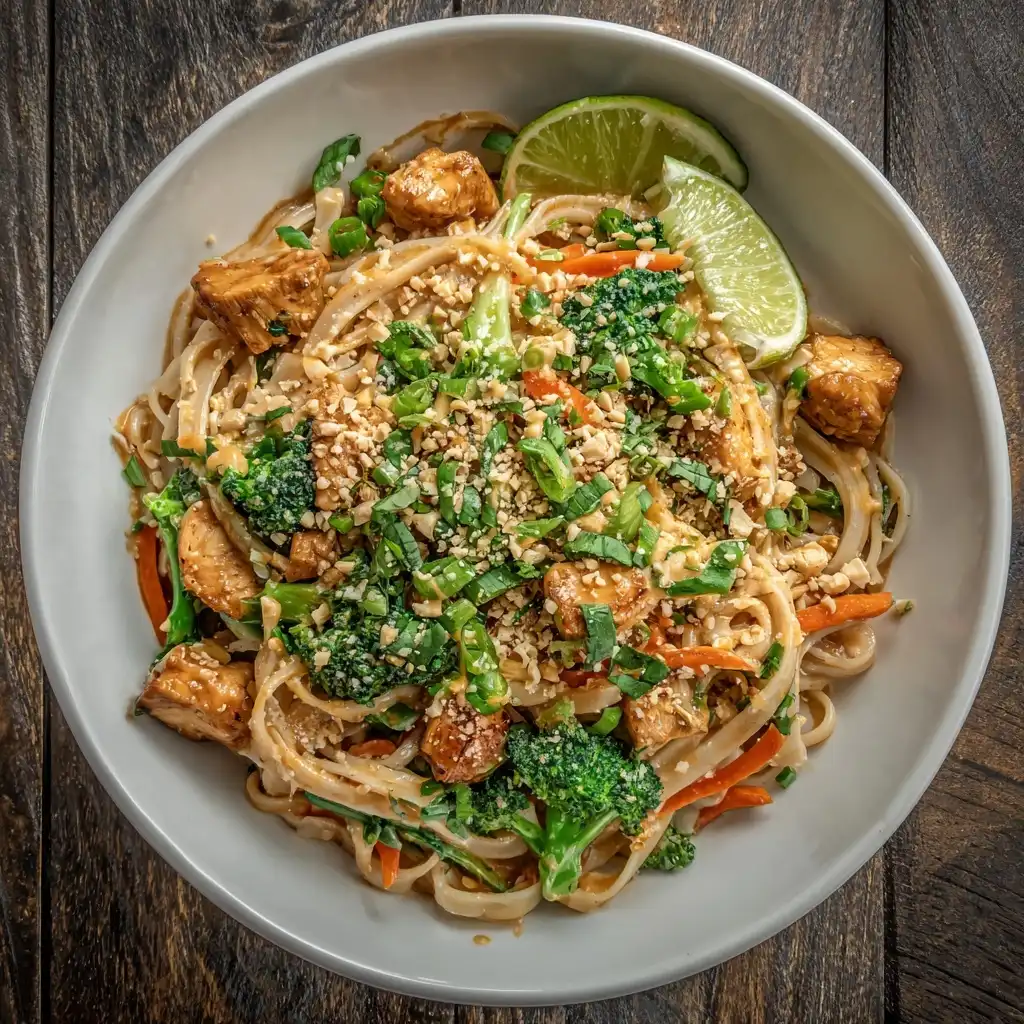
Thai Peanut Chicken Noodles are a vibrant, soul-satisfying fusion dish that masterfully bridges the bold flavors of Southeast Asian street food with the comforting familiarity of Western noodle bowls. This beloved recipe delivers an irresistible harmony of creamy, tangy, spicy, sweet, and savory notes—all wrapped around tender strips of marinated chicken and springy rice noodles or wheat-based alternatives. Whether served chilled as a refreshing summer salad or gently warmed for cozy comfort, Thai Peanut Chicken Noodles have earned global acclaim for their dynamic flavor profile, textural contrast (crunchy peanuts, silky sauce, chewy noodles, and crisp vegetables), and remarkable versatility. It’s a dish equally at home in a bustling food truck window, a packed school lunchbox, a gourmet dinner party spread, or a weeknight meal prepped in under 30 minutes—making it not just delicious, but deeply democratic in its appeal.
The History
While there is no single documented “origin moment” for Thai Peanut Chicken Noodles, its roots lie in a rich tapestry of culinary cross-pollination spanning centuries. Peanut sauce—known as satay sauce or bumbu kacang—originated in Indonesia and Malaysia, where it was traditionally paired with grilled skewered meats like chicken satay. As trade routes expanded across maritime Southeast Asia, peanut-based condiments traveled north into Thailand, where they were reimagined with local ingredients: fiery bird’s eye chilies (prik kee noo), aromatic lemongrass, fragrant kaffir lime leaves, and palm sugar. In the mid-to-late 20th century, Thai cuisine gained international traction—first through diplomatic outreach and later via waves of Thai immigration to North America, Australia, and Europe. American chefs and home cooks, captivated by the depth of Thai flavors but seeking approachability and speed, began adapting traditional elements into fusion formats. The “noodle bowl” format—popularized by Vietnamese pho, Japanese ramen, and Chinese-American chop suey—provided the perfect vessel. By the 1990s and early 2000s, food magazines, cooking shows, and early food blogs featured versions of peanut-dressed chicken noodle salads, often labeled “Thai-inspired” to honor the flavor lineage while acknowledging creative liberties. Today, Thai Peanut Chicken Noodles stand as a quintessential example of globalized comfort food—authentic in spirit, adaptable in execution, and continually evolving with each cook’s pantry and palate.
Ingredients Breakdown
Understanding each component deepens both flavor control and culinary confidence. Below is a granular analysis of core and optional ingredients—not just *what* goes in, but *why* and *how* it functions:
- Chicken Breast or Thigh: Boneless, skinless chicken breast offers lean protein and clean texture, while thigh meat provides superior moisture, richness, and forgiveness during cooking (less prone to drying out). Thinly sliced or julienned ensures quick, even cooking and optimal sauce adhesion.
- Rice Noodles (Pad Thai–style or Vermicelli): Made from rice flour and water, these gluten-free noodles absorb sauce beautifully without turning gummy. Wide rice noodles (sen yai) deliver hearty chew; thin vermicelli (sen mee) offer delicate lightness. Soaking time is critical—under-soaked noodles remain stiff and chalky; over-soaked ones turn mushy and clump.
- Peanut Butter: Natural, unsweetened, stirred-style peanut butter (with just peanuts + salt) is ideal—no added sugars, hydrogenated oils, or stabilizers that mute flavor and cause separation. Creamy yields silkier sauce; crunchy adds subtle texture. Avoid “no-stir” varieties with palm oil—they resist emulsifying and create greasy, broken sauces.
- Fish Sauce (Nam Pla): The umami backbone of Thai cooking. Fermented anchovy liquid delivers deep, salty-savory complexity that no soy sauce or salt can fully replicate. Look for premium brands like Red Boat or Squid for cleaner, less fishy aroma and balanced funk.
- Lime Juice: Freshly squeezed is non-negotiable. Bottled lime juice lacks volatile citrus oils and develops off-flavors; its acidity is flatter and less bright. Lime balances sweetness and cuts through fat—adding it at the end preserves its vibrant top note.
- Coconut Aminos (Optional Substitute for Soy Sauce): A naturally fermented, soy-free, gluten-free alternative made from coconut sap. It’s slightly sweeter and milder than soy sauce but retains rich umami—ideal for allergen-conscious or paleo preparations.
- Fresh Aromatics: Minced garlic and fresh ginger provide pungent warmth; finely grated lemongrass (tender inner stalk only) imparts floral-citrus perfume; shredded carrots and red cabbage add sweetness, crunch, and color contrast; scallions contribute mild onion sharpness and visual freshness.
- Toasted Peanuts: Dry-toasting raw peanuts in a skillet deepens nuttiness and eliminates raw bitterness. Roasted, salted peanuts work in a pinch—but avoid honey-roasted or candied varieties, which clash with the sauce’s balance.
- Chili Options: Sriracha offers accessible heat and garlicky sweetness; sambal oelek delivers pure chili fruitiness and coarse texture; Thai bird’s eye chilies (fresh or fermented) bring authentic, searing heat. Adjust quantity based on Scoville tolerance—not just preference.
- Garnishes: Fresh cilantro leaves lend herbal brightness; crushed roasted peanuts add crunch and aroma; lime wedges allow diners to adjust acidity; pickled red onions introduce tangy-sweet acidity and vivid magenta hue; microgreens or bean sprouts enhance freshness and textural lift.
Step-by-Step Recipe
- Prep the Noodles: Place dried rice noodles in a large heatproof bowl. Cover with room-temperature filtered water by at least 1 inch. Soak for 15–25 minutes (time varies by thickness—check package instructions). Noodles are ready when pliable but still slightly firm to the touch (they’ll soften further when tossed). Drain thoroughly in a fine-mesh colander, rinse under cold water to halt cooking and remove excess starch, then shake vigorously to eliminate water. Toss lightly with 1 tsp neutral oil (e.g., grapeseed or avocado) to prevent sticking. Set aside.
- Marinate the Chicken: In a medium bowl, combine 1 tbsp soy sauce (or coconut aminos), 1 tsp lime juice, 1 tsp grated ginger, 1 minced garlic clove, and ½ tsp sesame oil. Add 1 lb thinly sliced chicken breast or thigh. Gently coat, cover, and refrigerate for 15–30 minutes (no longer—acid begins to “cook” the surface).
- Toast the Peanuts: Heat a dry skillet over medium-low heat. Add ⅓ cup raw peanuts. Stir constantly for 4–6 minutes until fragrant, golden, and slightly darkened. Transfer immediately to a plate to cool. Once cool, roughly chop or leave whole for garnish.
- Make the Peanut Sauce: In a blender or food processor, combine ½ cup natural peanut butter, ¼ cup warm water (for smooth consistency), 3 tbsp lime juice, 3 tbsp fish sauce, 3 tbsp brown sugar (or palm sugar for authenticity), 1–2 tbsp sriracha (to taste), 1 tbsp grated ginger, 1 minced garlic clove, and 1 tsp rice vinegar. Blend on high for 60–90 seconds until velvety smooth and fully emulsified. If too thick, add warm water 1 tsp at a time. Taste and adjust: more lime for brightness, fish sauce for savoriness, sugar for balance, chili for heat. Sauce should coat the back of a spoon.
- Cook the Chicken: Heat 1 tbsp neutral oil in a large nonstick or well-seasoned wok over medium-high heat. Add marinated chicken in a single layer. Cook undisturbed for 2 minutes to develop fond, then stir-fry 3–4 minutes until opaque and cooked through. Avoid overcrowding—cook in batches if needed. Transfer to a clean plate; let rest 2 minutes to retain juices.
- Assemble & Toss: In a very large mixing bowl, combine drained noodles, cooked chicken, ½ cup shredded carrots, ½ cup thinly sliced red cabbage, ¼ cup sliced scallions, and 2 tbsp chopped fresh cilantro. Pour over ¾–1 cup peanut sauce (start with less—you can always add more). Using two large spoons or tongs, gently fold and toss from the bottom up for 90 seconds—this evenly coats without breaking noodles. Let sit 3 minutes to allow noodles to absorb sauce.
- Garnish & Serve: Divide among serving bowls. Top generously with toasted peanuts, extra cilantro, lime wedges, and optional pickled red onions or bean sprouts. Serve immediately at room temperature—or chill for 30 minutes for a crisper, salad-like experience.
Tips
- Noodle Mastery: Never boil rice noodles unless specified—soaking preserves integrity. Test doneness by biting: it should yield with slight resistance (“al dente”), not be mushy. If noodles clump after draining, rinse again with cold water and toss with a drop of oil.
- Sauce Emulsion Secret: Warm liquid (not hot) helps peanut butter dissolve smoothly. Blending longer—not faster—is key to preventing graininess. If sauce separates after sitting, whisk in 1 tsp warm water and blend 15 seconds.
- Chicken Perfection: Pat chicken *very* dry before marinating—moisture prevents browning. For ultra-tender results, velvet the chicken: mix 1 tsp cornstarch + 1 tsp egg white + 1 tsp rice wine into marinade before adding chicken.
- Heat Control: Add chili gradually—remember, heat intensifies over time. Reserve half your chili for finishing so guests can customize spice level. Toasting dried chilies before grinding enhances smokiness.
- Make-Ahead Magic: Sauce keeps refrigerated in an airtight jar for up to 10 days. Cooked chicken stays fresh 3–4 days. Soak noodles day-of—never prep them ahead, as they harden or become gummy when refrigerated wet.
- Bowl Building Wisdom: Layer sturdy veggies (cabbage, carrots) first, then noodles, then chicken, then sauce—this prevents sogginess. Toss just before serving to maintain crunch.
- Texture Triad: Always include three contrasting textures: soft (noodles/chicken), crisp (cabbage/carrots), and crunchy (peanuts/scallion greens). Missing one diminishes the full sensory experience.
- Acid Balance: Lime juice should be added in two stages—half in the sauce, half reserved for final squeeze. That bright finish lifts every bite and prevents flavor fatigue.
Variations and Customizations
This recipe thrives on personalization—here’s how to adapt it across dietary needs, seasonal availability, and global pantries:
- Vegetarian/Vegan: Swap chicken for extra-firm tofu (pressed, cubed, baked or pan-seared), tempeh, or seitan. Use maple syrup or coconut sugar instead of brown sugar, and ensure fish sauce is replaced with vegan fish sauce (like Ocean’s Halo) or double the soy/coconut aminos + ½ tsp nori powder for umami depth.
- Gluten-Free: Verify all sauces are GF-certified (many fish sauces contain wheat; some soy sauces use hydrolyzed wheat protein). Use 100% rice noodles and tamari instead of soy sauce. Skip oyster sauce if included in variations.
- Low-Carb/Keto: Replace noodles with spiralized zucchini (“zoodles”), shirataki noodles, or blanched green beans. Increase healthy fats: add avocado slices, sesame seeds, or cashew butter in sauce (reduce sugar entirely; use erythritol or monk fruit if needed).
- Protein Swaps: Shrimp (sauté 2–3 min until pink), ground turkey (brown with 5-spice), flank steak (slice against grain, marinate 1 hour), or shredded rotisserie chicken (skip cooking step—add warm).
- Regional Twists: Malaysian: Add 1 tsp curry powder + 1 tbsp tamarind paste to sauce. Indonesian: Stir in 1 tbsp kecap manis (sweet soy) + crushed candlenuts. Thai Isaan: Toss in fermented pork sausage (naem) and green papaya slaw. California: Add mango ribbons, macadamia nuts, and mint.
- Seasonal Swaps: Spring: swap cabbage for sugar snap peas and radishes. Summer: add grilled corn, cherry tomatoes, and basil. Fall: incorporate roasted sweet potato cubes and toasted pumpkin seeds. Winter: stir in sautéed bok choy and dried cranberries.
- Sauce Reinventions: Green Peanut: Blend in ½ cup fresh spinach, ¼ cup cilantro, and 1 tbsp jalapeño. Smoky: Add ½ tsp chipotle powder + 1 tsp smoked paprika. Herbal: Infuse sauce with 1 tbsp chopped lemongrass + 1 tsp kaffir lime leaf (blended fine).
- Meal Prep Friendly: Portion components separately: noodles (tossed with 1 tsp oil), sauce (in small jars), protein (cooled), and veggies (in airtight containers). Assemble within 2 hours of eating for best texture.
Health Considerations and Nutritional Value
A single serving (approx. 2 cups assembled) delivers a well-rounded macro- and micronutrient profile—especially when prepared mindfully:
- Protein Powerhouse: Chicken provides ~30g high-quality complete protein per serving—supporting muscle synthesis, satiety, and metabolic health. Pairing with peanuts adds plant-based protein and arginine, linked to vascular function.
- Smart Fats: Peanut butter contributes monounsaturated fats (heart-healthy oleic acid) and vitamin E (a potent antioxidant). Using minimal refined oil and emphasizing whole-food fats aligns with Mediterranean and anti-inflammatory dietary patterns.
- Fiber & Phytonutrients: Carrots supply beta-carotene (vitamin A precursor) and soluble fiber; red cabbage delivers anthocyanins (anti-aging antioxidants) and glucosinolates (linked to detox support); scallions offer quercetin and allicin (immune-modulating compounds).
- Sodium Awareness: Fish sauce and soy sauce are sodium-dense—yet their umami richness allows you to use *less* salt overall. Opt for low-sodium fish sauce and reduce added salt elsewhere. One serving contains ~650–850mg sodium—well within daily limits (<2,300mg) for most adults.
- Sugar Transparency: Brown sugar adds ~12g per serving—but it’s used purposefully to balance acidity and enhance mouthfeel. Substituting with coconut sugar lowers glycemic impact; omitting entirely risks a harsh, unbalanced sauce. No added sugars are hidden—every gram is intentional and visible.
- Digestive Support: Ginger aids gastric motility and reduces nausea; lime juice stimulates digestive enzymes; fermented fish sauce contains beneficial bacteria (though heat during cooking reduces live cultures).
- Allergen Notes: Contains peanuts (major allergen)—always label clearly. For tree-nut allergies, peanuts are legumes (not nuts), but cross-reactivity occurs in ~5–10% of cases. Offer seed-based alternatives (sunflower or pumpkin seed butter) for true nut-free versions.
- Balanced Glycemic Load: Rice noodles have moderate GI (~65), but pairing with protein, fat, and fiber significantly slows glucose absorption—making this meal diabetes-friendly when portion-controlled and paired with non-starchy veggies.
Ingredients
- 12 oz dried rice noodles (wide or thin, depending on preference)
- 1 lb boneless, skinless chicken breast or thighs, thinly sliced
- ⅓ cup raw unsalted peanuts
- ½ cup natural creamy peanut butter (no added sugar or oils)
- ¼ cup warm water (plus more as needed)
- 3 tbsp fresh lime juice (about 2 large limes)
- 3 tbsp fish sauce (premium brand preferred)
- 3 tbsp brown sugar or palm sugar
- 1–2 tbsp sriracha or sambal oelek (adjust to heat preference)
- 1 tbsp grated fresh ginger
- 2 garlic cloves, minced
- 1 tbsp rice vinegar
- 1 tbsp neutral oil (grapeseed, avocado, or refined coconut)
- 1 tbsp soy sauce or coconut aminos
- ½ tsp toasted sesame oil
- ½ cup shredded carrots
- ½ cup thinly sliced red cabbage
- ¼ cup sliced scallions (green and white parts)
- 2 tbsp fresh cilantro leaves, roughly chopped
- Lime wedges, extra cilantro, and additional crushed peanuts for serving
- (Optional) Pickled red onions, bean sprouts, or roasted cashews
Directions
- Soak rice noodles in room-temperature water for 15–25 minutes until pliable but firm. Drain, rinse under cold water, shake dry, and toss with 1 tsp neutral oil. Set aside.
- In a bowl, combine soy sauce (or coconut aminos), 1 tsp lime juice, 1 tsp grated ginger, 1 minced garlic clove, and ½ tsp sesame oil. Add chicken and marinate 15–30 minutes.
- Toast peanuts in a dry skillet over medium-low heat for 4–6 minutes until golden and fragrant. Cool, then chop.
- In a blender, combine peanut butter, warm water, remaining lime juice, fish sauce, brown sugar, sriracha, grated ginger, minced garlic, and rice vinegar. Blend until completely smooth (60–90 sec), adding warm water 1 tsp at a time if too thick.
- Heat 1 tbsp oil in a wok or large skillet over medium-high. Cook chicken in a single layer until opaque and cooked through (3–4 min). Transfer to a plate.
- In a large bowl, combine noodles, chicken, carrots, cabbage, scallions, and cilantro. Pour over ¾–1 cup peanut sauce. Gently toss for 90 seconds until evenly coated. Let rest 3 minutes.
- Serve immediately at room temperature, garnished with toasted peanuts, cilantro, lime wedges, and any optional toppings.
FAQ
- Can I use regular peanut butter?
- Yes—but only if it’s natural (ingredients: peanuts + salt). Conventional “no-stir” brands contain added sugars, hydrogenated oils, and emulsifiers that prevent proper emulsification and impart artificial sweetness. They often separate and taste cloying.
- Why does my sauce break or look oily?
- Common causes: using cold water (prevents blending), overheating peanut butter, or blending too briefly. Fix it by slowly whisking in 1 tsp warm water while blending another 15–20 seconds. Ensure all liquids are room-temp or slightly warm.
- Can I make this ahead for meal prep?
- Absolutely—but keep components separate. Store sauce (up to 10 days), cooked chicken (3–4 days), and prepped veggies (3 days) in airtight containers. Soak noodles only day-of. Assemble within 2 hours of eating to preserve crunch and prevent sogginess.
- What if I don’t have fish sauce?
- Fish sauce is irreplaceable for authentic depth—but in a pinch, substitute 2 tbsp soy sauce + 1 tsp Worcestershire sauce + ½ tsp anchovy paste. For vegan version, use certified vegan fish sauce or 1 tbsp soy sauce + ½ tsp seaweed flakes + 1 tsp lime zest.
- Are rice noodles gluten-free?
- Yes—100% rice noodles are naturally gluten-free. However, always verify packaging for “gluten-free” certification, as some facilities process wheat alongside rice products, risking cross-contamination.
- How do I prevent noodles from sticking together?
- Rinse thoroughly after soaking, shake *very* dry, and toss with a light coating of neutral oil before assembling. Never let soaked noodles sit in water or piled up without tossing.
- Can I freeze this dish?
- Not recommended. Noodles become rubbery or mushy upon thawing; sauce may separate; fresh herbs and vegetables lose texture and vibrancy. Freeze sauce alone (up to 3 months) and prepare fresh noodles/protein when ready to serve.
- Is this dish spicy?
- Heat is fully customizable. The base recipe is mildly spicy (1–2/10). To reduce: omit chili, use mild paprika, or add 1 tsp honey to mellow. To increase: add fresh Thai chilies, chili crisp, or a dash of cayenne.
- What’s the best way to reheat leftovers?
- Do not microwave—this steams noodles and makes them gummy. Instead, gently warm chicken and sauce in a skillet over low heat, then toss with room-temp noodles and fresh veggies. Or enjoy cold—it’s delicious at any temperature.
- Can I use other noodles?
- Yes! Soba (buckwheat), udon, or even whole-wheat spaghetti work beautifully. Adjust cooking time per package directions—and rinse wheat-based noodles under cold water to remove starch and stop cooking.
Summary
Thai Peanut Chicken Noodles are a brilliantly balanced, globally inspired dish that celebrates the layered umami of fish sauce, the creamy richness of natural peanut butter, the bright acidity of fresh lime, and the aromatic warmth of ginger and garlic—all harmonizing over tender chicken and springy rice noodles. With endless customization options, make-ahead flexibility, and impressive nutritional merits, it’s a weeknight staple, meal-prep hero, and crowd-pleasing centerpiece that never fails to deliver bold flavor, satisfying texture, and joyful nourishment.