Introduction
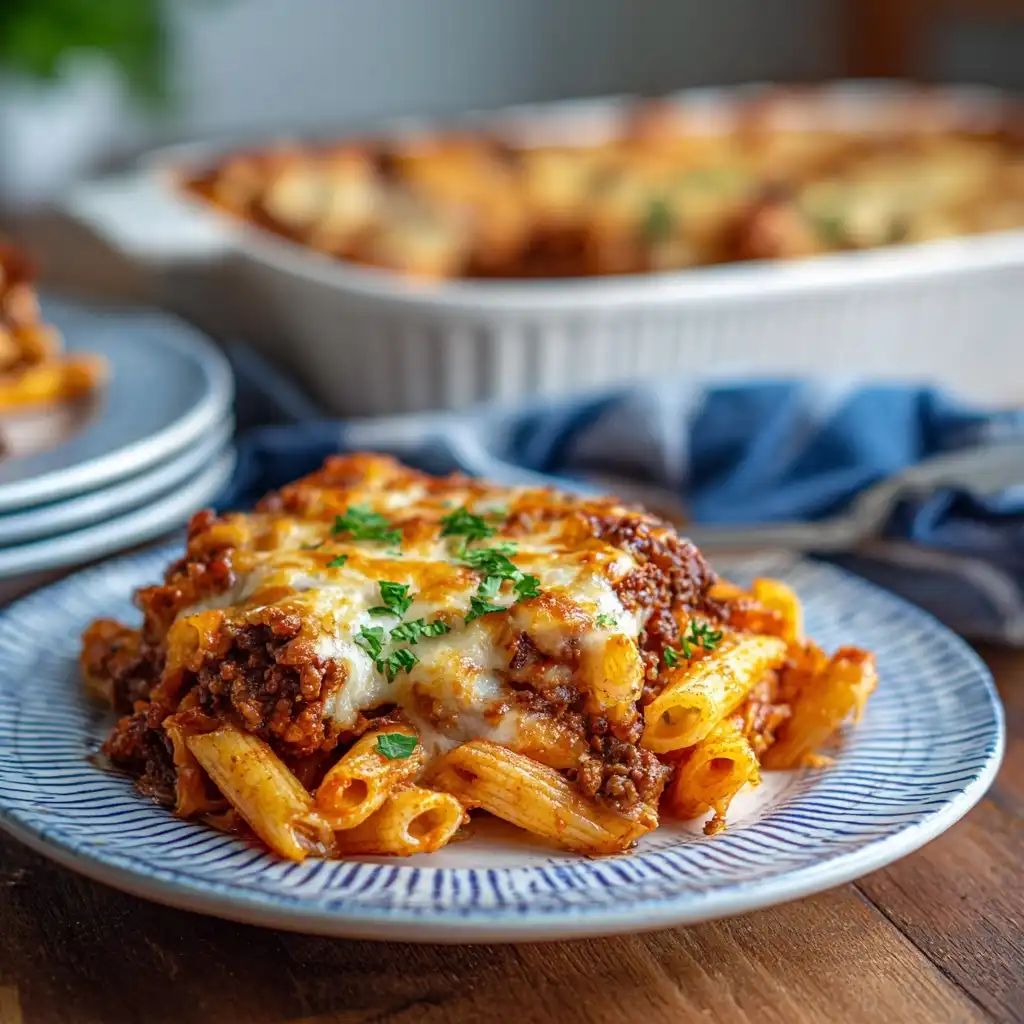
Baked Ziti with Ground Beef is a beloved American-Italian comfort classic—rich, hearty, and deeply satisfying. Often served at family gatherings, potlucks, holiday dinners, and weeknight meals alike, this casserole seamlessly blends the rustic charm of Italian pasta traditions with the practicality and flavor-forward approach of American home cooking. Unlike its cousin lasagna—which features layered sheets of pasta—baked ziti uses tube-shaped ziti pasta, which captures sauce, cheese, and meat in every bite. Its appeal lies not only in its indulgent creaminess and savory depth but also in its remarkable versatility: it’s easily scaled up for crowds or adapted to suit dietary preferences, all while maintaining that unmistakable “oven-baked” aroma and golden, bubbly finish that signals pure culinary comfort.
The History
While baked pasta dishes trace their origins back centuries to Italy—where recipes like pasta al forno (oven-baked pasta) were regional staples dating to the Middle Ages—the version known today as “Baked Ziti” is a quintessential Italian-American creation. Immigrant families in cities like New York, Philadelphia, and Boston adapted traditional Southern Italian techniques using accessible, affordable ingredients available in early 20th-century America. Ziti—a smooth, extruded tubular pasta traditionally from Campania—was substituted for more labor-intensive fresh pasta or harder-to-find regional shapes. Ground beef, though not common in historic Italian preparations (which favored pork, sausage, or even no meat at all), became a staple protein in American kitchens due to its affordability, ease of preparation, and crowd-pleasing flavor. Over time, ricotta cheese—often used in Italian baked pastas like timballo or manicotti—was incorporated into American versions for added creaminess and richness, further distinguishing the dish from its Old World ancestors. By the mid-1900s, baked ziti had secured its place in American cookbooks, church supper menus, and neighborhood delis—and today, it remains a cornerstone of Italian-American culinary identity, symbolizing heritage, hospitality, and home.
Ingredients Breakdown
Understanding each ingredient’s role helps elevate your baked ziti from good to extraordinary:
- Ziti Pasta: Traditionally, authentic ziti is a long, thick, smooth tube—but most U.S. supermarkets carry “ziti” as a shorter, slightly porous cut (sometimes labeled “cut ziti”). Its hollow shape acts like a sauce vessel, trapping meat, herbs, and cheese inside. For best results, use dried semolina wheat pasta—not fresh or gluten-free alternatives unless specifically adapted—because it holds up to baking without turning mushy.
- Ground Beef: An 80/20 lean-to-fat ratio delivers optimal flavor and moisture. The fat renders during browning, enriching the sauce and preventing dryness. For deeper umami, consider blending in 25% ground pork or veal—or using a mix of beef and Italian sausage for complexity.
- Onion & Garlic: The aromatic foundation. Yellow onions provide sweetness when sautéed; garlic adds pungent depth. Always cook them until softened and fragrant—not browned or burnt—to build a balanced base.
- Tomato Sauce & Crushed Tomatoes: A dual-sauce approach yields ideal texture and flavor. Canned crushed tomatoes (preferably San Marzano–style) offer body and bright acidity, while a high-quality tomato sauce (or passata) contributes smoothness and subtle sweetness. Avoid overly seasoned “spaghetti sauces”—they often contain excess sugar, herbs, or preservatives that compete with your custom seasonings.
- Ricotta Cheese: Whole-milk ricotta is essential—it’s creamy, mild, and binds the filling without overwhelming. Low-fat ricotta tends to weep and curdle when baked. For silkier texture, drain excess whey by placing ricotta in a fine-mesh strainer over a bowl for 15–30 minutes before mixing.
- Mozzarella Cheese: Use freshly grated low-moisture mozzarella (not pre-shredded). Pre-shredded cheese contains anti-caking agents (like cellulose) that inhibit melting and create greasy pools instead of gooey stretch. Freshly grated melts evenly and browns beautifully.
- Parmigiano-Reggiano or Romano: Adds salty, nutty, umami complexity. Authentic Parmigiano-Reggiano is aged longer and has deeper flavor than generic “Parmesan.” Grate it yourself for maximum aroma and meltability.
- Egg: Acts as a binder for the ricotta mixture—preventing separation during baking and lending structure to the cheese layer. Optional but highly recommended for consistent texture.
- Herbs & Seasonings: Dried oregano and basil evoke classic Italian-American profiles; fresh basil stirred in at the end adds brightness. Red pepper flakes lend gentle heat, while black pepper and sea salt are crucial for balancing acidity and richness. A splash of red wine (added to the meat while cooking) deepens savoriness, and a teaspoon of sugar can temper excessive tomato acidity—if needed.
Step-by-Step Recipe
- Preheat & Prep: Position oven rack in the center and preheat to 375°F (190°C). Lightly grease a 9×13-inch (3-quart) baking dish with olive oil or nonstick spray. Set aside.
- Cook the Pasta: Bring 4–6 quarts of well-salted water (2 Tbsp kosher salt per gallon) to a rolling boil. Add ziti and cook for 2 minutes *less* than package instructions for “al dente”—typically 8–9 minutes. Stir occasionally to prevent sticking. Drain thoroughly in a colander, rinse briefly with warm (not cold) water to remove excess starch, then return to the pot. Toss with 1–2 Tbsp olive oil to prevent clumping while cooling.
- Brown the Meat: In a large Dutch oven or heavy-bottomed skillet over medium-high heat, add 1 Tbsp olive oil. Add diced yellow onion and sauté 4–5 minutes until translucent. Add minced garlic and cook 1 minute until fragrant. Push aromatics to one side, add ground beef, and break apart with a wooden spoon. Cook undisturbed 2–3 minutes to develop fond, then stir and continue browning until no pink remains (8–10 minutes total). Drain excess fat if desired—but retain ~1 Tbsp for flavor.
- Build the Sauce: Stir in ½ tsp red pepper flakes (optional), 1 tsp dried oregano, and 1 tsp dried basil. Pour in ½ cup dry red wine (e.g., Chianti or Sangiovese) and simmer 2 minutes to burn off alcohol. Add one 28-oz can crushed tomatoes and one 15-oz can tomato sauce. Stir in 1 tsp sugar (only if tomatoes taste sharply acidic), 1½ tsp kosher salt, and ½ tsp freshly ground black pepper. Reduce heat to low, cover partially, and simmer gently for 20–25 minutes, stirring occasionally. Taste and adjust seasoning.
- Prepare the Cheese Mixture: In a large bowl, combine 2 cups whole-milk ricotta, 1 large egg, 1 cup freshly grated mozzarella, ½ cup freshly grated Parmigiano-Reggiano, ¼ cup finely chopped fresh parsley, ¼ tsp freshly grated nutmeg (a secret umami booster), ½ tsp salt, and ¼ tsp black pepper. Mix gently with a spatula until just combined—do not overmix or beat, or the ricotta will become grainy.
- Combine Pasta & Sauce: In the same large pot used for pasta, combine the warm, oiled ziti and the simmered meat sauce. Fold gently with a silicone spatula until every piece is evenly coated. Let cool 5 minutes—this prevents the ricotta from scrambling when mixed.
- Layer the Casserole: Spread half the sauced ziti into the prepared baking dish. Dollop and spread the entire ricotta mixture evenly over the top. Carefully cover with remaining ziti mixture. Smooth surface. Sprinkle generously with 1½ cups freshly grated mozzarella and ⅓ cup grated Parmigiano-Reggiano.
- Bake: Cover tightly with aluminum foil (tent it slightly to prevent cheese from sticking). Bake for 25 minutes. Remove foil and bake uncovered for 15–20 minutes more, until top is deeply golden, edges are bubbling vigorously, and internal temperature reaches 165°F (74°C) when checked with an instant-read thermometer inserted into the center.
- Rest & Serve: Let baked ziti rest for *at least 20 minutes* before cutting—this allows starches to set, cheeses to re-emulsify, and steam to redistribute. Cutting too soon causes liquid pooling and structural collapse. Garnish with extra fresh basil, a drizzle of high-quality olive oil, and additional grated cheese.
Tips
- Undercook the Pasta Intentionally: Ziti continues to absorb liquid and soften during baking. If cooked to full al dente, it will turn gummy or disintegrate. Err on the side of slightly firm.
- Resist Rinsing with Cold Water: While rinsing removes starch, cold water shocks hot pasta and can make it slippery—hindering sauce adhesion. Warm water preserves heat and texture.
- Season in Layers: Salt the pasta water heavily (it’s the only chance to season the pasta itself). Season the meat while browning. Adjust sauce seasoning after simmering—and again before assembling. Final cheese mixture should be subtly seasoned, not oversalted.
- Use Room-Temperature Ricotta: Cold ricotta doesn’t blend smoothly and may cause lumps or uneven distribution. Let it sit out 15–20 minutes before mixing.
- Don’t Skip the Rest Time: This isn’t optional—it’s critical. Resting transforms texture: the dish firms up, slices cleanly, and flavors meld. Rushing leads to soupy, sloppy servings.
- Bake in Glass or Ceramic: These materials distribute heat more evenly than metal pans, reducing hot spots and promoting uniform browning. If using metal, choose heavy-gauge stainless or enameled steel—not thin aluminum.
- Freeze Smart: Assemble unbaked (without final cheese topping), cover tightly with foil + plastic wrap, and freeze up to 3 months. Thaw overnight in fridge before baking—add 10–15 minutes covered time, then uncover and bake as directed.
- Reheat Gently: Individual portions reheat best in a covered microwave dish with a splash of water or marinara. For full pan, cover with foil and warm at 325°F for 25–35 minutes until heated through.
Variations and Customizations
Baked ziti is wonderfully adaptable—here are time-tested, chef-approved variations for every palate and pantry:
- Vegetarian Ziti: Omit beef and replace with 1½ cups sautéed cremini mushrooms, 1 cup roasted eggplant cubes, and ½ cup cooked lentils. Boost umami with 2 Tbsp tomato paste and 1 tsp soy sauce or tamari in the sauce.
- Spicy Arrabbiata Style: Double the red pepper flakes (1 tsp), add 1 minced chipotle in adobo, and finish with a swirl of Calabrian chili paste before baking.
- White Ziti (Ziti al Forno Bianco): Skip tomatoes entirely. Use a rich béchamel base made with whole milk, nutmeg, and white pepper; fold in sautéed spinach, roasted garlic, and fontina cheese alongside the ricotta.
- Meatball Ziti: Substitute 1½ lbs cooked Italian-style meatballs (homemade or high-quality store-bought) for ground beef. Nestle whole or halved meatballs between pasta layers.
- Gluten-Free Version: Use certified GF ziti (like Barilla GF or Jovial) and ensure all sauces, cheeses, and seasonings are GF-certified. Add 1 tsp xanthan gum to ricotta mixture to improve binding.
- Keto/Low-Carb Adaptation: Replace ziti with spiralized zucchini (“zoodles”) or baked cauliflower florets. Sauté zoodles first to remove moisture; roast cauliflower at 425°F until tender-crisp before assembling. Reduce sugar and check labels on tomato products for hidden carbs.
- Greek-Inspired Ziti: Swap ricotta for a mixture of feta, goat cheese, and Greek yogurt. Use ground lamb, add lemon zest and dried mint to the sauce, and top with crumbled feta and kalamata olives.
- Breakfast Ziti: A brunch twist! Use cooked breakfast sausage, add scrambled eggs to the ricotta mixture, fold in sautéed peppers/onions, and top with sharp cheddar and green onions.
- Make-Ahead Mini Zitis: Portion into greased muffin tins or ramekins. Bake covered 25 min, uncovered 10–12 min. Perfect for portion control or party appetizers.
Health Considerations and Nutritional Value
A standard serving (1½ cups) of traditional baked ziti with ground beef contains approximately:
- Calories: 480–560 kcal
- Protein: 28–34 g (excellent source from beef, ricotta, and mozzarella)
- Total Fat: 20–26 g (includes 10–13 g saturated fat—primarily from cheese and beef fat)
- Carbohydrates: 42–48 g (mostly complex carbs from pasta; fiber ~2–3 g)
- Sodium: 720–950 mg (highly variable based on cheese saltiness, canned tomatoes, and added salt—can exceed 40% DV)
- Vitamins & Minerals: Rich in calcium (from dairy), iron (from beef), vitamin B12, zinc, and lycopene (antioxidant from cooked tomatoes).
Health-Conscious Swaps & Notes:
- Lower-Sodium Option: Use no-salt-added crushed tomatoes and tomato sauce, low-sodium ricotta/mozzarella, and reduce added salt by 50%. Flavor with extra herbs, garlic powder, onion powder, and lemon zest.
- Leaner Protein: Substitute 93/7 lean ground beef, ground turkey breast, or plant-based crumbles. Note: Very lean meats may yield drier results—compensate with extra olive oil or ¼ cup unsweetened almond milk in ricotta mixture.
- Fiber Boost: Add 1 cup finely chopped spinach or kale to sauce during last 5 minutes of simmering—or stir ½ cup cooked lentils into the ricotta mixture.
- Whole Grain Upgrade: Use 100% whole-wheat ziti. It adds ~4 g fiber/serving and a nuttier flavor—but requires slightly longer initial boil and benefits from extra sauce moisture.
- Dairy Sensitivity Options: Substitute lactose-free ricotta and mozzarella. For vegan versions, use cashew-based “ricotta” (soaked cashews + lemon juice + nutritional yeast + garlic), tofu “mozzarella,” and nutritional yeast “Parmesan.”
- Portion Awareness: Baked ziti is calorie-dense. Pair with a large green salad dressed in vinaigrette and steamed seasonal vegetables to balance the meal nutritionally.
- Food Safety Reminder: Never leave cooked ziti at room temperature >2 hours. Refrigerate within 1 hour of serving. Reheat to 165°F internally. Consume refrigerated leftovers within 4–5 days.
Ingredients
- 1 pound (450 g) dried ziti pasta
- 2 tablespoons extra-virgin olive oil, plus more for greasing
- 1 medium yellow onion, finely diced
- 4 cloves garlic, minced
- 1½ pounds (680 g) 80/20 ground beef
- ½ teaspoon red pepper flakes (optional)
- 1 teaspoon dried oregano
- 1 teaspoon dried basil
- ½ cup dry red wine (e.g., Chianti or Sangiovese)
- One 28-ounce (794 g) can crushed tomatoes (San Marzano–style preferred)
- One 15-ounce (425 g) can tomato sauce
- 1 teaspoon granulated sugar (optional, for acidity balance)
- 1½ teaspoons kosher salt, plus more for pasta water
- ½ teaspoon freshly ground black pepper
- 2 cups (480 g) whole-milk ricotta cheese, drained
- 1 large egg
- 1 cup (115 g) freshly grated low-moisture mozzarella
- ½ cup (50 g) freshly grated Parmigiano-Reggiano
- ¼ cup (10 g) finely chopped fresh flat-leaf parsley
- ¼ teaspoon freshly grated nutmeg
- 1½ cups (170 g) freshly grated low-moisture mozzarella (for topping)
- ⅓ cup (35 g) freshly grated Parmigiano-Reggiano (for topping)
- Fresh basil leaves, for garnish
- Extra-virgin olive oil, for drizzling
Directions
- Preheat oven to 375°F (190°C). Lightly grease a 9×13-inch (3-quart) baking dish with olive oil.
- Bring 4–6 quarts water to a rolling boil. Add 2 tablespoons kosher salt. Add ziti and cook for 2 minutes less than package’s al dente time (usually 8–9 minutes). Drain well in a colander; rinse briefly with warm water. Return to pot, toss with 1 tablespoon olive oil, and set aside.
- In a large Dutch oven or heavy skillet, heat 1 tablespoon olive oil over medium-high heat. Add onion; sauté 4–5 minutes until soft and translucent. Add garlic; cook 1 minute until fragrant. Push to side; add ground beef. Cook undisturbed 2–3 minutes, then crumble and brown fully (8–10 minutes). Drain excess fat, leaving ~1 tablespoon.
- Add red pepper flakes, oregano, and basil; stir 30 seconds. Pour in wine; simmer 2 minutes. Add crushed tomatoes, tomato sauce, sugar (if using), 1½ tsp salt, and ½ tsp pepper. Reduce heat to low, cover partially, and simmer 20–25 minutes, stirring occasionally.
- In a large bowl, whisk together ricotta, egg, 1 cup mozzarella, ½ cup Parmigiano-Reggiano, parsley, nutmeg, ½ tsp salt, and ¼ tsp pepper—just until blended.
- In the pasta pot, combine warm ziti and meat sauce. Fold gently until fully coated. Let cool 5 minutes.
- Spoon half the pasta mixture into prepared dish. Spread ricotta mixture evenly over top. Cover with remaining pasta. Smooth surface.
- Sprinkle with 1½ cups mozzarella and ⅓ cup Parmigiano-Reggiano.
- Cover tightly with foil (tent slightly). Bake 25 minutes. Remove foil; bake uncovered 15–20 minutes, until golden and bubbling at edges.
- Let rest 20 minutes. Garnish with fresh basil, a drizzle of olive oil, and extra cheese. Serve warm.
FAQ
- Can I use penne or rigatoni instead of ziti?
- Yes—penne and rigatoni work exceptionally well and are often used interchangeably. Rigatoni’s wider tubes hold even more sauce and meat, while penne’s angled cuts create great surface area for cheese adhesion. Just maintain the same undercooking rule (2 minutes less than al dente).
- Why does my baked ziti turn out dry?
- Dryness usually results from overcooked pasta, insufficient sauce (too little liquid relative to pasta volume), or baking too long uncovered. Ensure sauce fully coats pasta before baking, use enough cheese mixture (it adds moisture), and never skip the foil-covered phase. If making ahead, add ¼ cup extra marinara to the assembled dish before covering and refrigerating.
- Can I prepare baked ziti the day before?
- Absolutely—and it often tastes better! Assemble completely (including final cheese topping), cover tightly with plastic wrap + foil, and refrigerate up to 24 hours. Bake straight from the fridge: add 10 minutes covered time, then uncover and bake as directed. Let rest 20 minutes before serving.
- Is it okay to freeze baked ziti?
- Yes—both baked and unbaked versions freeze well for up to 3 months. For best texture, freeze *unbaked*: assemble without final cheese topping, wrap in double layers of plastic + foil. Thaw overnight in fridge, add cheese, then bake as directed (adding 10–15 minutes covered time). Baked ziti freezes well too—cool completely, slice, wrap portions individually, and reheat from frozen.
- What’s the difference between ricotta and cottage cheese in baked ziti?
- Ricotta has finer curds, milder flavor, and superior meltability. Cottage cheese is lumpier, tangier, and higher in sodium/water content—leading to potential separation or sogginess. If substituting, drain cottage cheese extremely well and blend until smooth—but ricotta is strongly preferred.
- Can I make baked ziti in a slow cooker?
- Yes—with caveats. Cook pasta separately (undercook by 3 minutes), combine with sauce and cheese mixture, and transfer to a slow cooker lined with parchment. Top with cheeses. Cook on LOW for 2–3 hours (uncovered for last 30 min to brown). Texture will be softer, and browning minimal—but it’s convenient for hands-off cooking.
- How do I fix watery baked ziti after baking?
- This typically happens if ricotta wasn’t drained, pasta was over-rinsed with cold water, or sauce was too thin. Next time, simmer sauce 5–10 minutes longer to reduce. For current batch: carefully spoon off excess liquid, then broil 2–3 minutes to re-crisp top (watch closely!). Serve immediately.
- What wine pairs well with baked ziti?
- A medium-bodied, high-acid red complements the tomato richness: Chianti Classico, Barbera d’Alba, or Montepulciano d’Abruzzo. For white lovers, try an off-dry Vermentino or barrel-aged Pinot Grigio. Non-alcoholic: sparkling water with lemon and fresh basil.
- Can I add vegetables without changing the flavor profile too much?
- Yes—finely diced carrots and celery (sautéed with onions) add sweetness and depth invisibly. Spinach, kale, or roasted red peppers blend seamlessly when puréed into the sauce or folded into ricotta. Avoid strongly flavored veggies like broccoli or Brussels sprouts unless you want a distinct twist.
- Why does my cheese topping not brown evenly?
- Ensure cheese is freshly grated (not pre-shredded), evenly distributed, and placed under the broiler only *after* full baking. If using convection, rotate pan halfway through uncovered bake. A light mist of olive oil over cheese before final bake encourages browning.
Summary
Baked Ziti with Ground Beef is a timeless Italian-American casserole that marries perfectly al dente ziti, savory herb-infused meat sauce, creamy ricotta-cheese filling, and a golden, stretchy mozzarella-Parmigiano crust—all elevated by thoughtful technique, layered seasoning, and patient resting.
Whether cherished as a nostalgic family tradition, adapted for modern dietary needs, or reinvented with global flavors, this dish endures because it delivers unmatched comfort, crowd-pleasing richness, and endless creative possibility—all from one humble, oven-baked pan.