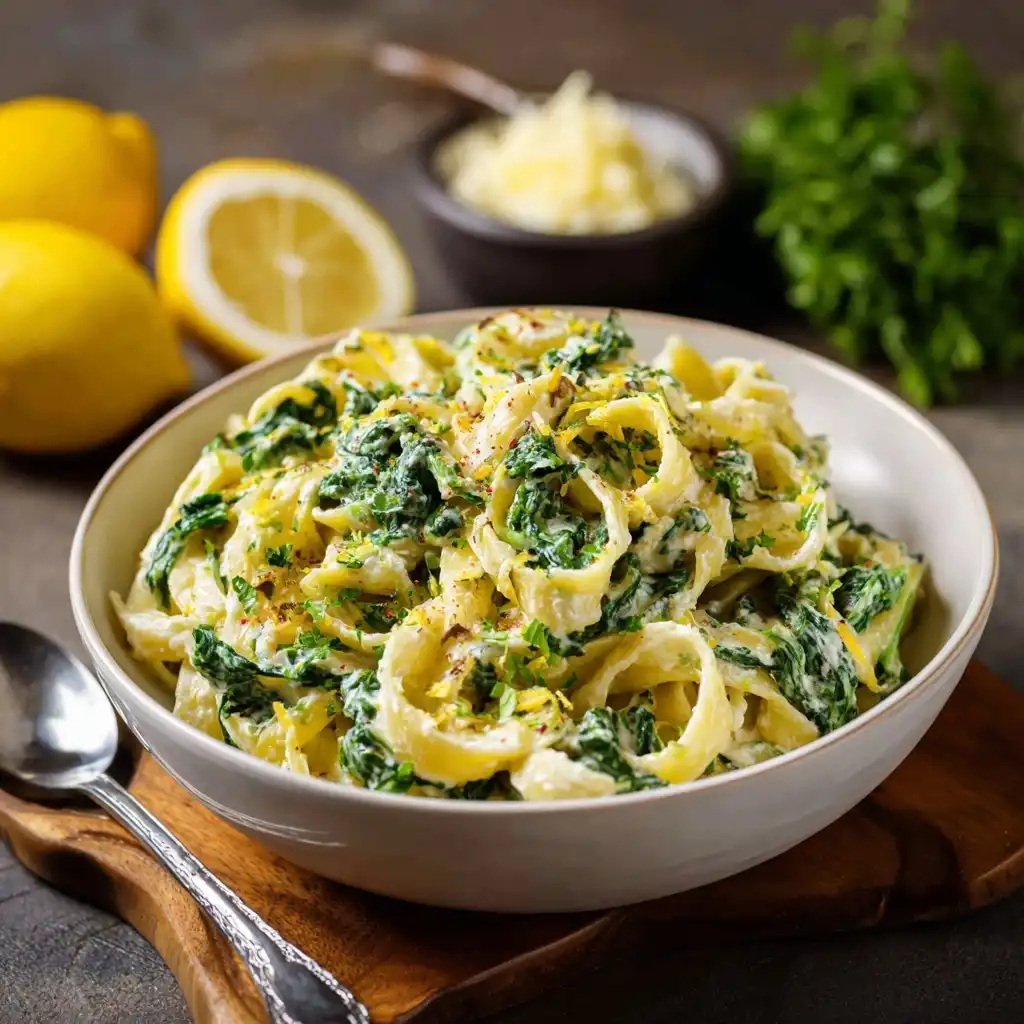
Introduction
Lemon Ricotta Spinach Pasta is a vibrant, creamy, and nutritionally balanced Italian-inspired dish that marries bright citrus notes with the luscious richness of fresh ricotta, the earthy depth of tender spinach, and the comforting simplicity of al dente pasta. Far from being just another weeknight dinner, this recipe embodies the elegance of minimal-ingredient cooking—where quality, balance, and technique transform humble pantry staples into something truly memorable. Whether served as a light lunch, a sophisticated vegetarian main, or even an elegant starter at a dinner party, its zesty aroma, velvety texture, and refreshing finish make it perennially beloved across seasons—and especially cherished during spring and summer when lemon zest and fresh herbs are at their peak.
The History
While there is no single documented “origin story” for Lemon Ricotta Spinach Pasta—as it’s a modern fusion rather than a centuries-old regional classic—it draws deeply from time-honored Italian culinary traditions. Ricotta cheese, dating back to ancient Rome and medieval Sicily, was originally a byproduct of whey leftover from cheesemaking, prized for its mild sweetness and delicate curd structure. Spinach entered Italian cuisine more broadly after the Arab agricultural influence spread through southern Italy and Sicily in the 9th–11th centuries, later gaining prominence in Renaissance-era recipes. The use of lemon in pasta preparations echoes the coastal cuisines of Campania and Liguria, where citrus—notably Sorrento lemons—is used not only for acidity but as a flavor amplifier and natural preservative. The contemporary rise of this specific combination can be traced to the late 20th- and early 21st-century farm-to-table movement, where chefs and home cooks alike began reimagining simple ingredients with seasonal integrity: ricotta from local dairies, baby spinach from nearby farms, and organic lemons expressing terroir. Its viral popularity on food blogs, Instagram, and TikTok in the 2010s cemented its status as a modern Italian-American staple—a dish that feels both nostalgic and refreshingly new.
Ingredients Breakdown
Every element in Lemon Ricotta Spinach Pasta plays a precise, interdependent role—no ingredient is merely filler or afterthought. Here’s why each matters:
- Pasta: A short, sturdy shape like fusilli, gemelli, orecchiette, or even bucatini (cut into 1-inch pieces) provides ideal surface area and nooks to cradle the creamy sauce. Semolina-based pastas (e.g., bronze-die extruded Italian varieties) offer superior sauce adhesion thanks to their slightly rough texture.
- Ricotta: Whole-milk, fresh, high-quality ricotta is non-negotiable. Avoid ultra-pasteurized or tub-style “spreadable” ricottas—they lack body and often contain stabilizers that inhibit proper emulsification. Look for ricotta sold in deli tubs or paper containers with visible, moist curds and a clean, milky-sweet fragrance.
- Fresh Spinach: Baby spinach is preferred over mature leaves for its tenderness, mild flavor, and rapid wilting properties. Its high water content actually helps loosen the sauce naturally—no extra broth needed. Frozen spinach (thawed and *thoroughly* squeezed) works in a pinch—but loses vibrancy and introduces subtle textural grit if not perfectly drained.
- Lemon: Both zest and juice are essential. Zest contributes volatile citrus oils—intense, floral, and aromatic—while juice delivers bright, palate-cleansing acidity. Organic lemons are recommended to avoid wax or pesticide residue when zesting.
- Garlic: Freshly minced (not pre-minced or jarred) garlic adds pungent warmth without bitterness. Sautéed gently—not browned—to preserve its sweetness and integrate seamlessly into the dairy base.
- Olive Oil: Extra-virgin olive oil, preferably a medium-fruity, low-bitterness variety (e.g., Tuscan or Greek), serves dual purposes: sautéing medium and finishing oil. Its polyphenols enhance ricotta’s richness and stabilize the emulsion.
- Grated Cheese: While ricotta provides creaminess, a hard, salty, umami-rich grating cheese like Pecorino Romano (traditional) or Parmigiano-Reggiano (milder, nuttier) adds depth, salt balance, and structural grip to the sauce. Avoid pre-grated versions—they contain anti-caking agents that hinder melting and cause graininess.
- Seasonings: Fine sea salt enhances all other flavors; freshly cracked black pepper adds gentle heat and aromatic complexity. Optional additions include red pepper flakes for subtle heat or a pinch of grated nutmeg to subtly deepen the ricotta’s sweetness.
Step-by-Step Recipe
- Prepare Ingredients Mise en Place: Grate Pecorino Romano (¾ cup), zest 1 large lemon (yielding ~1 tbsp finely grated zest), juice the same lemon (yielding ~3 tbsp juice), mince 2 garlic cloves, wash and spin-dry 5 oz (about 6 loosely packed cups) baby spinach, measure 1½ cups whole-milk ricotta, and bring a large pot of well-salted water (2 tbsp kosher salt per 5 quarts) to a rolling boil.
- Cook Pasta Al Dente: Add 12 oz pasta to boiling water. Stir immediately to prevent sticking. Cook 1–2 minutes *less* than package instructions—typically 8–9 minutes for dried pasta. Reserve 1¼ cups starchy pasta water before draining. Do *not* rinse pasta.
- Sauté Aromatics: While pasta cooks, heat 3 tbsp extra-virgin olive oil in a wide, heavy-bottomed skillet or Dutch oven over medium-low heat. Add minced garlic and cook gently for 60–90 seconds—just until fragrant and translucent (do not let it sizzle or brown). Reduce heat to low if needed.
- Warm Ricotta Base: Whisk ricotta in a medium bowl until smooth and slightly airy. Whisk in lemon zest, 2 tbsp lemon juice, ½ tsp fine sea salt, and a generous grind of black pepper. Set aside.
- Combine & Emulsify: Return skillet with garlic oil to low heat. Add drained, hot pasta directly to the pan. Toss gently for 30 seconds to coat. Remove from heat. Immediately add ricotta mixture and half the reserved pasta water (⅔ cup). Using tongs or a flexible spatula, vigorously toss and fold—lifting and turning—for 90 seconds. The heat from the pasta will warm the ricotta; the starch in the water begins binding it into a cohesive, glossy sauce. If too thick, add remaining pasta water 1 tbsp at a time, continuing to toss until silky and evenly coated.
- Incorporate Spinach: Gently fold in fresh spinach in two batches, allowing each addition to wilt slightly (about 20 seconds) before adding the next. The residual heat is sufficient—no additional cooking required. Overmixing or overheating will turn spinach dull and slimy.
- Finish & Serve: Off heat, fold in grated Pecorino Romano and remaining 1 tbsp lemon juice. Taste and adjust: more salt? More lemon? A drizzle of raw olive oil? Garnish generously with extra zest, a final crack of black pepper, and optional microgreens or lemon-thyme sprigs. Serve immediately in warmed bowls.
Tips
- Temperature Control Is Key: Ricotta breaks if overheated. Never return the finished sauce to high heat or boil after adding dairy. Keep everything off direct flame once ricotta enters the pan.
- Starch Water Is Your Secret Weapon: That reserved pasta water isn’t optional—it’s liquid gold. Its starch content acts as an emulsifier, binding fat (oil, ricotta) and water (lemon juice, spinach moisture) into a stable, luxurious sauce. Always reserve *before* draining, and always use warm water—not cold.
- Whisk Ricotta First: Breaking up cold ricotta with a whisk before adding ensures zero lumps and maximizes surface area for even incorporation.
- Undercook Pasta Intentionally: Since the pasta finishes cooking in the hot sauce, undercooking prevents mushiness. Trust the timing—al dente means “to the tooth,” with a slight, pleasant resistance at the core.
- Use Warm Bowls: Serving in pre-warmed ceramic or stoneware bowls helps maintain temperature and prevents rapid cooling of the delicate sauce.
- Don’t Skip the Zest: Lemon zest contains 90% of the fruit’s aromatic compounds. Skipping it sacrifices the dish’s signature brightness and complexity—even if you add extra juice.
- Resting Is Not Recommended: This dish is best served within 2–3 minutes of finishing. Ricotta-based sauces thicken quickly as they cool and may separate if held.
- Double Batch? Scale Carefully: When increasing volume, increase pasta water proportionally—but add it gradually. Larger batches retain heat longer and may require less water overall due to increased residual steam.
Variations and Customizations
This versatile canvas invites endless creativity—always respecting the foundational balance of acid, cream, green, and salt. Consider these thoughtfully tested adaptations:
- Protein-Powered: Add pan-seared lemon-marinated shrimp (tossed in 1 tsp zest + 1 tbsp juice before cooking), grilled chicken breast strips, or crispy pancetta lardons (rendered first, then set aside and folded in at the end).
- Vegetable-Forward: Fold in roasted cherry tomatoes (halved, tossed in olive oil, salt, and thyme, roasted at 400°F for 15–18 minutes), sautéed asparagus ribbons, or caramelized leeks for sweetness and complexity.
- Holiday Twist: Stir in toasted pine nuts and chopped fresh basil for a Genovese flair—or swap lemon for orange zest/juice and add crumbled feta for a Mediterranean variation.
- Herb Infusion: Steep 2–3 sprigs of fresh thyme or rosemary in warm olive oil for 5 minutes before straining and using as your sauté oil. Or stir in 2 tbsp chopped fresh dill or chives just before serving for a grassy, aromatic lift.
- Dairy Alternatives: For lactose sensitivity, substitute full-fat cottage cheese (blended until smooth) or a high-quality cashew ricotta (soaked raw cashews blended with lemon, nutritional yeast, and salt). Note: texture and tang will differ.
- Gluten-Free Adaptation: Use certified GF pasta (brown rice, lentil, or chickpea-based). Cook according to package directions—but reduce initial cook time by 1 minute, as GF pastas soften faster in residual heat.
- Vegan Version: Replace ricotta with blended silken tofu + lemon + white miso + nutritional yeast; use vegan Parmesan (e.g., almond-based); ensure pasta is egg-free. Finish with lemon oil instead of olive oil for intensified citrus aroma.
- Meal Prep Friendly: Prepare components separately: cook and chill pasta (tossed lightly in oil to prevent sticking), store ricotta mixture (covered, refrigerated), keep spinach dry, and zest/lemon juice pre-measured. Assemble and heat *only* the portion needed—ricotta sauces don’t reheat well.
Health Considerations and Nutritional Value
A single 1¾-cup serving (approx. 480 calories) delivers impressive macro- and micronutrient density when prepared with whole-food, minimally processed ingredients:
- Protein Powerhouse: Ricotta (14g/serving) and Pecorino (7g/serving) provide complete, high-biological-value protein—including all nine essential amino acids—supporting muscle maintenance, satiety, and metabolic health.
- Calcium & Vitamin K Synergy: Ricotta and Pecorino supply ~35% DV calcium; spinach contributes 400% DV vitamin K1—crucial for bone mineralization and cardiovascular health. This pairing significantly enhances calcium absorption and utilization.
- Antioxidant-Rich Citrus: Lemon zest contains limonene and flavonoids (hesperidin, naringenin) with demonstrated anti-inflammatory, neuroprotective, and cholesterol-modulating effects. Juice provides ~60mg vitamin C per serving—nearly 70% DV—boosting iron absorption from spinach (non-heme iron) and supporting immune resilience.
- Fiber & Phytonutrients: Whole-wheat pasta adds 6g dietary fiber (25% DV), promoting gut microbiome diversity and glycemic control. Spinach contributes lutein, beta-carotene, folate, and magnesium—linked to reduced oxidative stress and improved endothelial function.
- Heart-Healthy Fats: Extra-virgin olive oil contributes monounsaturated fats (oleic acid) and polyphenols (oleocanthal) shown to reduce LDL oxidation and arterial inflammation.
- Considerations: Sodium content (~520mg/serving) is moderate but controllable—reduce added salt by ¼ tsp and rely on Pecorino’s natural saltiness. For lower-calorie versions, decrease ricotta to 1 cup and increase spinach to 7 oz; the volume remains satisfying while cutting ~120 calories and 10g fat. Those managing histamine intolerance should note ricotta is low-histamine, but aged cheeses like Pecorino are higher—opt for fresher, milder alternatives like young Asiago or mascarpone if needed.
Ingredients
- 12 oz (340 g) high-quality dried pasta (fusilli, gemelli, orecchiette, or bucatini)
- 5 oz (140 g / ~6 loosely packed cups) fresh baby spinach, washed and thoroughly dried
- 1½ cups (360 g) whole-milk, fresh, high-quality ricotta cheese (not ultra-pasteurized)
- ¾ cup (85 g) finely grated Pecorino Romano cheese (or Parmigiano-Reggiano)
- 1 large organic lemon (zest and juice)
- 2 medium garlic cloves, finely minced
- 3 tbsp (45 ml) extra-virgin olive oil, plus more for finishing
- 2 tsp fine sea salt (plus more to taste), divided
- Freshly ground black pepper, to taste
- Optional: Pinch of freshly grated nutmeg, ¼ tsp red pepper flakes, 2 tbsp fresh chopped basil or dill
Directions
- Bring 5–6 quarts of water to a vigorous boil in a large Dutch oven or stockpot. Add 2 tablespoons kosher salt.
- Add pasta and cook, stirring occasionally, until 1–2 minutes shy of al dente (check package timing and subtract). Reserve 1¼ cups starchy pasta water, then drain pasta in a colander—do not rinse.
- While pasta cooks, heat olive oil in a 12-inch wide, heavy-bottomed skillet or sauté pan over medium-low heat. Add minced garlic and cook gently for 60–90 seconds until fragrant and softened—but not browned.
- In a medium bowl, whisk together ricotta, lemon zest, 2 tablespoons lemon juice, ½ teaspoon salt, and several generous turns of black pepper until smooth and airy.
- Return skillet with garlic oil to low heat. Add hot, drained pasta and toss for 30 seconds to coat. Remove from heat.
- Immediately add ricotta mixture and ⅔ cup reserved pasta water. Using tongs or a flexible silicone spatula, vigorously fold and toss for 90 seconds—lifting and turning constantly—until sauce becomes glossy, creamy, and evenly coats every strand.
- Add spinach in two batches, folding gently after each addition until just wilted (about 20 seconds per batch). Avoid overmixing.
- Fold in grated Pecorino Romano and remaining 1 tablespoon lemon juice. Taste and adjust seasoning—add more salt, pepper, or lemon juice as desired.
- Transfer to warmed serving bowls. Drizzle with a final ½ tablespoon extra-virgin olive oil and garnish with extra lemon zest, black pepper, and optional fresh herbs.
- Serve immediately—this dish is best enjoyed within 2–3 minutes of preparation.
FAQ
- Can I make this ahead of time?
- No—ricotta-based sauces do not hold well. They thicken, separate, or become grainy upon cooling and reheating. However, you *can* prep components ahead: cook and chill pasta (tossed with 1 tsp oil), grate cheese, zest/lemon juice, and wash/spin-dry spinach. Assemble and finish just before serving.
- Why does my sauce look curdled or grainy?
- Most commonly caused by: (1) overheating ricotta—always remove from heat before adding; (2) using low-fat or ultra-pasteurized ricotta, which lacks the fat and protein structure to emulsify; (3) insufficient pasta water—add warm starchy water 1 tbsp at a time while tossing vigorously; or (4) adding cold ricotta to cold pasta—ensure pasta is piping hot when combined.
- Can I freeze Lemon Ricotta Spinach Pasta?
- Not recommended. Freezing causes ricotta to weep, separate, and develop icy crystals, resulting in a watery, rubbery, or chalky texture upon thawing. Dairy-based pasta dishes are best enjoyed fresh.
- What’s the best pasta water ratio?
- Start with ⅔ cup (about 160 ml) for 12 oz pasta. Add more—1 tablespoon at a time—as needed while tossing. You’ll know it’s right when the sauce clings smoothly, glistens, and flows slowly off the tongs—not runny, not stiff.
- Can I use frozen spinach?
- Yes—but with caveats. Thaw completely, then squeeze *aggressively* in a clean kitchen towel or cheesecloth until no moisture remains (you should be able to wring out at least ¼ cup water). Even then, frozen spinach yields a slightly denser, less vibrant result than fresh.
- Is there a way to make it lighter without sacrificing creaminess?
- Absolutely. Substitute half the ricotta (¾ cup) with an equal amount of blended silken tofu or strained Greek yogurt (full-fat, plain, unsweetened). Increase lemon zest to 1½ tbsp and add a pinch of white miso (¼ tsp) for umami depth. Boost volume with extra spinach (up to 7 oz) and serve with a side arugula-lemon salad.
- My sauce is too thin—how do I fix it?
- Return to low heat *briefly* (15–20 seconds only) and toss continuously. The residual starch will continue thickening. Alternatively, stir in 1 extra tablespoon of grated cheese—it absorbs excess liquid and adds body. Avoid adding more ricotta, which dilutes flavor and increases risk of curdling.
- Can I use bottled lemon juice?
- Not recommended. Bottled juice lacks volatile oils and nuanced acidity, resulting in a flat, one-dimensional, sometimes bitter flavor. Fresh lemon is irreplaceable here—both zest and juice are integral to the dish’s identity.
Summary
Lemon Ricotta Spinach Pasta is a masterclass in minimalist, ingredient-driven cooking—where the brilliance lies in perfect timing, thoughtful emulsification, and reverence for freshness. It transforms pantry staples into a luxuriously creamy, vibrantly acidic, and deeply nourishing meal that satisfies both the palate and the body.
With its roots in Italian tradition and its expression in modern wellness-conscious kitchens, this dish proves that extraordinary flavor and profound nutrition need not come from complexity—but from clarity, balance, and care.