Introduction
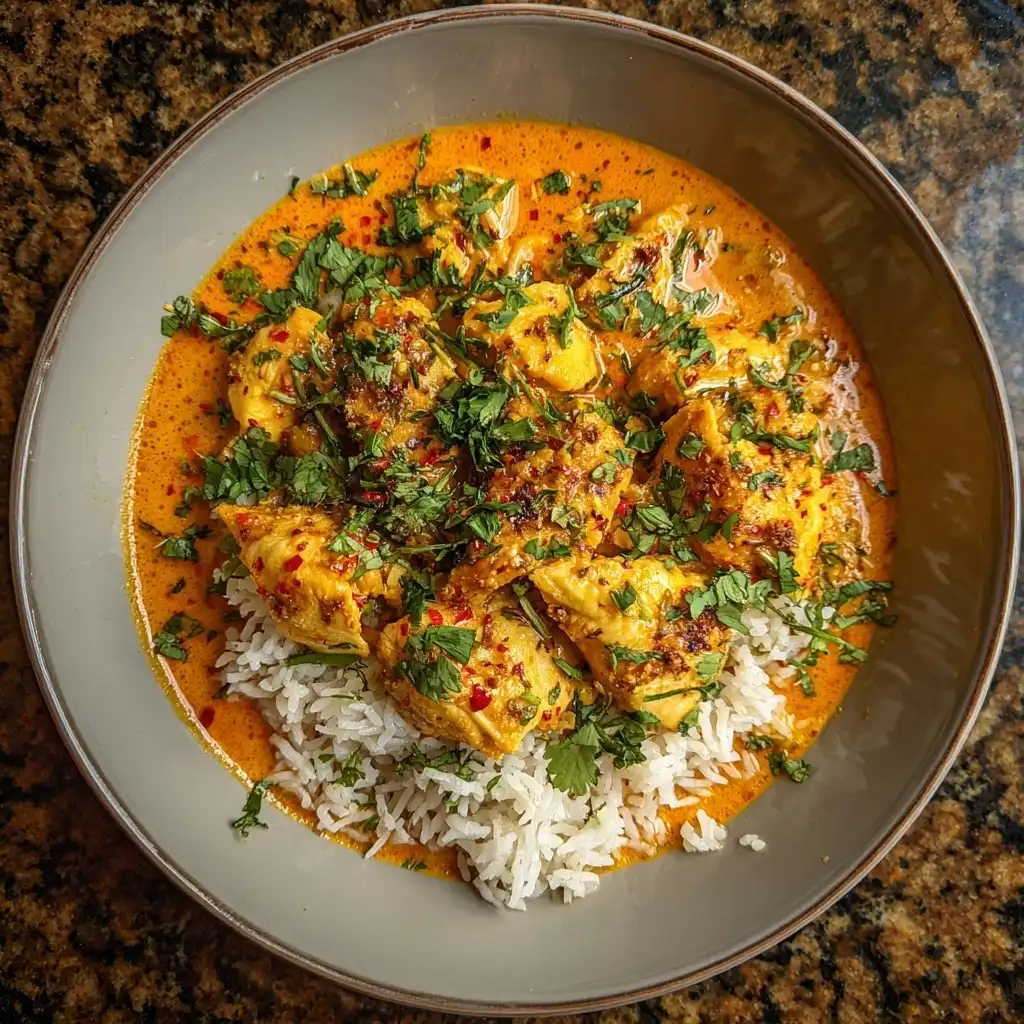
Spicy Coconut Curry Chicken is a vibrant, aromatic, and deeply satisfying dish that embodies the soul of Southeast Asian and South Indian culinary traditions—reimagined for modern home kitchens. With its luscious coconut milk base, layers of toasted spices, tender marinated chicken, and a fiery yet balanced heat profile, this curry transcends mere sustenance to become an experience: fragrant steam rising from a simmering pot, the rich aroma of lemongrass and kaffir lime mingling with caramelized shallots, and the luxurious mouthfeel of creamy, velvety sauce clinging to every bite of succulent poultry. Whether served over jasmine rice, tucked into warm naan, or spooned over quinoa for a wellness twist, this dish is endlessly adaptable, culturally resonant, and universally comforting—even at its spiciest.
The History
The origins of Spicy Coconut Curry Chicken are deeply rooted in centuries-old trade routes and regional ingenuity across tropical Asia. Coconut milk has been a cornerstone of cooking in Thailand, Indonesia, Malaysia, Sri Lanka, and Southern India since at least the 1st millennium CE—valued not only for its richness but also for its preservative qualities and ability to temper heat. In Thai cuisine, gaeng phet (red curry) laid foundational principles: roasted red curry paste, coconut milk, protein, and aromatic herbs. Meanwhile, in Kerala and Tamil Nadu, kerala-style chicken curry evolved with black pepper, mustard seeds, curry leaves, tamarind, and freshly grated coconut—reflecting Portuguese, Arab, and Dutch colonial influences as well as indigenous spice knowledge. The “spicy coconut curry chicken” as known globally today emerged in the late 20th century through diasporic adaptation—fusion chefs and home cooks blending Thai red curry techniques with Indian tempering (tadka), Malaysian sambal depth, and Western pantry accessibility. Its rise accelerated with the popularity of Thai restaurants in North America and Europe in the 1980s–90s, later amplified by food blogs, YouTube tutorials, and meal-kit services democratizing complex flavors. Today, it stands as a testament to culinary globalization—where turmeric from India, galangal from Java, bird’s eye chilies from Thailand, and coconut milk from the Philippines converge in one pot.
Ingredients Breakdown
Understanding each ingredient—not just as a component but as a flavor architect—is essential to mastering this dish:
- Coconut Milk: Full-fat canned coconut milk (not “light” or “beverage-style”) provides body, fat-soluble spice infusion, and emulsified silkiness. The thick cream layer (“coconut cream”) skimmed off the top adds decadence; the thinner liquid beneath ensures proper consistency. Look for brands with no gums or stabilizers (e.g., Aroy-D, Chaokoh, or Native Forest) for authentic separation and richness.
- Curry Paste: The soul of the dish. Homemade paste offers unparalleled depth—roasting dried chilies, grinding fresh aromatics (lemongrass, galangal, garlic, shallots), and toasting whole spices (coriander, cumin, peppercorns) before pounding. Store-bought options vary widely: Thai red curry paste (Mae Ploy for bold heat and shrimp paste umami; Maekrua for cleaner, herb-forward notes); Malaysian rempah (more ginger-forward, less shrimp paste); or Indian-inspired pastes with garam masala and dried mango powder. Always fry the paste in oil first (“blooming”) to unlock volatile oils and mellow raw sharpness.
- Chicken: Boneless, skinless thighs are preferred over breasts—they contain more collagen and intramuscular fat, rendering them juicy and resilient during prolonged simmering. Cut into 1.5-inch pieces against the grain for tenderness. For ultra-luxury texture, try “velveting”: marinate in 1 tsp baking soda + 1 tbsp water + 1 tsp cornstarch for 15 minutes, then rinse thoroughly before cooking.
- Aromatics: Lemongrass (bruised stalks or finely minced tender core), kaffir lime leaves (torn—not chopped—to release citrusy camphor notes), galangal (not ginger—sharper, piney, fibrous; slice thinly or pound), and makrut lime zest add irreplaceable top-notes. Shallots and garlic provide savory sweetness when caramelized.
- Chilies: Heat is multidimensional. Dried red chilies (like Kashmiri for color + mild warmth, or Thai bird’s eye for searing front-end fire) contribute depth when soaked and blended into paste. Fresh green or red chilies (serrano, jalapeño, or Thai) added at the end deliver bright, vegetal heat. Chili oil or infused coconut oil can be drizzled post-cooking for aromatic finish heat.
- Acids: Tamarind concentrate, lime juice, or even a splash of rice vinegar balance coconut’s richness and lift spice perception. Add acid *after* cooking or at the very end—heat degrades volatile citrus compounds.
- Umami Boosters: Fish sauce (nam pla), shrimp paste (belacan), soy sauce, or fermented black beans deepen savoriness without overpowering. Use sparingly—a teaspoon of fish sauce can transform the entire broth.
- Herbs & Garnishes: Fresh Thai basil (not sweet basil—its anise-clove note is essential), cilantro stems (for stock infusion), mint, and scallions add freshness. Toasted coconut flakes, roasted peanuts, or crispy fried shallots lend textural contrast.
Step-by-Step Recipe
- Prep & Marinate (30 min–2 hrs): Cube chicken thighs. In a bowl, combine with 1 tbsp fish sauce, 1 tsp palm sugar or brown sugar, 1 tsp grated galangal, 1 minced garlic clove, and 1 tsp lime juice. Refrigerate 30 minutes minimum (up to 2 hours). Meanwhile, prepare aromatics: bruise 2 lemongrass stalks; tear 4–6 kaffir lime leaves; thinly slice 1-inch galangal; mince 4 shallots and 3 garlic cloves.
- Bloom the Paste (5 min): Heat 3 tbsp neutral oil (peanut or grapeseed) in a heavy-bottomed Dutch oven or wok over medium-low heat. Add 3–4 tbsp red curry paste. Stir constantly for 3–5 minutes until fragrant, oil separates, and paste darkens slightly—do not burn. This step is non-negotiable for flavor development.
- Sauté Aromatics (4 min): Add minced shallots and garlic; stir 2 minutes until softened. Add sliced galangal and bruised lemongrass; cook 1 minute more. Then add chicken (with marinade) and sear undisturbed 3 minutes per side until lightly browned—building fond and locking in juices.
- Simmer the Base (15 min): Pour in 1 can (13.5 oz) full-fat coconut milk, stirring to deglaze. Bring to gentle simmer—not boil—then reduce heat to low. Partially cover and simmer 12–15 minutes, stirring occasionally, until chicken is 80% cooked and sauce thickens slightly. Skim excess oil if desired for lighter texture.
- Infuse Coconut & Spice (10 min): Add torn kaffir lime leaves, 1 tsp palm sugar, 1 tbsp tamarind concentrate (or 2 tsp lime juice), and 1 tsp fish sauce. Simmer uncovered 5 minutes. Taste and adjust: more sugar for balance, more fish sauce for salt/umami, more lime for brightness.
- Finish & Enrich (3 min): Remove lemongrass stalks and any large galangal pieces. Stir in ½ cup reserved thick coconut cream (skimmed from second can) for luxurious sheen. Reduce heat to lowest setting. Gently fold in ½ cup loosely packed Thai basil leaves—do not over-stir; let leaves wilt softly.
- Rest & Serve (5 min): Turn off heat. Let curry rest, covered, 5 minutes—this allows flavors to harmonize and chicken to finish cooking gently. Adjust final seasoning: a pinch of flaky sea salt, extra lime juice, or a drizzle of chili oil. Serve immediately.
Tips
- Coconut Milk Separation Is Your Friend: Don’t shake the can! Scoop the thick cream off the top for finishing—it adds unctuousness and gloss without thinning the curry.
- Low and Slow Wins: Boiling coconut milk causes curdling and breaks the emulsion. Maintain a bare simmer (small bubbles barely breaking surface) throughout.
- Toast Whole Spices First: If making your own paste, dry-toast coriander, cumin, white peppercorns, and dried chilies in a pan until fragrant—then grind. This unlocks essential oils far beyond pre-ground versions.
- Layer Heat Strategically: Use dried chilies in the paste for deep, rounded heat; fresh chilies at the end for bright, clean fire; and chili oil for aromatic finish heat. Never rely on just one source.
- Acid Timing Matters: Lime juice or tamarind added too early loses vibrancy. Stir in *after* removing from heat—or reserve half for garnish.
- Don’t Skip the Rest: That 5-minute covered rest allows residual heat to finish cooking chicken evenly and lets coconut fats re-emulsify into silky perfection.
- Make-Ahead Magic: Curry tastes better the next day. Cool completely, refrigerate up to 4 days (fat will solidify on top—just rewarm gently and whisk back in). Freeze for up to 3 months in portioned, airtight containers—thaw overnight in fridge, then reheat slowly.
- Rescue a Broken Curry: If sauce splits or looks oily: remove from heat, whisk in 1 tsp cold coconut milk or lime juice, then gently reheat while whisking constantly. A small pat of butter can also help re-emulsify.
- Texture Contrast Is Key: Always serve with something crunchy—pickled shallots, crushed roasted peanuts, crispy fried garlic, or toasted coconut—and something cooling: cucumber ribbons, yogurt raita, or a simple lime-dressed green salad.
Variations and Customizations
This recipe is a canvas—not a cage. Here’s how to make it uniquely yours:
- Vegetarian/Vegan Version: Swap chicken for king oyster mushrooms (sliced thick, seared until golden), chickpeas (pre-cooked, added in last 5 minutes), or tofu (extra-firm, pressed, air-fried or pan-seared). Replace fish sauce with soy sauce + ¼ tsp miso paste + ½ tsp maple syrup for umami-sweet depth. Use vegetable stock instead of water if thinning.
- Thai Green Curry Style: Substitute green curry paste (made with fresh green chilies, Thai basil stems, and cilantro roots). Add bamboo shoots and Thai eggplant (small, round, green). Finish with extra Thai basil and a squeeze of lime.
- Indian-Inspired Kerala Curry: Use a blend of mustard seeds, fenugreek, curry leaves, and dried red chilies for tempering. Replace lemongrass with grated fresh ginger. Add ½ tsp turmeric and 1 tsp garam masala at the end. Use tamarind pulp soaked in warm water instead of concentrate. Garnish with roasted cashews and cilantro.
- Malaysian Rendang-Influenced: Simmer longer (45–60 min) until most liquid evaporates and chicken is fork-tender in thick, glossy, darkened sauce. Add toasted desiccated coconut and candlenuts (or macadamia) pounded into paste. Finish with kaffir lime leaf strips and belacan-infused oil.
- Japanese-Inspired Curry: Add 1 tbsp Japanese curry powder (S&B Golden) and 1 tsp grated apple or pear for subtle sweetness. Include carrots and potatoes (parboiled first). Finish with pickled ginger and nori strips.
- Low-Carb/Keto Adaptation: Omit sugar entirely; use erythritol or monk fruit if needed. Increase healthy fats—add 1 tbsp MCT oil or ghee at finish. Serve over cauliflower rice or shirataki noodles. Thicken with xanthan gum (⅛ tsp) instead of cornstarch.
- Kid-Friendly Mild Version: Halve the curry paste; omit fresh chilies; add 1 tbsp unsweetened coconut milk powder for natural sweetness and creaminess. Stir in 2 tbsp natural peanut butter at the end for nutty richness and mildness.
- Grill or Air-Fry Chicken Option: Marinate chicken as directed, then grill over medium charcoal or air-fry at 375°F for 12–15 minutes until charred and cooked. Add directly to simmering curry for final 5 minutes—preserves smoky depth and avoids overcooking.
- Instant Pot / Pressure Cooker Method: Sauté paste and aromatics using “Sauté” function. Add chicken and sear. Pour in coconut milk, tamarind, fish sauce, and lime leaves. Seal lid, cook on High Pressure for 8 minutes, then natural release 10 minutes. Stir in basil and coconut cream. Thicken using “Sauté” if needed.
Health Considerations and Nutritional Value
When prepared mindfully, Spicy Coconut Curry Chicken offers notable nutritional benefits—far beyond its indulgent reputation:
- Protein Powerhouse: Chicken thighs provide complete protein (≈25g per 4 oz serving), along with iron (heme form, highly absorbable), zinc, and B vitamins—especially B6 and niacin, crucial for metabolism and immunity.
- Medium-Chain Triglycerides (MCTs): Coconut milk contains lauric acid, a potent antimicrobial MCT linked to improved energy utilization and satiety. While high in saturated fat, emerging research suggests dietary saturated fat from whole-food sources like coconut behaves differently than processed trans fats—and may support HDL cholesterol when consumed as part of a balanced diet.
- Anti-Inflammatory Compounds: Turmeric (often in curry paste) contains curcumin—a powerful polyphenol with documented anti-inflammatory and antioxidant activity. Pairing it with black pepper (piperine) increases bioavailability by up to 2000%. Ginger and galangal add additional gingerols and diarylheptanoids with similar properties.
- Metabolic Boost from Capsaicin: Chilies contain capsaicin, shown to modestly increase thermogenesis and fat oxidation—supporting healthy weight management when combined with balanced nutrition and movement.
- Gut Health Support: Fermented ingredients like shrimp paste and fish sauce contain beneficial microbes and bioactive peptides. Garlic, shallots, and lemongrass act as prebiotics—feeding beneficial gut bacteria.
- Considerations & Modifications: Those monitoring sodium should choose low-sodium fish sauce or tamari, limit added salt, and rinse canned coconut milk if overly salty. For lower saturated fat, use light coconut milk *only after* blooming paste in oil—never substitute entirely, as it lacks emulsifying capacity. Diabetics can enjoy freely—the dish is naturally low-glycemic; just monitor added sugars (palm sugar, tamarind concentrate) and pair with high-fiber sides like brown rice or lentils. Individuals with IBS may benefit from low-FODMAP swaps: use garlic-infused oil (no solids), omit shallots, and replace lemongrass with lime zest.
- Nutrition Snapshot (Per Serving, ~1.5 cups): Calories: 420–480 | Protein: 28–32g | Fat: 28–34g (of which 22–26g saturated) | Carbs: 6–10g | Fiber: 1–2g | Sodium: 480–720mg | Vitamin A: 12% DV | Iron: 15% DV | Vitamin C: 20% DV (from lime/lemongrass)
Ingredients
- 1.5 lbs boneless, skinless chicken thighs, cut into 1.5-inch pieces
- 3 tbsp neutral cooking oil (peanut, grapeseed, or refined coconut)
- 3–4 tbsp authentic Thai red curry paste (preferably Mae Ploy or Maekrua)
- 4 shallots, finely minced
- 3 garlic cloves, finely minced
- 1-inch piece galangal, peeled and very thinly sliced (or 1 tsp grated)
- 2 stalks lemongrass, outer layers removed, bruised (or 1 tbsp finely minced tender core)
- 4–6 kaffir lime leaves, torn (or 1 tsp finely grated kaffir lime zest)
- 1 (13.5 oz) can full-fat coconut milk (well-chilled, cream reserved)
- 1 tbsp fish sauce (nam pla)
- 1 tsp palm sugar or light brown sugar
- 1 tbsp tamarind concentrate (or 2 tsp fresh lime juice)
- ½ cup fresh Thai basil leaves, loosely packed
- 1–2 fresh Thai bird’s eye chilies, thinly sliced (optional, for extra heat)
- Flaky sea salt, to taste
- Lime wedges, for serving
Optional Garnishes: Toasted coconut flakes, roasted peanuts, crispy fried shallots, cilantro sprigs, extra lime wedges, chili oil.
Directions
- In a medium bowl, combine chicken with 1 tbsp fish sauce, 1 tsp palm sugar, 1 tsp grated galangal, 1 minced garlic clove, and 1 tsp lime juice. Marinate 30 minutes–2 hours in refrigerator.
- Heat oil in a heavy-bottomed Dutch oven or wide skillet over medium-low heat. Add curry paste and stir constantly for 3–5 minutes until fragrant, oil begins to separate, and paste darkens slightly.
- Add minced shallots and garlic; stir 2 minutes until soft and translucent. Add sliced galangal and bruised lemongrass; cook 1 minute more.
- Add marinated chicken (including marinade) and sear undisturbed 3 minutes. Flip and sear another 3 minutes until lightly browned on all sides.
- Pour in coconut milk (reserving the thick cream), stirring to scrape up browned bits. Bring to gentle simmer, then reduce heat to low. Partially cover and simmer 12–15 minutes, stirring occasionally, until chicken is mostly cooked and sauce thickens.
- Remove lemongrass stalks and large galangal pieces. Stir in kaffir lime leaves, remaining 1 tbsp fish sauce, 1 tsp palm sugar, and tamarind concentrate. Simmer uncovered 5 minutes.
- Skim thick coconut cream from second can (if using) or reserve from first can. Stir cream into curry until glossy and smooth.
- Turn off heat. Gently fold in Thai basil leaves and optional fresh chilies. Let rest, covered, 5 minutes.
- Taste and adjust: add flaky salt, extra lime juice, or a drizzle of chili oil. Serve hot over jasmine rice, with lime wedges and garnishes.
FAQ
- Can I use coconut cream instead of coconut milk?
- Yes—but dilute it. Coconut cream is extremely thick and rich. For best results, mix ¾ cup coconut cream with ¼ cup warm water or broth before adding to avoid splitting and ensure even texture.
- Why does my curry taste bitter?
- Bitterness usually comes from burnt curry paste, over-toasted dried chilies, or excessive lime zest (white pith is bitter). Next time, bloom paste over lower heat and stir constantly. Also, use only the green outer zest of kaffir lime—avoid white pith.
- How do I fix a curry that’s too spicy?
- Balance—not dilute. Stir in 1–2 tsp coconut milk powder or unsweetened shredded coconut to mellow heat. Add a touch more palm sugar or a spoonful of plain Greek yogurt (off heat). Serve with cooling sides: cucumber salad, mango chutney, or raita.
- Can I make this in a slow cooker?
- Absolutely. Sauté paste, aromatics, and chicken first (critical step!), then transfer to slow cooker with coconut milk, fish sauce, tamarind, and lime leaves. Cook on LOW 4–5 hours. Stir in basil and coconut cream in last 10 minutes.
- Is store-bought curry paste “authentic”?
- Authenticity lies in intention—not origin. Many traditional Thai households now use trusted commercial pastes for convenience. Look for minimal ingredients (chilies, lemongrass, galangal, garlic, shallots, shrimp paste, salt, spices) and avoid MSG, artificial colors, or excessive preservatives. Read labels carefully—some “Thai” pastes contain tomato paste or sugar that alter authenticity.
- What’s the difference between Thai red curry and Indian curry?
- Thai red curry relies on fresh herb-based paste (lemongrass, galangal, kaffir lime) and coconut milk as the primary liquid, yielding bright, herbal, creamy heat. Indian curries typically use dry-spice blends (garam masala), yogurt or tomato bases, and tempered whole spices—producing deeper, earthier, often drier gravies. This recipe honors both traditions through layered technique—not fusion gimmickry.
- Can I freeze leftover curry?
- Yes—and it freezes exceptionally well. Cool completely, portion into airtight containers (leave ½-inch headspace), and freeze up to 3 months. Thaw overnight in fridge. Reheat gently on stove, stirring frequently. Add a splash of coconut milk if too thick.
- My coconut milk separated—did I ruin it?
- No—this is normal and actually desirable. Natural separation indicates no emulsifiers. Simply stir vigorously while heating to reincorporate. If it curdles (grainy texture), you likely boiled it too hard. Next time, maintain low simmer and whisk in cold coconut milk to rescue.
- What can I use instead of kaffir lime leaves?
- There’s no perfect substitute—but you can approximate: 1 tsp finely grated kaffir lime zest + 1 small bay leaf + 1 small strip of lemon peel (no pith). Avoid regular lime leaves—they lack the distinctive floral-camphor note.
- How do I get restaurant-level richness?
- Three keys: (1) Use *two* cans of coconut milk—one for cooking, one for finishing cream; (2) Bloom paste *long enough* (4+ minutes) until oil rises; (3) Finish with cold-pressed chili oil and hand-torn Thai basil—not chopped. Texture, temperature, and timing elevate everything.
Summary
Spicy Coconut Curry Chicken is a masterclass in layered Southeast Asian and South Indian flavors—uniting bold heat, creamy coconut richness, aromatic herbs, and tender, umami-kissed poultry in a single, deeply nourishing pot. With mindful technique, smart substitutions, and respect for each ingredient’s role, it transforms from takeout favorite into a weekly staple, cultural bridge, and kitchen triumph.
Whether you’re simmering it for family Sunday dinner, meal-prepping for the week, or impressing guests with its vibrant aroma and complex balance, this curry proves that spice need not overwhelm—and richness need not compromise wellness. It’s comfort, culture, and craft, all stirred into one unforgettable bowl.