Introduction
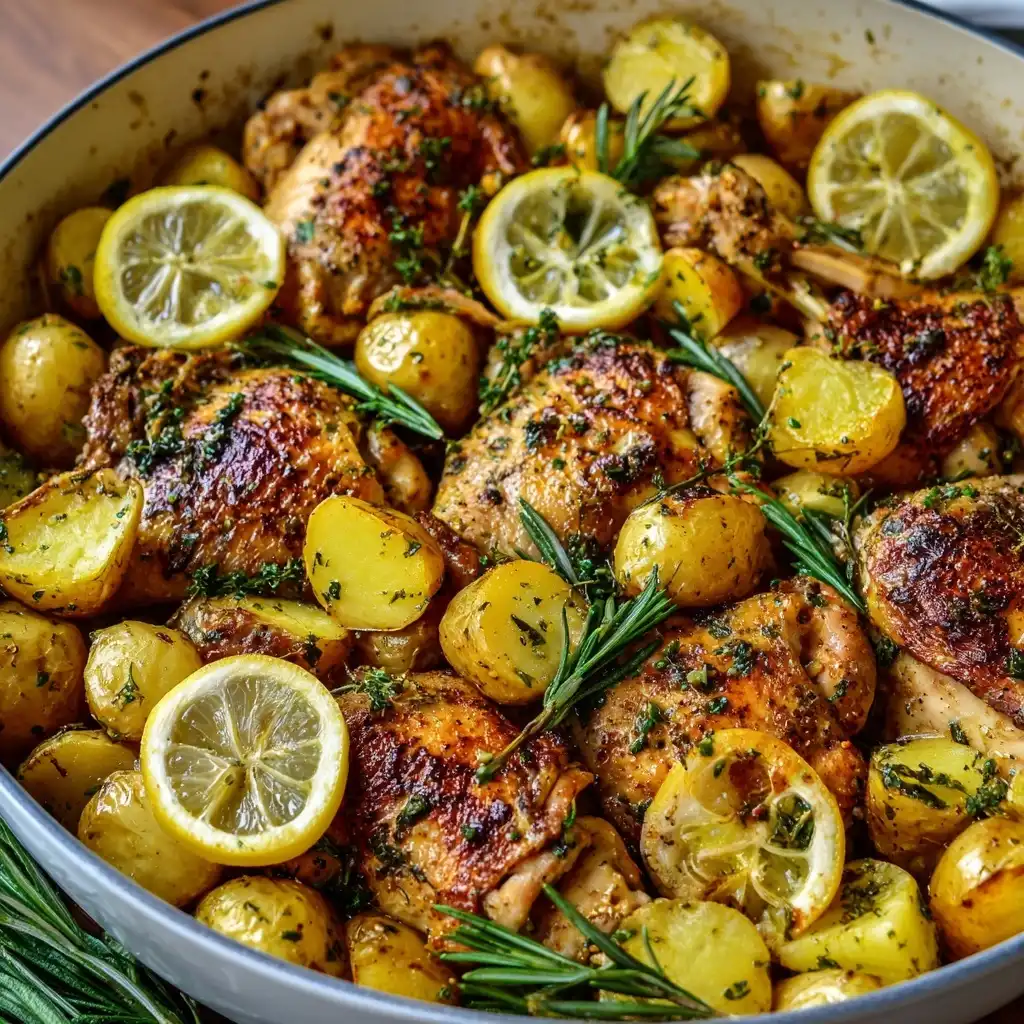
One Pan Lemon Herb Chicken and Potatoes is the quintessential weeknight hero—elegant enough for Sunday dinner, effortless enough for a chaotic Tuesday evening. This dish embodies the magic of minimal cleanup without sacrificing depth of flavor, vibrant aroma, or restaurant-worthy presentation. By roasting bone-in, skin-on chicken thighs (or breasts, depending on preference) alongside rustic-cut potatoes, garlic cloves, fresh herbs, and a bright lemon-infused olive oil glaze, you coax out layers of caramelized richness, herbaceous freshness, and zesty acidity—all in a single heavy-duty sheet pan or large oven-safe skillet. It’s not just convenient; it’s culinary alchemy: high-heat roasting transforms simple ingredients into golden, crispy, succulent, and deeply aromatic harmony. Whether you’re a novice cook seeking confidence or a seasoned home chef craving reliable elegance, this recipe delivers consistency, versatility, and soul-warming satisfaction with every bite.
The History
While no single origin story defines “One Pan Lemon Herb Chicken and Potatoes,” its roots run deep through multiple culinary traditions. The concept of roasting meat and vegetables together dates back centuries—from Mediterranean wood-fired hearths where whole chickens were nestled among root vegetables and wild herbs, to French en papillote-inspired techniques that trap steam and aromatics, and even rustic Italian al forno (oven-baked) preparations featuring lemon, rosemary, and olive oil. The modern “sheet pan dinner” movement gained momentum in the early 2010s, propelled by food bloggers, meal-prep enthusiasts, and busy families seeking efficiency without compromise. Lemon and herbs—particularly rosemary, thyme, and oregano—have long symbolized brightness and balance in Levantine, Greek, and Provençal cuisines, where citrus cuts through the richness of poultry and olive oil. The addition of potatoes reflects a globally beloved starch pairing, evolving from humble peasant fare (think Spanish tortilla or German Kartoffelgratin) into a roasted, golden-crusted cornerstone. Today’s version merges time-honored technique with contemporary sensibilities: mindful ingredient sourcing, adaptable dietary needs, and an emphasis on whole-food integrity—all unified by the philosophy that great food shouldn’t require six pans, three timers, and a sous-chef.
Ingredients Breakdown
Every element in this dish serves a distinct, intentional purpose—flavor, texture, moisture retention, or structural integrity. Understanding their roles empowers confident customization:
- Chicken (bone-in, skin-on thighs preferred): Provides rich collagen that renders into savory, sticky juices during roasting. Skin crisps to golden perfection, sealing in moisture and adding umami depth. Thighs are more forgiving than breasts—less prone to drying out—even with minor timing variations.
- Yukon Gold or Russet Potatoes: Yukons offer creamy interiors and buttery sweetness with moderate starch; Rusters deliver fluffier flesh and superior browning. Both hold shape well under high heat. Avoid waxy varieties like red bliss for roasting—they can turn gummy.
- Fresh Lemon (zest + juice): Zest contains aromatic citrus oils—intensely fragrant and non-acidic—while juice adds bright acidity that balances fat and enhances herbal notes. Bottled lemon juice lacks complexity and can introduce off-notes.
- Fresh Herbs (rosemary, thyme, oregano): Rosemary contributes pine-like intensity and stands up to high heat; thyme offers subtle floral-earthy nuance; oregano lends Mediterranean warmth. Dried herbs may be substituted at ⅓ the volume—but fresh is transformative.
- Garlic (whole unpeeled cloves): Roasting transforms raw garlic into sweet, jammy, spreadable morsels—mellowing pungency while amplifying savory-sweet depth. Leaving skins on prevents burning and simplifies cleanup.
- Extra Virgin Olive Oil: Not just fat—it carries flavor, aids browning, emulsifies the marinade, and protects herbs from scorching. Choose a robust, fruity EVOO for best results.
- Red Onion (optional but recommended): Adds gentle sweetness, textural contrast, and visual appeal when caramelized at the edges. Its sulfur compounds also complement poultry beautifully.
- Salt & Black Pepper (coarsely ground): Salt seasons from within (especially when applied 30+ minutes pre-roast), while freshly cracked pepper adds floral heat and volatile aromatics that bloom under heat.
- Lemon Slices (for garnish & steam): Placed atop chicken, they gently steam the breast/thigh surface, infusing citrus essence while preventing over-browning. They also create stunning visual contrast on the finished platter.
Step-by-Step Recipe
- Prep & Rest (30–60 min ahead): Pat chicken pieces *extremely* dry with paper towels—this is non-negotiable for crisp skin. Season generously with salt (½ tsp per thigh) and let rest uncovered in the fridge for at least 30 minutes (up to 24 hours). Meanwhile, scrub and cube potatoes into 1–1.5 inch pieces—uniformity ensures even cooking. Toss potatoes with 1 tbsp olive oil, ¼ tsp salt, and black pepper; spread on a parchment-lined sheet pan and roast at 425°F (220°C) for 15 minutes to jumpstart browning.
- Build the Aromatic Base: In a small bowl, whisk together ¼ cup extra virgin olive oil, zest of 1 large lemon, juice of 1½ lemons, 2 tsp finely chopped fresh rosemary, 1½ tsp fresh thyme leaves, ½ tsp dried oregano, 2 minced garlic cloves (not the whole cloves for roasting), ½ tsp black pepper, and 1 tsp flaky sea salt. Set aside.
- Arrange the Pan: Remove par-roasted potatoes from oven. Scatter 8–10 unpeeled garlic cloves and 1 thinly sliced red onion (if using) evenly across the pan. Nestle seasoned chicken pieces skin-side up among the potatoes—do not overcrowd; leave space for air circulation. Tuck lemon slices beneath and atop some chicken pieces. Pour the entire herb-lemon oil mixture evenly over everything—use a spoon to drizzle under chicken edges and over potatoes.
- Roast with Precision: Return pan to oven at 425°F (220°C). Roast for 25 minutes. Then, rotate pan front-to-back, reduce heat to 400°F (200°C), and continue roasting 20–25 minutes more—or until chicken registers 165°F (74°C) at the thickest part *and* skin is deeply golden, blistered, and crackling. Potatoes should be fork-tender with deeply caramelized, crispy edges.
- Rest & Finish: Remove pan from oven. Tent loosely with foil and rest 10 minutes—this allows juices to redistribute, ensuring moist chicken and lets potatoes firm up slightly. During resting, squeeze remaining ½ lemon over the entire pan. Sprinkle with additional fresh herbs (chopped parsley or dill), flaky salt, and a final drizzle of high-quality olive oil for gloss and aroma.
- Serve: Transfer directly to table in the pan for rustic presentation—or portion onto warmed plates. Spoon pan juices and roasted garlic cloves over servings. Offer crusty bread to mop up every last drop.
Tips
- Dry Chicken = Crispy Skin: Moisture is the enemy of crispness. Always pat chicken thoroughly—even after brining or marinating—and allow refrigerated seasoning to further dehydrate the surface.
- Pan Choice Matters: Use a heavy-gauge rimmed baking sheet (like USA Pan or Nordic Ware) or a large, oven-safe stainless steel or cast iron skillet (12–14 inches). Thin pans warp and cause uneven browning; dark non-stick pans may over-brown edges.
- Don’t Flip the Chicken: Resist turning! Roasting skin-side up ensures optimal fat rendering and crisping. Flipping disrupts this process and risks tearing the skin.
- Garlic Timing: Whole cloves won’t burn if left unpeeled and buried among potatoes. If using peeled garlic, add it only during the last 15 minutes—or use garlic powder in the herb oil instead.
- Lemon Juice Timing: Add acidic components *before* roasting—not after—to help break down proteins and tenderize. Post-roast acid (final squeeze) brightens without softening texture.
- Oven Thermometer Essential: Most home ovens run hot or cold. An inexpensive oven thermometer ensures accuracy—critical for consistent results.
- Resting Is Non-Negotiable: Skipping the 10-minute rest causes juices to flood the plate instead of staying in the meat. It also allows starches in potatoes to set, preventing mushiness.
- Make-Ahead Friendly: Marinate chicken (without lemon juice) up to 24 hours ahead. Prep potatoes and herbs the night before—store separately. Assemble and roast day-of.
- Broil for Extra Crisp: For ultimate skin crackle, switch to broil (high) for the final 2–3 minutes—watch constantly to avoid burning.
- Save the Juices: Those golden, herb-flecked pan drippings? Deglaze with ¼ cup dry white wine or chicken broth, simmer 2 minutes, and drizzle over servings as a light sauce.
Variations and Customizations
This recipe is a masterful canvas—adaptable to seasons, diets, pantries, and preferences:
- Dietary Adaptations:
- Gluten-Free: Naturally compliant—just verify all spice blends are certified GF.
- Dairy-Free: No substitutions needed—this recipe contains zero dairy.
- Keto/Low-Carb: Replace potatoes with low-starch alternatives: cauliflower florets, radish wedges, turnip chunks, or thickly sliced zucchini (add in last 15 mins). Reduce lemon juice slightly to maintain macros.
- Whole30/Paleo: Ensure all spices and oils are compliant (no added sugars or seed oils); omit honey if used in variations.
- Vegetarian/Vegan: Substitute chicken with hearty portobello caps, tempeh steaks, or seitan cutlets—marinate similarly and adjust roasting time (20–25 mins at 400°F).
- Protein Swaps:
- Chicken Breasts: Use bone-in, skin-on for best results; reduce total roasting time by 5–8 minutes and check temp earlier.
- Drumsticks/Thighs Combo: Offers textural variety and crowd-pleasing familiarity.
- Turkey Cutlets or Pork Tenderloin Medallions: Slice ½-inch thick; sear first, then roast 12–15 mins.
- Salmon Fillets: Roast skin-down on preheated pan at 400°F for 12–14 mins—delicate, so add later than potatoes.
- Vegetable Rotations (Seasonal & Textural):
- Spring: Asparagus tips, baby carrots, fennel wedges, peas (added last 5 mins).
- Summer: Cherry tomatoes (halved), zucchini ribbons, bell pepper strips, red onion.
- Fall: Butternut squash cubes, Brussels sprouts (halved), parsnips, apple slices (tossed in maple & cinnamon).
- Winter: Celeriac, rutabaga, kohlrabi, roasted shallots.
- Herb & Citrus Twists:
- Mediterranean: Add kalamata olives, capers, and oregano; finish with lemon zest + parsley.
- Provence: Lavender buds (⅛ tsp), fennel pollen, tarragon, and orange zest.
- Asian-Inspired: Swap lemon for yuzu or lime; add grated ginger, scallions, toasted sesame oil (finish only), and cilantro.
- Smoky-Sweet: Add ½ tsp smoked paprika + 1 tsp maple syrup to herb oil; garnish with crumbled bacon.
- Flavor Boosters (Add Pre-Roast):
- 1 tbsp Dijon mustard whisked into herb oil for tangy emulsion.
- 2 tsp capers + 1 tbsp chopped cornichons for briny brightness.
- ½ tsp crushed red pepper flakes for gentle heat.
- 2 tbsp crumbled feta or goat cheese (added in last 5 mins).
- 1 tsp honey or agave for caramelized glaze (reduce lemon juice slightly).
Health Considerations and Nutritional Value
This dish shines as a nutrient-dense, balanced meal—naturally rich in high-quality protein, complex carbohydrates, heart-healthy fats, and phytonutrient-packed produce. A standard serving (1 chicken thigh + 1 cup potatoes + vegetables) provides approximately:
- Calories: 480–560 kcal (varies by cut, oil amount, and potato type)
- Protein: 32–38g (supporting muscle maintenance, satiety, and metabolic health)
- Healthy Fats: 22–28g (primarily monounsaturated from olive oil and chicken skin—linked to reduced LDL cholesterol and anti-inflammatory benefits)
- Complex Carbs: 30–40g (from potatoes—rich in potassium, vitamin C, and resistant starch when cooled slightly)
- Fiber: 4–6g (enhanced significantly with onions, garlic, herbs, and optional veggies)
- Vitamins & Minerals: Exceptionally high in B6 (chicken), vitamin C (lemon), potassium (potatoes, lemon), manganese (herbs), selenium (poultry), and antioxidants like rosmarinic acid (rosemary) and quercetin (onions, garlic)—all shown to support immune function, cognitive health, and cellular repair.
Smart Modifications for Specific Goals:
- Lower Sodium: Reduce added salt by 50% and rely on lemon, herbs, garlic, and black pepper for flavor; rinse canned items (if added) thoroughly.
- Lower Fat: Use skinless chicken breasts and reduce olive oil to 2 tbsp total; increase lemon juice and herbs for flavor compensation.
- Blood Sugar Management: Pair with leafy greens or non-starchy veg; cool potatoes slightly to increase resistant starch (lowers glycemic impact); consider half-potato/half-cauliflower ratio.
- Digestive Support: Garlic and lemon stimulate gastric secretions; rosemary and thyme contain carminative compounds that ease bloating.
- Anti-Inflammatory Focus: Emphasize turmeric (¼ tsp in herb oil), extra garlic, and generous fresh herbs—all potent NF-kB pathway modulators.
Note: While chicken skin contains saturated fat, recent research affirms its role in flavor, satiety signaling, and fat-soluble vitamin absorption—moderation, not elimination, remains key for most individuals.
Ingredients
- 1½ lbs bone-in, skin-on chicken thighs (about 6–8 pieces), patted extremely dry
- 1½ lbs Yukon Gold potatoes (about 4 medium), scrubbed and cut into 1–1.5 inch cubes
- 1 large lemon (zested and juiced—yielding ~2 tbsp juice + 1 tsp zest)
- ¼ cup extra virgin olive oil (plus 1 tsp for finishing)
- 2 tsp fresh rosemary, finely chopped (or ¾ tsp dried)
- 1½ tsp fresh thyme leaves (or ½ tsp dried)
- ½ tsp dried oregano
- 10–12 unpeeled garlic cloves
- 1 medium red onion, thinly sliced (optional but recommended)
- 1 tsp flaky sea salt (like Maldon), plus more to taste
- 1 tsp freshly ground black pepper
- Additional lemon slices (for roasting and garnish)
- Fresh parsley or dill, chopped (for garnish)
Directions
- Preheat oven to 425°F (220°C). Line a large rimmed baking sheet with parchment paper (or use an oven-safe skillet).
- In a small bowl, whisk together olive oil, lemon zest, lemon juice (1½ lemons’ worth), rosemary, thyme, oregano, ½ tsp black pepper, and 1 tsp flaky salt.
- Toss potato cubes with 1 tbsp olive oil, ¼ tsp salt, and ¼ tsp pepper. Spread evenly on prepared pan. Roast 15 minutes.
- Remove pan from oven. Scatter unpeeled garlic cloves and red onion slices over potatoes. Nestle chicken pieces skin-side up among vegetables—ensure space between pieces.
- Pour herb-lemon oil mixture evenly over chicken and potatoes, spooning under chicken edges. Tuck lemon slices around and partially under chicken.
- Roast at 425°F for 25 minutes. Rotate pan. Reduce heat to 400°F (200°C) and continue roasting 20–25 minutes more, until chicken reaches 165°F internally and skin is deeply golden and crisp.
- Remove from oven. Tent loosely with foil and rest 10 minutes.
- Squeeze remaining ½ lemon over entire pan. Garnish with fresh herbs, flaky salt, and a final drizzle of olive oil.
- Serve immediately, directly from the pan or plated, with crusty bread or a simple arugula salad.
FAQ
- Can I use frozen chicken?
- Yes—but thaw completely in the refrigerator first (never at room temperature). Pat *extra* dry, and add 5–8 minutes to roasting time. Frozen chicken will release excess water, inhibiting crisp skin.
- Why are my potatoes soggy?
- Three likely culprits: (1) Not par-roasting them first, (2) crowding the pan (steam builds instead of evaporates), or (3) using waxy potatoes. Ensure space between pieces, choose starchy/medium-starch varieties, and always pre-roast.
- Can I make this ahead and reheat?
- Absolutely. Roast fully, cool completely, and refrigerate up to 4 days. Reheat covered at 350°F for 15–20 minutes, then uncover for 5 minutes to revive crispness. For best texture, re-crisp skin under the broiler for 1–2 minutes.
- Is the skin really necessary?
- For authentic texture and flavor—yes. Skin renders fat that bastes the meat and crisps into savory crackling. If avoiding skin, increase olive oil by 1 tbsp and baste chicken with pan juices halfway through roasting.
- What if I don’t have fresh herbs?
- Dried work in a pinch—use ⅓ the amount (e.g., 1 tsp dried rosemary instead of 1 tbsp fresh). Add them to the oil mixture *before* roasting to hydrate and release oils. Fresh is strongly preferred for aroma and color.
- Can I use a convection oven?
- Yes—reduce temperature by 25°F and check 5 minutes earlier. Convection accelerates browning and drying, so monitor closely.
- How do I prevent lemon slices from burning?
- Place them *under* chicken pieces or nestled *between* potatoes—not exposed on top. Their moisture steams the chicken and protects them from direct heat.
- Can I double this recipe?
- Yes—but use two separate pans. Overcrowding lowers oven temperature, traps steam, and yields steamed—not roasted—results. Never stack or overlap chicken.
- What wine pairs well?
- A crisp, citrus-driven white like Sauvignon Blanc, Vermentino, or unoaked Chardonnay complements lemon and herbs. For red lovers, try a light-bodied Pinot Noir with earthy undertones.
- Are the roasted garlic cloves edible?
- Deliciously so! Squeeze the soft, sweet, caramelized pulp from the skins—it’s rich in allicin and makes a fantastic spread on bread or stir-in for mashed potatoes.
Summary
One Pan Lemon Herb Chicken and Potatoes is a masterclass in simplicity meeting sophistication—where minimal equipment, maximal flavor, and nutritional integrity converge effortlessly. With golden-crisp chicken, tender-yet-caramelized potatoes, aromatic roasted garlic, and a bright, herb-laced pan sauce, it delivers restaurant-caliber satisfaction with the ease of a single sheet pan and under an hour’s commitment.
Beyond convenience, it’s endlessly adaptable—seasonally resonant, diet-inclusive, and deeply nourishing—making it not just a recipe, but a foundational technique for joyful, sustainable, and flavorful home cooking for years to come.