Introduction
Hot Honey Garlic Chicken Bowls are the ultimate harmony of bold, sweet, spicy, and savory flavors—served over a nourishing, customizable base that transforms weeknight dinners into restaurant-worthy experiences. This vibrant, globally inspired dish marries the fiery-sweet allure of hot honey with the deep umami richness of slow-caramelized garlic and tender, perfectly seared chicken. Whether you’re meal prepping for the week, feeding a busy family, or hosting friends for a casual yet impressive dinner, these bowls deliver maximum flavor with minimal fuss. With endless adaptability—from grain-free cauliflower rice to protein-packed quinoa—and built-in flexibility for dietary preferences (gluten-free, dairy-free, keto-friendly, and more), Hot Honey Garlic Chicken Bowls aren’t just a recipe; they’re a culinary framework designed for joy, balance, and repeat performance.
The History
While no single origin story defines Hot Honey Garlic Chicken Bowls, their evolution reflects a fascinating confluence of culinary traditions and modern food culture. Hot honey—a now-iconic condiment—traces its roots to Brooklyn’s Lucali pizzeria in the early 2000s, where chef Mark Iacono began drizzling Calabrian chile-infused honey over pizzas, sparking a nationwide obsession. Simultaneously, Asian-inspired garlic sauces—like Korean yangnyeom (seasoned) glazes and Chinese garlic-black bean preparations—have long celebrated garlic’s transformative power when cooked low and slow until golden and fragrant. The fusion took hold in the late 2010s, accelerated by food bloggers, TikTok chefs, and fast-casual concepts like Blaze Pizza and Kogi BBQ, who spotlighted sweet-heat-glazed proteins served over hearty grain bowls. By 2022–2023, #HotHoneyChicken had amassed over 1.2 billion views on TikTok, cementing the bowl format as both a comfort-food staple and a canvas for culinary creativity. Today, Hot Honey Garlic Chicken Bowls represent more than a trend—they’re a testament to how regional ingredients, social media storytelling, and home cook ingenuity can converge to redefine everyday eating.
Ingredients Breakdown
Every exceptional Hot Honey Garlic Chicken Bowl rests on three foundational pillars: the Protein Base, the Signature Sauce, and the Textural & Nutritional Foundation. Let’s explore each in meticulous detail:
- Chicken: Boneless, skinless chicken thighs are strongly preferred over breasts for their higher fat content, which yields unparalleled juiciness, tenderness, and sauce-adherence—even when reheated. Thighs contain ~10g more monounsaturated fat per 4 oz serving, helping carry fat-soluble flavors like garlic oil and smoked paprika. If using breasts, pound to ½-inch thickness and brine in 1% saltwater (1 tsp kosher salt per cup water) for 20 minutes to prevent dryness.
- Garlic: Fresh, minced garlic is non-negotiable—pre-minced jarred versions lack enzymatic pungency and develop off-flavors. Use 8–10 large cloves (≈¼ cup minced) for full aromatic depth. For layered complexity, reserve 2 cloves raw and finely grate them into the finished sauce for a bright, sharp finish.
- Hot Honey: A true dual-purpose ingredient—providing sweetness *and* heat. Opt for small-batch varieties infused with natural chile sources (e.g., ancho, chipotle, or Calabrian) rather than artificial extracts. Brands like Mike’s Hot Honey, Queen Bee Hot Honey, or homemade versions (simmering local raw honey with dried chiles, apple cider vinegar, and a pinch of black pepper for 8 minutes) offer superior balance. Avoid “honey blends” with high-fructose corn syrup—they burn easily and taste cloying.
- Soy Sauce or Tamari: Acts as the savory backbone (umami). Use low-sodium tamari for gluten-free integrity and deeper fermented notes; coconut aminos work as a soy-free, lower-sodium alternative (~⅓ less sodium, mild caramel nuance). Never substitute regular soy sauce unless you reduce added salt elsewhere.
- Rice Vinegar or Unseasoned Rice Vinegar: Adds crucial brightness and acidity to cut through richness. Apple cider vinegar may be substituted but imparts a fruitier note; avoid distilled white vinegar—it’s overly harsh.
- Neutral Oil: Avocado oil (smoke point 520°F) or refined peanut oil ensures flawless searing without burning garlic. Extra virgin olive oil is *not recommended* for high-heat cooking—it degrades and tastes bitter.
- Aromatics & Enhancers: Fresh grated ginger (1 tbsp) adds citrusy warmth; toasted sesame oil (½ tsp, added *off-heat*) delivers nutty depth; a splash of lime juice (½ tsp) post-cooking lifts the entire profile.
- Bowl Base Options: Far beyond plain rice—think: brown rice (fiber-rich, nutty), forbidden black rice (anthocyanin-packed, earthy), sushi rice (slightly sticky, ideal for sauce cling), riced cauliflower (low-carb, neutral), farro (chewy, prebiotic fiber), or mixed greens (for a deconstructed “power bowl”)
- Toppings: These aren’t garnishes—they’re functional flavor amplifiers. Quick-pickled red onions (vinegar + sugar + salt, 15 min), roasted broccoli florets (tossed in garlic-infused oil, 425°F for 20 min), crushed roasted peanuts or cashews (for crunch + healthy fats), microgreens or cilantro (fresh herbaceous lift), and sesame seeds (toasted, for visual appeal and subtle nuttiness).
Step-by-Step Recipe
- Prep & Marinate (15 minutes, plus optional 30-min chill): In a medium bowl, combine 1.5 lbs chicken thighs (cut into 1.5-inch pieces), 3 tbsp low-sodium tamari, 1 tbsp rice vinegar, 1 tbsp grated fresh ginger, 1 tsp toasted sesame oil, ½ tsp black pepper, and 2 minced garlic cloves (reserve remaining garlic for sauce). Gently toss to coat. Cover and refrigerate for at least 15 minutes—or up to 2 hours for deeper flavor infusion. *Note: Do not marinate longer than 2 hours with acidic vinegar—it begins to “cook” the chicken surface, yielding a mushy texture.*
- Toast Nuts & Prep Toppings (10 minutes): While chicken chills, toast ⅓ cup raw peanuts or cashews in a dry skillet over medium-low heat, stirring constantly, until golden and fragrant (3–4 minutes). Transfer to a plate to cool. Thinly slice 1 small red onion and quick-pickle in ¼ cup rice vinegar, 1 tbsp sugar, and ½ tsp kosher salt for at least 10 minutes. Roast 2 cups broccoli florets tossed with 1 tbsp avocado oil, salt, and pepper at 425°F for 18–20 minutes until charred at edges.
- Make the Hot Honey Garlic Sauce (5 minutes): In a small saucepan over low heat, warm 3 tbsp avocado oil. Add the remaining 8–10 minced garlic cloves. Cook gently—do NOT brown—stirring constantly, for 4–5 minutes until garlic is soft, fragrant, and translucent (oil should shimmer, not sizzle). Remove from heat. Whisk in ⅓ cup hot honey, 2 tbsp tamari, 1 tbsp rice vinegar, 1 tsp lime juice, and ¼ tsp red pepper flakes (optional, for extra heat). Set aside.
- Seal & Sear the Chicken (8–10 minutes): Heat 1 tbsp avocado oil in a heavy-bottomed stainless steel or cast-iron skillet over medium-high heat until shimmering. Pat chicken *very dry* with paper towels—this is critical for browning. Add chicken in a single layer (work in batches if needed) and cook undisturbed for 3–4 minutes until deeply golden brown and slightly caramelized. Flip and cook 3 more minutes until internal temperature reaches 165°F. Transfer to a clean plate; tent loosely with foil.
- Glaze & Finish (3 minutes): Reduce heat to medium-low. Return chicken to skillet. Pour reserved hot honey garlic sauce over chicken. Gently stir to coat. Simmer 1–2 minutes, stirring occasionally, until sauce thickens slightly and clings luxuriously to each piece. Remove from heat. Stir in the reserved 2 tsp raw grated garlic and a final squeeze of lime juice.
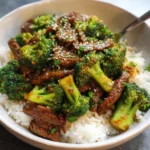
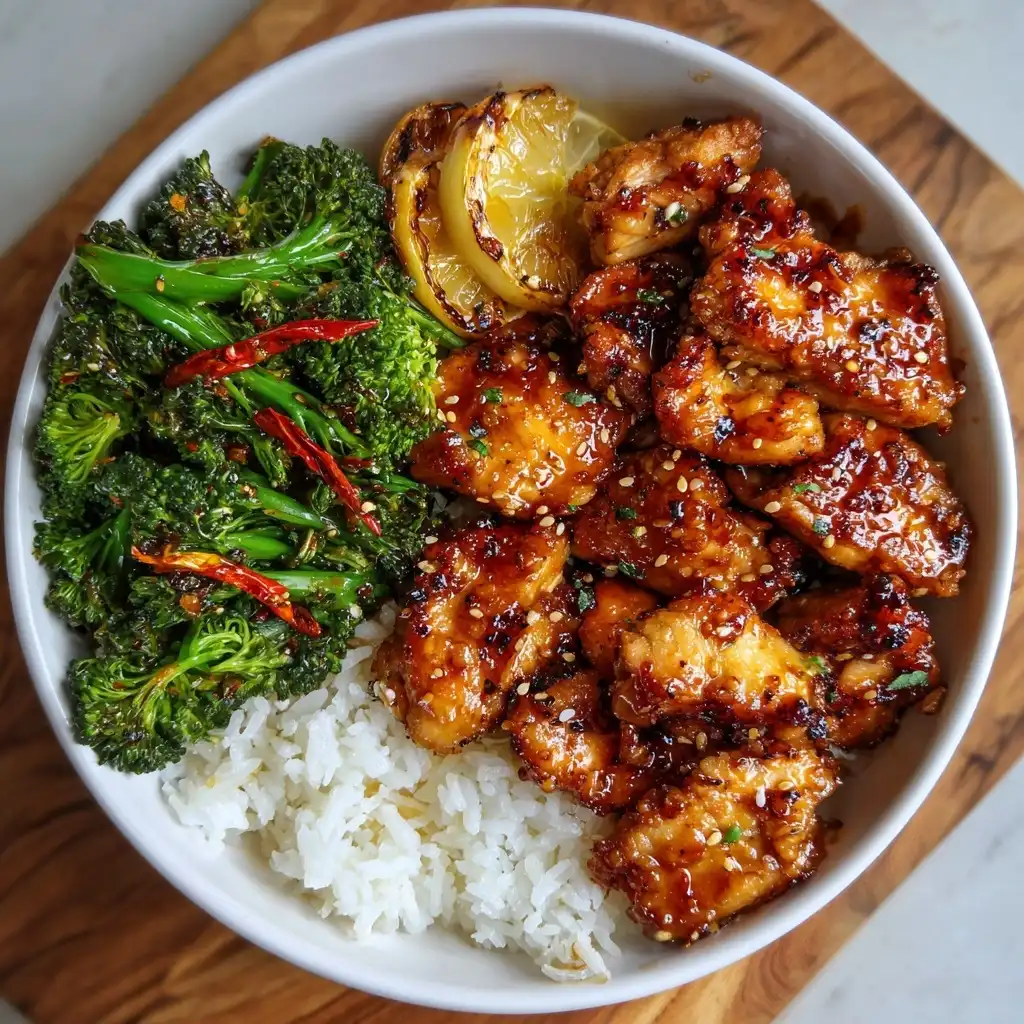
- Assemble Bowls (5 minutes): Divide 4 cups cooked base (e.g., 1 cup cooked brown rice per bowl) among four wide, shallow bowls. Arrange glazed chicken evenly over each. Top generously with roasted broccoli, quick-pickled onions, toasted nuts, sesame seeds, and fresh cilantro or microgreens. Optional drizzle: extra hot honey or chili crisp for heat lovers.
Tips
- Dry Chicken = Golden Chicken: Moisture is the enemy of sear. Always pat chicken thoroughly before marinating *and* again before cooking—even if it means using two paper towel rolls.
- Low-and-Slow Garlic, High-and-Fast Chicken: Garlic burns at 300°F—so infuse it gently in warm oil first. Chicken needs high heat for Maillard reaction—don’t crowd the pan, and don’t stir prematurely.
- Sauce Consistency Control: If sauce reduces too much and becomes sticky, whisk in 1–2 tsp warm water or chicken broth to loosen. If too thin, simmer 30 seconds longer—but never boil vigorously, or honey will crystallize.
- Meal Prep Mastery: Cook components separately: marinate & sear chicken (store up to 4 days); make sauce (refrigerate up to 1 week); roast veggies (up to 5 days); cook grains (up to 6 days). Reheat chicken + sauce together in skillet; add fresh toppings just before serving.
- Leftover Magic: Transform leftovers into tacos (warm corn tortillas + slaw), fried rice (scramble egg + day-old rice + chopped chicken + peas/carrots), or a loaded baked potato (top baked russet with chicken, broccoli, and extra pickled onions).
- No-Stick Skillet Secret: For stainless steel pans, heat oil until it shimmers *then* add chicken—immediately press down gently with a spatula for 10 seconds. This creates instant contact and prevents sticking.
- Taste-As-You-Go Discipline: Dip a cooled spoon into sauce *before adding raw garlic* to assess sweetness/heat balance. Adjust with a pinch of flaky sea salt (enhances sweetness), a dash of vinegar (brightens), or ½ tsp honey (rounds heat).
Variations and Customizations
This recipe is intentionally modular—designed to evolve with your pantry, palate, and purpose. Here’s how to personalize it with confidence:
- Protein Swaps: Try shrimp (add in last 90 seconds of glazing), tempeh cubes (marinate 30+ min, pan-fry until crisp), ground turkey (brown thoroughly, then glaze), or crispy baked tofu (extra-firm, pressed, cubed, air-fried at 400°F for 18 min).
- Global Twists:
- Korean-Inspired: Swap tamari for gochujang (1 tbsp) + soy sauce; add 1 tsp rice wine and ½ tsp toasted sesame seeds to sauce; top with kimchi and nori strips.
- Thai-Inspired: Replace hot honey with tamarind paste + palm sugar syrup; add 1 tbsp lime zest + 1 Thai chile (finely minced); garnish with crushed peanuts, basil, and cucumber ribbons.
- Mediterranean-Inspired: Use lemon-infused honey; replace soy with 1 tbsp capers + 1 tsp Dijon mustard; top with kalamata olives, crumbled feta, and parsley.
- Dietary Adaptations:
- Keto/Low-Carb: Serve over riced cauliflower sautéed in ghee + garlic; double the nuts and broccoli; use sugar-free hot honey (e.g., erythritol-based) or make your own with monk fruit sweetener.
- Vegan: Use king oyster mushrooms (sliced thick, marinated like chicken); replace honey with date syrup + cayenne; add 1 tsp nutritional yeast to sauce for umami boost.
- Paleo/Whole30: Skip honey entirely—use 2 tbsp pure maple syrup (not compliant with strict Whole30) OR create a date-chile paste (soak 4 pitted dates + 1 dried ancho in hot water 10 min, blend smooth); use coconut aminos.
- Gluten-Free Verified: Ensure tamari is certified GF (many contain hidden wheat starch); double-check hot honey labels—some use malt vinegar (barley-derived).
- Heat-Level Dial: Mild—use honey infused with ancho or smoked paprika; Medium—Calabrian or chipotle; Bold—Naga Jolokia or ghost pepper honey (start with 1 tsp!); Ultra-Heat—drizzle with chili crisp *after* plating.
- Texture Playbook: Add crunch with julienned jicama or radish; creaminess with smashed avocado or tahini drizzle; chewiness with dried cranberries or cherries (unsweetened); freshness with shaved fennel or watermelon radish.
Health Considerations and Nutritional Value
A thoughtfully composed Hot Honey Garlic Chicken Bowl is nutritionally robust—far exceeding typical takeout fare. Here’s a detailed analysis per standard serving (1.5 cups base + 4 oz chicken + ½ cup broccoli + toppings):
- Macronutrient Profile: ~520–610 kcal | 38–44g protein | 42–58g carbohydrates (of which 6–9g fiber, depending on grain choice) | 22–28g total fat (mostly heart-healthy monounsaturated and omega-6 from nuts/oil). Protein supports muscle maintenance and satiety; complex carbs fuel sustained energy; healthy fats aid vitamin absorption (A, D, E, K) and hormone health.
- Functional Superstars:
- Garlic: Contains allicin—shown in clinical studies to support cardiovascular health, immune modulation, and anti-inflammatory pathways (especially when raw garlic is added at the end).
- Broccoli: Rich in sulforaphane, a potent phytonutrient linked to detoxification enzyme activation and cellular protection. Roasting preserves more glucosinolates than boiling.
- Raw Honey: Raw, unfiltered varieties retain bee pollen, enzymes (diastase, invertase), and polyphenols—associated with antioxidant capacity and prebiotic effects. Note: Pasteurized honey loses most bioactive compounds.
- Ginger: Contains gingerol—clinically studied for nausea reduction, joint pain relief, and digestive motility support.
- Dietary Notes:
- Sodium Awareness: Tamari contributes ~480mg sodium per serving. Reduce by 25% and boost umami with 1 tsp mushroom powder or nutritional yeast. Rinsing quick-pickled onions removes ~30% excess salt.
- Sugar Transparency: One serving contains ~22–26g total sugar—primarily from honey (natural fructose/glucose) and inherent veggie sugars. No added refined sugars. For metabolic health, pair with high-fiber base (e.g., barley or farro) to blunt glycemic response.
- Allergen Alert: Tree nuts (peanuts/cashews) are common allergens. Substitute sunflower or pumpkin seeds for crunch. Soy is present in tamari—coconut aminos are a seamless swap.
- Food Safety First: Chicken must reach 165°F internally. Use an instant-read thermometer—not color or juices—as the only reliable indicator. Reheat leftovers to 165°F throughout.
- Who Benefits Most?: Athletes (high-protein recovery meal), busy professionals (nutrient-dense, time-efficient), individuals managing blood sugar (low-glycemic index when paired with fiber-rich grains), and those seeking gut-supportive foods (fermented pickles, prebiotic garlic/onions, diverse plant fibers).
Ingredients
- 1.5 lbs boneless, skinless chicken thighs, cut into 1.5-inch pieces
- 3 tbsp low-sodium tamari (or coconut aminos for soy-free)
- 1 tbsp unseasoned rice vinegar
- 1 tbsp fresh ginger, finely grated
- 1 tsp toasted sesame oil
- ½ tsp freshly ground black pepper
- 12 large garlic cloves, divided (10 minced for sauce, 2 minced for marinade)
- ⅓ cup artisan hot honey (e.g., Mike’s Hot Honey or homemade)
- 2 tbsp additional low-sodium tamari
- 1 tbsp additional unseasoned rice vinegar
- 1 tsp fresh lime juice
- ¼ tsp red pepper flakes (optional, for extra heat)
- 3 tbsp avocado oil, divided (2 tbsp for garlic infusion, 1 tbsp for searing)
- 4 cups cooked base of choice (e.g., brown rice, quinoa, riced cauliflower—about 1 cup per bowl)
- 2 cups broccoli florets, roasted
- ⅓ cup raw peanuts or cashews, toasted
- ½ small red onion, very thinly sliced
- ¼ cup rice vinegar (for pickling)
- 1 tbsp granulated sugar (for pickling)
- ½ tsp kosher salt (for pickling)
- 1 tbsp sesame seeds, toasted
- Fresh cilantro or microgreens, for garnish
- Extra hot honey or chili crisp, for finishing (optional)
Directions
- In a medium bowl, combine chicken, 3 tbsp tamari, 1 tbsp rice vinegar, grated ginger, toasted sesame oil, black pepper, and 2 minced garlic cloves. Toss gently to coat. Cover and refrigerate 15–30 minutes.
- Prepare quick-pickle: In a small bowl, combine sliced red onion, ¼ cup rice vinegar, sugar, and salt. Stir well and set aside for at least 10 minutes.
- Preheat oven to 425°F. Toss broccoli florets with 1 tbsp avocado oil, salt, and pepper. Spread on a parchment-lined baking sheet and roast 18–20 minutes until edges are charred and tender-crisp.
- Toast nuts: In a dry skillet over medium-low heat, toast peanuts or cashews, stirring constantly, for 3–4 minutes until golden and fragrant. Cool completely.
- Make sauce: In a small saucepan over low heat, warm 2 tbsp avocado oil. Add 10 minced garlic cloves. Cook gently 4–5 minutes until soft and fragrant (do not brown). Remove from heat. Whisk in hot honey, 2 tbsp tamari, 1 tbsp rice vinegar, lime juice, and red pepper flakes (if using). Set aside.
- Heat remaining 1 tbsp avocado oil in a large skillet over medium-high heat until shimmering. Pat chicken *very dry*. Add in a single layer and sear undisturbed 3–4 minutes until deeply browned. Flip and cook 3 more minutes until internal temp reaches 165°F. Transfer to a plate.
- Reduce heat to medium-low. Return chicken to skillet. Pour sauce over top. Simmer gently 1–2 minutes, stirring to coat, until sauce thickens and clings.
- Remove from heat. Stir in reserved 2 tsp raw minced garlic and an extra squeeze of lime juice.
- Divide cooked base among four bowls. Top with glazed chicken, roasted broccoli, pickled onions, toasted nuts, sesame seeds, and fresh herbs. Drizzle with extra hot honey or chili crisp if desired.
FAQ
- Can I make this in a slow cooker or Instant Pot?
- Yes—with adjustments. For Instant Pot: Use Sauté mode to sear chicken and garlic-infused oil, then pressure cook on High for 8 minutes with ¼ cup broth. Release naturally 5 minutes, then thicken sauce using Sauté mode with cornstarch slurry (1 tsp cornstarch + 1 tbsp water). Slow cooker: Sear chicken first, then cook on Low 3–4 hours with sauce ingredients (omit raw garlic until end). Note: Broccoli should be added fresh after cooking—never slow-cooked.
- Why does my sauce separate or become greasy?
- This usually occurs from overheating honey (causing oil separation) or adding cold sauce to hot chicken too quickly. Solution: Warm sauce gently *before* adding to chicken, and stir constantly over low heat. If separation happens, whisk in 1 tsp warm water or tamari to re-emulsify.
- Can I freeze leftovers?
- Absolutely. Freeze chicken + sauce (without fresh toppings or greens) in airtight containers for up to 3 months. Thaw overnight in fridge. Reheat gently in skillet with 1 tsp water or broth to restore gloss. Add fresh toppings after reheating.
- Is there a way to reduce the garlic aftertaste?
- Yes—balance is key. Pair generously with fresh herbs (cilantro, mint), acidic elements (lime, vinegar), and crunchy textures (nuts, cabbage slaw). Chewing fresh parsley or drinking green tea post-meal also helps neutralize volatile sulfur compounds.
- What’s the best rice for maximum sauce adherence?
- Sushi rice or short-grain brown rice—their higher amylopectin starch content creates a slightly sticky, cohesive texture that holds glaze beautifully. Rinse thoroughly before cooking to remove excess surface starch and prevent gumminess.
- My hot honey is extremely spicy—how do I tone it down?
- Don’t dilute the honey—dilute the *effect*. Increase the tamari by 1 tsp (salt suppresses perceived heat), add ½ tsp lime zest (citrus oils mask capsaicin burn), or stir in 1 tsp neutral oil (capsaicin is fat-soluble—oil coats receptors). Serve with cooling toppings: plain Greek yogurt, sliced cucumber, or chilled coconut milk drizzle.
- Can I use frozen chicken?
- Not recommended for best texture. Frozen-thawed chicken releases excess water, preventing proper sear and diluting sauce. If necessary, thaw fully in fridge, then *pat extremely dry* and increase sear time by 1 minute per side.
- How do I keep this Whole30-compliant?
- Omit honey entirely. Create a date-chile paste: soak 4 pitted Medjool dates + 1 dried ancho chile in ¼ cup hot water for 10 minutes; blend until smooth. Use in place of hot honey. Ensure tamari is certified Whole30 (e.g., San-J), and skip sesame oil (not compliant)—use avocado oil only.
Summary
Hot Honey Garlic Chicken Bowls are a masterclass in balanced flavor science—where fiery chiles harmonize with floral honey, pungent raw garlic cuts through rich umami, and tender seared chicken anchors a nutrient-dense, endlessly adaptable grain bowl experience.
With smart prep strategies, global variations, and intentional nutrition in mind, this recipe transcends trend status to become a cornerstone of mindful, joyful, and sustainable home cooking—for beginners and seasoned chefs alike.