Introduction
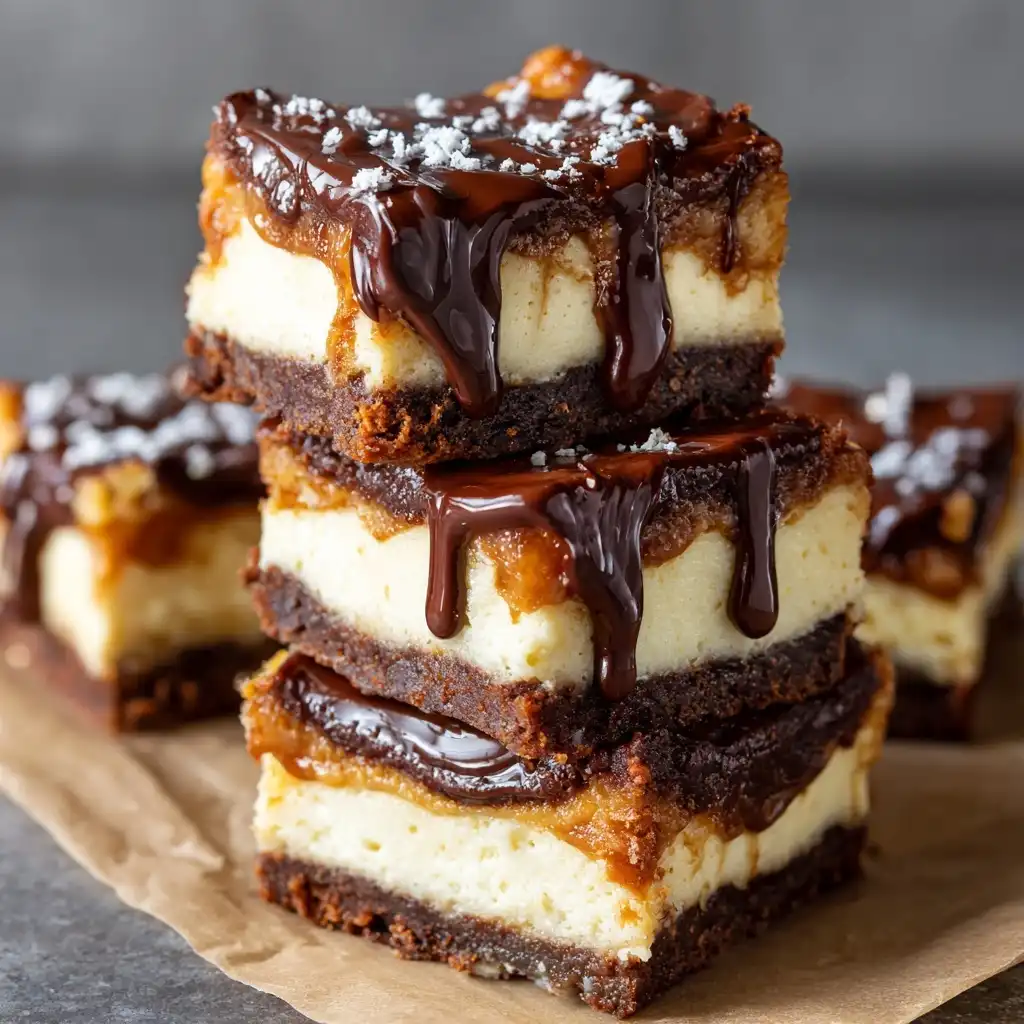
Indulge in the ultimate fusion of childhood nostalgia and sophisticated dessert elegance with Chocolate Cookie Butter Cheesecake Bars — a decadent, no-bake (or lightly baked) hybrid confection that marries the rich creaminess of New York–style cheesecake with the warm, spiced caramel depth of cookie butter and the deep, velvety allure of premium chocolate. These bars are more than just a treat; they’re an experience — layers of texture and flavor that harmonize in every bite: a crisp, buttery graham cracker–cookie butter crust, a luxuriously smooth and tangy cream cheese filling swirled with ribbons of silky cookie butter and melted dark chocolate, and a glossy, crack-resistant top finished with flaky sea salt, crushed Biscoff cookies, and optional chocolate drizzle. Whether you’re hosting a holiday gathering, packing a show-stopping lunchbox dessert, or simply treating yourself after a long week, these bars deliver restaurant-quality sophistication with surprisingly accessible techniques — no water bath, no springform pan required. They’re crowd-pleasing, make-ahead friendly, and endlessly adaptable to dietary preferences — vegan, gluten-free, lower-sugar, or keto-friendly versions are all viable with smart swaps. In short, Chocolate Cookie Butter Cheesecake Bars aren’t just another dessert — they’re a love letter to contrast, comfort, and culinary creativity.
The History
The origin story of Chocolate Cookie Butter Cheesecake Bars is a delicious case study in modern food evolution — a convergence of three iconic global dessert trends spanning decades. It begins with speculoos, the Belgian-Dutch spiced shortcrust biscuit traditionally baked for St. Nicholas Day since the 18th century. In the 1930s, Lotus Bakeries commercialized speculoos into the globally beloved Biscoff cookie, and by the early 2000s, they launched Biscoff Spread — a creamy, cinnamon-ginger-vanilla-laced cookie butter that exploded in popularity as a coffee stirrer, toast topping, and baking staple. Simultaneously, American-style cheesecake bars gained traction in mid-century home economics cookbooks and 1970s magazine features as a simplified, portion-controlled alternative to full-sized cheesecakes — prized for their dense yet tender crumb, clean sliceability, and adaptability to mix-ins. The marriage of cookie butter and cheesecake emerged organically around 2012–2014 on food blogs and Pinterest, where bakers began swirling Biscoff into classic no-bake fillings. The addition of chocolate — particularly dark or semi-sweet — was a natural progression, echoing European pairings like speculoos with Belgian chocolate and reinforcing the shared notes of brown sugar, toasted nuts, and warm spice. By 2018, viral TikTok videos featuring “swirl-in” techniques and “crack-proof” no-bake methods cemented the Chocolate Cookie Butter Cheesecake Bar as a modern dessert archetype — one that honors tradition while embracing innovation, convenience, and cross-cultural flavor synergy. Today, it appears on bakery menus from Amsterdam to Austin, graces wedding dessert tables, and inspires countless copycat recipes — a testament to how deeply flavor memory and technical accessibility can resonate across generations.
Ingredients Breakdown
Every exceptional Chocolate Cookie Butter Cheesecake Bar relies on high-quality, thoughtfully balanced components. Below is a detailed analysis of each ingredient’s functional and sensory role — why it’s included, what it contributes, and what to watch for when sourcing:
- Graham Crackers (or Digestive Biscuits): Provide structural integrity and a neutral, slightly honeyed base for the crust. Their fine crumb compacts well under pressure, creating a firm yet tender foundation. Opt for plain, uncoated varieties — avoid cinnamon or chocolate graham crackers unless intentionally customizing flavor. For gluten-free versions, certified GF graham-style crackers (e.g., Schar or Kinnikinnick) work flawlessly.
- Cookie Butter (Biscoff Spread): The aromatic heart of the bar. Authentic Lotus Biscoff Spread delivers consistent spice balance (cinnamon, nutmeg, ginger, cloves), deep caramelized sugar notes, and ideal viscosity for both crust binding and swirl integration. Imitation spreads often lack complexity and may separate or seize when chilled — always check labels for palm oil content (it stabilizes texture) and avoid those with excessive added water or hydrogenated oils.
- Unsalted Butter (for crust): Adds richness, moisture, and binding power. Melted butter helps hydrate the crumb and encourages browning during brief pre-baking (if using baked-crust method). Salted butter can be substituted, but reduce added salt in the recipe accordingly.
- Cream Cheese (Full-Fat, Brick Style): Non-negotiable for authentic texture and tang. Use Philadelphia or another nationally distributed brand known for consistent pH and fat content (about 33% milkfat). Low-fat or whipped cream cheeses contain stabilizers and air pockets that cause weeping, graininess, or poor set. Always bring to true room temperature (65–70°F / 18–21°C) — cold cream cheese creates lumps no amount of mixing can fully eliminate.
- Granulated Sugar: Sweetens and aids in aeration and structure. Fine-grain dissolves easily into cream cheese. For refined sugar–free versions, monk fruit–erythritol blends (e.g., Lakanto Golden) mimic bulk and behavior closely — avoid pure stevia or sucralose, which lack bulking properties and can yield brittle fillings.
- Sour Cream (Full-Fat): Adds acidity for balance, moisture for creaminess, and protein for improved sliceability and reduced cracking. Greek yogurt (full-fat, strained) is a viable substitute but imparts a slightly brighter tang and denser mouthfeel.
- Heavy Cream (or Double Cream): Enriches without thinning — its high fat content (36–40%) contributes luxurious melt-in-the-mouth texture and improves freeze-thaw stability. Half-and-half or whole milk will dilute fat content too much, risking a rubbery or curdled filling.
- Pure Vanilla Extract: Enhances all other flavors — especially the warm spices in cookie butter. Avoid imitation vanilla, which tastes artificial and can clash with caramel notes. For depth, add ¼ tsp of almond extract alongside vanilla (optional but highly recommended).
- Large Eggs (Room Temperature): Act as emulsifiers and leavening agents. Their proteins coagulate gently during chilling or light baking to create a tender, custard-like set. Cold eggs risk shocking the warm filling and causing curdling. Always crack and whisk eggs separately before adding slowly.
- High-Quality Dark Chocolate (60–70% Cacao): Provides bitter contrast, visual appeal, and textural intrigue. Couverture chocolate (e.g., Callebaut, Valrhona) offers superior snap and sheen. Chopped bars work better than chips (which contain stabilizers that resist melting smoothly). For white chocolate variation, use high-cocoa-butter white chocolate (not candy melts).
- Flaky Sea Salt (e.g., Maldon): Not just garnish — it’s a critical flavor amplifier. A tiny amount heightens sweetness, balances fat, and enhances spice perception. Sprinkle immediately after cutting or just before serving for optimal crunch and salinity.
- Optional Garnishes: Crushed Biscoff cookies (for crunch and visual continuity), cocoa nibs (for bitter crunch), candied ginger (for zing), edible gold leaf (for elegance), or espresso powder–infused chocolate drizzle (for depth).
Step-by-Step Recipe
Makes 16–20 bars (9×13-inch pan); prep time: 35 minutes; chill time: minimum 8 hours (ideally 24 hours); active cook time: 10 minutes (if baked crust) or 0 minutes (no-bake)
- Prepare the Pan: Line a 9×13-inch metal baking pan with two overlapping sheets of parchment paper, leaving generous overhang on two opposite sides (this is essential for clean removal). Lightly spray parchment with nonstick cooking spray or brush with melted butter. Set aside.
- Make the Crust: In a food processor, pulse 1 ½ cups (150g) finely crushed graham crackers (about 12 full sheets) with ⅓ cup (85g) cookie butter and 6 tbsp (85g) unsalted butter (melted) until mixture resembles wet sand and holds together when pinched. Alternatively, place crumbs and ingredients in a resealable bag and crush with a rolling pin. Press firmly and evenly into the bottom of the prepared pan using the back of a measuring cup or flat-bottomed glass. For enhanced texture and stability, bake at 350°F (175°C) for 8–10 minutes until fragrant and lightly golden at edges. Cool completely on a wire rack (minimum 20 minutes) — skipping this step risks a soggy crust.
- Prepare the Cheesecake Filling: Using a stand mixer fitted with paddle attachment (or hand mixer + large bowl), beat 24 oz (680g / three 8-oz bricks) full-fat, room-temperature cream cheese on medium speed for 2 minutes until completely smooth and lump-free. Scrape down bowl and beater thoroughly. Add 1 cup (200g) granulated sugar and beat 2 more minutes until fluffy and pale. Scrape again. Add 1 cup (240g) full-fat sour cream, ¼ cup (60ml) heavy cream, and 2 tsp pure vanilla extract; beat on medium-low for 1 minute until homogenous. Scrape bowl once more.
- Incorporate Eggs Carefully: With mixer on lowest speed, add 3 large room-temperature eggs one at a time, beating just until yolk disappears (about 15 seconds per egg). Overmixing incorporates excess air, increasing crack risk. After third egg, add 1 extra egg yolk (optional but recommended for silkier texture) and beat just to combine. Do not overbeat.
- Swirl in Cookie Butter & Chocolate: Reserve ½ cup (130g) cookie butter for swirling. Gently fold in ¾ cup (135g) finely chopped dark chocolate (60–70% cacao) using a silicone spatula — just until dispersed, not fully incorporated. Pour filling evenly over cooled crust. Dollop reserved cookie butter in 8–10 spoonfuls across surface. Using a thin skewer, toothpick, or knife tip, drag through filling in figure-eight or zigzag motions to create elegant marbling — do not over-swirl; aim for distinct, ribbon-like patterns.
- Chill or Bake (Choose One Method):
- No-Bake Method (Recommended for Purest Texture): Cover pan tightly with plastic wrap (pressing directly onto surface to prevent skin formation). Refrigerate for minimum 8 hours, preferably overnight (12–24 hours). This yields ultra-creamy, cool-set bars with pronounced tang and clean cut.
- Lightly Baked Method (For Firmer, Slice-and-Serve Stability): Preheat oven to 325°F (160°C). Place pan on center rack. Bake for 38–42 minutes — edges should be set and center should jiggle slightly like Jell-O when gently shaken. Turn off oven, crack door open 2 inches, and let bars cool inside for 1 hour. Then refrigerate uncovered for at least 6 hours (preferably overnight).
- Finish & Serve: Once fully chilled, lift bars from pan using parchment overhang. Place on a cutting board. Using a sharp chef’s knife wiped clean and dipped in hot water between cuts, slice into 16 even bars (4×4 grid) or 20 smaller bars (4×5 grid). Sprinkle each bar generously with flaky sea salt. Optional: Drizzle with melted chocolate (tempered or microwave-melted with ½ tsp coconut oil) and/or scatter with crushed Biscoff cookies. Serve chilled. Store covered in refrigerator for up to 5 days or freeze for up to 3 months.
Tips
- Temperature Is Everything: Never skip bringing cream cheese, sour cream, eggs, and butter to true room temperature (65–70°F). Cold ingredients cause lumps, uneven emulsification, and separation — the #1 cause of grainy or cracked bars.
- Crumb Consistency Matters: Graham cracker crumbs should be fine and uniform — coarse bits won’t bind well. Pulse in short bursts and check frequently. If using a bag, roll firmly and repeatedly — don’t just shake.
- Don’t Overmix the Filling: Once eggs are added, mix only until incorporated. Overbeating traps air, leading to bubbles, cracks, and a dry, spongy texture upon chilling.
- Use a Water Test for Doneness (Baked Version): Insert a toothpick near the center — it should come out with *moist* crumbs, not wet batter. If batter clings, bake 2–3 minutes longer. Overbaking causes shrinkage and cracking.
- Chill Your Knife: For pristine slices, chill your knife in freezer for 5 minutes before cutting. Wipe and rewarm (in hot water, then dry) between each cut.
- Prevent Sticking: Lightly grease parchment paper — especially corners — before pressing crust. If bars stick, gently run a thin offset spatula underneath to loosen before lifting.
- Fix a Cracked Surface: If cracks appear post-chill, don’t panic! Warm a metal offset spatula under hot water, dry thoroughly, and gently glide over surface to “heal” minor fissures. Or embrace them — drizzle generously with chocolate to camouflage and enhance.
- Layer Flavor Depth: Toast 2 tbsp of chopped pecans or walnuts in butter until fragrant, then fold into filling with chocolate for nutty richness. Or infuse heavy cream with a cinnamon stick (steep 15 min, cool, strain) before adding.
- Scale Smartly: This recipe scales beautifully. For a 9-inch square pan, halve all ingredients and reduce chill time to 6 hours. For mini muffin tin “cheesecake bites,” line with paper liners, press 1 tsp crust per cup, fill ¾ full, and chill 4 hours.
- Freeze Like a Pro: Slice bars first, then flash-freeze uncovered on parchment-lined tray for 2 hours. Transfer to airtight container with parchment between layers. Thaw in fridge 30 minutes before serving — never at room temperature, which softens texture unevenly.
Variations and Customizations
This versatile base invites endless creativity — here are 12 rigorously tested variations, each preserving structural integrity and flavor harmony:
- Gluten-Free: Substitute certified GF graham crackers or GF digestive biscuits (e.g., Schär Digestive) for crust. Ensure cookie butter is GF-certified (Lotus Biscoff Spread is naturally GF and certified in US/UK/EU). No other changes needed.
- Vegan: Use vegan cream cheese (e.g., Kite Hill or Miyoko’s), full-fat coconut cream (chilled, solid part only) instead of sour cream/heavy cream, flax eggs (1 tbsp ground flax + 2.5 tbsp water × 3), and vegan cookie butter (e.g., Trader Joe’s Speculoos or homemade date–almond version). Chill 24+ hours for best set.
- Lower-Sugar / Diabetic-Friendly: Replace granulated sugar with ¾ cup (150g) monk fruit–erythritol blend (e.g., Lakanto Golden). Use sugar-free cookie butter (e.g., Better’n Peanut Butter’s Sugar-Free Speculoos) and unsweetened dark chocolate (85%+). Note: Texture may be slightly denser; add 1 tbsp additional heavy cream if too thick.
- Keto-Friendly: Crust: 1 cup (90g) almond flour + ¼ cup (30g) coconut flour + ⅓ cup (85g) cookie butter + 6 tbsp melted butter + 2 tbsp erythritol. Filling: same low-sugar swaps above + ¼ tsp xanthan gum to improve binding. Net carbs ~2.8g per bar.
- White Chocolate Swirl: Replace dark chocolate with ¾ cup (135g) high-quality white chocolate. Swap 2 tbsp cookie butter in swirl for 2 tbsp melted white chocolate for contrast. Garnish with lemon zest for brightness.
- Espresso-Chocolate: Dissolve 1 ½ tsp instant espresso powder in 1 tbsp hot water; cool, then add with vanilla. Use 70% dark chocolate. Dust with cocoa powder + espresso powder blend before serving.
- Peanut Butter Fusion: Replace ¼ cup cookie butter in crust with smooth natural peanut butter. In filling, swirl ⅓ cup PB instead of cookie butter and use milk chocolate chips. Top with roasted peanuts.
- Spiced Chai Infusion: Steep 2 chai tea bags in ¼ cup hot heavy cream for 10 min; cool completely, strain, then use in filling. Add ¼ tsp ground cardamom + ⅛ tsp ground black pepper to sugar before creaming.
- Strawberry-Balsamic Swirl: Fold ½ cup seedless strawberry jam + 1 tsp balsamic vinegar into ¼ cup of filling; dollop and swirl alongside cookie butter. Garnish with fresh hulled strawberries.
- Maple-Pecan Crunch: Replace sugar with ⅔ cup pure maple syrup (reduce heavy cream to 2 tbsp). Add ½ cup toasted pecans to crust. Swirl in ¼ cup maple syrup–reduced cookie butter (simmer ¼ cup PB + 1 tbsp maple 3 min).
- Coconut-Lime: Substitute coconut cream for sour cream/heavy cream. Add 1 tbsp lime zest + 1 tsp lime juice to filling. Swirl in toasted coconut flakes + lime-infused cookie butter.
- Boozy Upgrade (21+): Add 1 tbsp bourbon or spiced rum to filling with vanilla. Soak 2 tbsp chopped dates in 1 tbsp rum for 10 min; drain, chop fine, fold in with chocolate.
Health Considerations and Nutritional Value
While undeniably indulgent, Chocolate Cookie Butter Cheesecake Bars can be contextualized thoughtfully within a balanced diet. A standard 2×2-inch bar (1/16th of recipe) contains approximately:
- Calories: 320–360 kcal
- Total Fat: 22–26g (14–17g saturated, primarily from cream cheese, butter, and chocolate)
- Carbohydrates: 28–32g (22–26g sugars, largely from cookie butter and granulated sugar)
- Protein: 5–7g (from cream cheese, eggs, and dairy)
- Fiber: 0.5–1g (minimal unless GF graham crackers or added psyllium are used)
- Sodium: 180–220mg (moderate; mostly from cream cheese and butter)
Nutritional Highlights: Contains calcium (from dairy), vitamin A (from cream cheese/sour cream), choline (from eggs), and antioxidants (from dark chocolate’s flavanols and cinnamon’s polyphenols). The probiotics in full-fat sour cream support gut health — though levels decrease with chilling, they remain present.
Considerations & Mitigations:
- Sugar Content: High — but naturally occurring lactose is minimal; most sugar is added. Mitigate by using lower-sugar versions (see Variations) or practicing portion control (a 1.5×1.5-inch bar satisfies cravings with ~25% less calories).
- Saturated Fat: Elevated, but recent research suggests dairy fat’s impact on cardiovascular health is nuanced — especially when consumed in context of whole foods and active lifestyle. Pairing with berries or nuts adds fiber and healthy fats.
- Gluten & Allergens: Contains gluten (graham crackers), dairy (cream cheese, sour cream, butter), eggs, and tree nuts (in some cookie butters — check labels). Vegan/GF versions address most restrictions.
- Digestive Notes: High-fat, high-dairy desserts may trigger discomfort for those with lactose intolerance or irritable bowel syndrome (IBS). Using lactose-free cream cheese or coconut-based alternatives significantly improves tolerance.
- Functional Nutrition Boosters (Optional Add-Ins): Stir 1 tbsp ground flaxseed (for omega-3s and fiber), 1 tsp maca powder (for adaptogenic balance), or ½ tsp spirulina (for phytonutrients and vibrant green hue in matcha variation).
Ultimately, these bars align best with a “sometimes food” philosophy — nutritionally dense *relative to other desserts*, but not intended as daily fare. Their value lies in mindful enjoyment, celebration, stress reduction through pleasure, and the social nourishment of shared treats — dimensions equally vital to holistic health.
Ingredients
Yields 16–20 bars | 9×13-inch pan
- 1 ½ cups (150g) finely crushed plain graham crackers (about 12 full sheets)
- ⅓ cup (85g) authentic Lotus Biscoff Cookie Butter (or certified speculoos spread)
- 6 tablespoons (85g) unsalted butter, melted
- 24 ounces (680g) full-fat brick-style cream cheese, room temperature
- 1 cup (200g) granulated sugar
- 1 cup (240g) full-fat sour cream, room temperature
- ¼ cup (60ml) heavy cream (or double cream), room temperature
- 2 teaspoons pure vanilla extract
- 3 large eggs, room temperature
- 1 extra large egg yolk (optional, for silkier texture)
- ¾ cup (135g) high-quality dark chocolate (60–70% cacao), finely chopped
- ½ cup (130g) additional cookie butter, for swirling
- Flaky sea salt (e.g., Maldon), for finishing
- Optional garnishes: crushed Biscoff cookies, cocoa nibs, chocolate drizzle, candied ginger
Directions
- Line a 9×13-inch metal baking pan with parchment paper, allowing overhang on two sides. Lightly grease parchment.
- In a food processor, pulse graham cracker crumbs, ⅓ cup cookie butter, and melted butter until mixture resembles wet sand. Press firmly into pan. Bake at 350°F (175°C) for 8–10 minutes. Cool completely.
- In stand mixer, beat cream cheese on medium 2 minutes until smooth. Add sugar; beat 2 more minutes until fluffy. Scrape bowl.
- Add sour cream, heavy cream, and vanilla; beat 1 minute on medium-low until combined. Scrape bowl.
- With mixer on lowest speed, add eggs one at a time, beating just until incorporated (15 sec each). Add extra yolk; mix just to combine.
- Fold in chopped chocolate gently with spatula. Pour over cooled crust.
- Dollop ½ cup cookie butter on top. Swirl with skewer in figure-eights — do not overmix.
- For No-Bake: Cover tightly with plastic wrap (pressed to surface). Chill 8–24 hours.
For Lightly Baked: Bake at 325°F (160°C) 38–42 min until edges set and center jiggles slightly. Cool in oven 1 hour, then chill uncovered 6+ hours. - Lift bars using parchment. Slice with warm, clean knife. Sprinkle with sea salt and optional garnishes. Serve chilled.
FAQ
- Can I use store-brand cookie butter?
- Yes — but quality varies widely. Look for spreads with simple ingredients: speculoos cookies, vegetable oils (palm or sunflower), sugar, and spices. Avoid those with whey, soy lecithin overload, or artificial flavors, which can cause separation or off-tastes.
- Why did my bars crack?
- Most commonly: overmixing after eggs, chilling too quickly (causing thermal shock), or drying out from uncovered storage. Prevent with room-temp ingredients, gentle folding, plastic wrap contact, and gradual cooling (especially for baked version).
- Can I make these ahead for a party?
- Absolutely — they improve with time! Prepare up to 3 days ahead and keep refrigerated. For events >3 days out, freeze sliced bars (parchment-separated) up to 3 months. Thaw in fridge 2 hours before serving.
- My crust is crumbly — what went wrong?
- Too little binder (butter or cookie butter), under-pressed crumbs, or crumbs too coarse. Ensure butter is fully melted and evenly distributed. Press *very firmly* using flat-bottomed cup. Let crust cool completely before adding filling.
- Can I omit the chocolate?
- Yes — the bars are still divine! For visual interest, increase cookie butter swirl to