Introduction
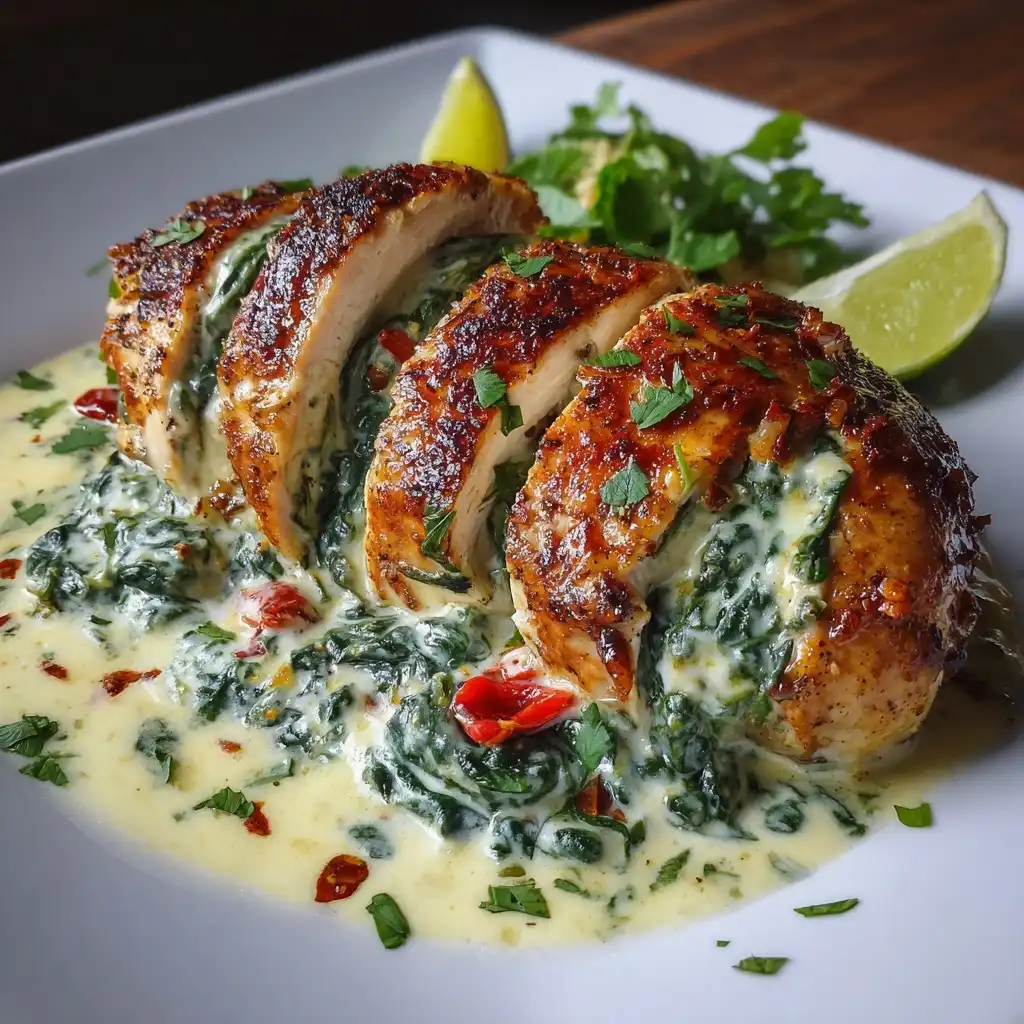
Creamy Spinach Stuffed Chicken Breast is a restaurant-worthy, gourmet-inspired dish that brings together tender, juicy chicken with a luxuriously rich and savory filling—crafted from fresh spinach, creamy cheeses, aromatic herbs, and subtle garlic notes. Elegant yet approachable, this dish strikes the perfect balance between comfort food familiarity and elevated culinary flair. Whether served for an intimate weeknight dinner, a special occasion centerpiece, or even meal-prepped for healthy lunches, its versatility, visual appeal, and deeply satisfying flavor profile make it a beloved favorite across home kitchens and food blogs alike. Its golden-brown sear, tender interior, and velvety spinach-cream cheese core deliver a multi-sensory experience—savory, creamy, herbaceous, and just slightly tangy—making every bite both nourishing and indulgent.
The History
While stuffed chicken breast has roots in classic European cuisines—particularly Italian pollo ripieno and French suprêmes farcies—the creamy spinach variation gained widespread popularity in the late 20th and early 21st centuries as home cooks sought healthier, protein-forward alternatives to heavy pasta or red meat dishes. The rise of the “gourmet home cook” movement, fueled by Food Network shows, celebrity chef cookbooks, and early food blogging platforms, helped cement spinach-and-cream-cheese-stuffed chicken as a signature “fancy but doable” recipe. Its origins trace loosely to traditional Italian spinaci e ricotta fillings adapted for poultry, later refined with American pantry staples like cream cheese, mozzarella, and grated Parmesan for enhanced meltability and richness. Over time, nutrition-conscious adaptations emerged—incorporating Greek yogurt, reduced-fat cheeses, or plant-based alternatives—while maintaining the dish’s soul: a harmonious union of lean protein and verdant, creamy vegetable goodness.
Ingredients Breakdown
Every element in Creamy Spinach Stuffed Chicken Breast serves a distinct functional and sensory role—no ingredient is arbitrary. Let’s explore each component in depth:
- Chicken Breasts (boneless, skinless): The canvas—ideally 6–8 oz each, uniform in thickness for even cooking. High-quality, air-chilled, or organic chicken yields superior moisture retention and cleaner flavor. Brining (even briefly) enhances juiciness and seasoning penetration.
- Fresh Spinach: Preferred over frozen for texture control and minimal water content. Baby spinach offers tenderness; mature leaves provide deeper earthiness. Sautéing first removes excess moisture—critical to prevent a soggy filling—and concentrates flavor.
- Cream Cheese: Acts as the foundational binder and source of luxurious mouthfeel. Full-fat ensures optimal melt and structure; low-fat versions often separate or become grainy. Softened at room temperature for seamless blending.
- Grated Parmesan Cheese: Adds umami depth, saltiness, and a subtle nutty sharpness. Freshly grated (not pre-shredded) melts smoothly and delivers superior aroma due to active enzymes and natural oils.
- Mozzarella (shredded, low-moisture): Provides stretch, mild sweetness, and structural integrity when baked. Avoid fresh mozzarella balls—they release too much water and compromise filling cohesion.
- Garlic (fresh minced): Offers pungent, aromatic warmth. Sautéed gently to mellow raw bite while preserving complexity—not burned, as bitterness will dominate.
- Onion (finely diced yellow or shallot): Builds aromatic base; sautéed until translucent for sweetness and depth without overpowering.
- Fresh Herbs (especially basil, parsley, thyme): Basil contributes bright, peppery-sweet notes; flat-leaf parsley adds clean, grassy freshness; thyme lends subtle woodsy earthiness. Dried herbs may be substituted but lack volatile oils—use ⅓ the amount.
- Lemon Zest: A secret weapon—brightens the entire filling, cuts through richness, and enhances perception of savoriness without adding acidity.
- Seasonings (sea salt, freshly ground black pepper, optional red pepper flakes): Salt amplifies all flavors and aids protein denaturation for juicier chicken; pepper adds gentle heat and complexity; red pepper flakes offer customizable warmth.
- Olive Oil (extra-virgin): Used for sautéing and searing—imparts fruitiness and polyphenol-rich antioxidants. Reserve high-smoke-point oil (like avocado or grapeseed) for high-heat searing if preferred.
- Chicken Broth or White Wine (for deglazing & pan sauce): Captures fond (browned bits), adds liquid depth, and forms the base for a luscious, glossy pan reduction that ties the dish together.
- Heavy Cream or Half-and-Half (optional finish): Enriches pan sauce with silkiness and body—added off-heat to prevent curdling.
Step-by-Step Recipe
- Prep the Chicken: Place boneless, skinless chicken breasts on a clean cutting board. Using a sharp, flexible boning knife or chef’s knife, carefully butterfly each breast horizontally—slice almost all the way through, then open like a book. Cover with plastic wrap and gently pound with a meat mallet or rolling pin to ¼-inch even thickness. This ensures uniform stuffing, rolling, and cooking. Pat dry thoroughly with paper towels—moisture is the enemy of browning.
- Make the Filling: In a large skillet over medium heat, warm 1 tbsp olive oil. Sauté ½ cup finely diced yellow onion until soft and translucent (~4 minutes). Add 2 minced garlic cloves and cook 30 seconds until fragrant. Stir in 6 oz fresh baby spinach in batches, wilting completely and pressing out excess liquid with a wooden spoon. Transfer mixture to a fine-mesh strainer; press firmly with the back of a spoon to extract every drop of moisture—this step cannot be skipped. Cool completely. In a mixing bowl, combine the cooled spinach-onion-garlic mixture with 4 oz softened full-fat cream cheese, ½ cup freshly grated Parmesan, ½ cup shredded low-moisture mozzarella, 1 tsp lemon zest, 2 tbsp chopped fresh basil, 2 tbsp chopped flat-leaf parsley, ½ tsp dried thyme (or 1 tsp fresh), ½ tsp sea salt, and ¼ tsp freshly ground black pepper. Mix until fully homogenous—no streaks of cheese remain. Taste and adjust seasoning.
- Stuff and Roll: Lay each pounded chicken breast flat. Spoon ⅓ to ½ cup filling evenly across the center, leaving a ½-inch border on all sides. Carefully roll each breast tightly from the short end, tucking in the sides as you go to seal the filling. Secure each roll with 2–3 toothpicks or kitchen twine—ensure they’re placed perpendicular to the roll for easy removal later. Refrigerate stuffed breasts for 15–30 minutes to firm up—this prevents unraveling during searing.
- Sear to Perfection: Heat 1.5 tbsp olive oil or avocado oil in a heavy-bottomed stainless steel or cast-iron skillet over medium-high heat until shimmering but not smoking. Season rolls generously with salt and pepper. Place seam-side down first—press gently for 10 seconds to seal. Sear undisturbed for 4–5 minutes per side (including ends), rotating carefully with tongs, until deeply golden brown and crust forms. Reduce heat to medium if browning too fast. Remove to a clean plate—do not wash the skillet yet!
- Bake for Tender Doneness: Preheat oven to 375°F (190°C). Transfer seared chicken rolls to a parchment-lined baking sheet or oven-safe skillet. Roast for 20–25 minutes, or until internal temperature reaches 160°F (71°C) when measured at the thickest part with an instant-read thermometer. Carryover cooking will bring it to the safe 165°F (74°C). Rest uncovered for 5 minutes before slicing—this allows juices to redistribute.
- Make the Pan Sauce (Optional but Highly Recommended): While chicken rests, return the stovetop skillet to medium heat. Add ¼ cup dry white wine or low-sodium chicken broth. Use a wooden spoon to vigorously scrape up all browned bits (fond)—this is pure flavor. Simmer 2–3 minutes until reduced by half. Stir in 2 tbsp cold unsalted butter, one piece at a time, swirling constantly until emulsified and glossy. Optional: stir in 1 tbsp heavy cream or Greek yogurt for extra richness. Finish with a squeeze of fresh lemon juice and additional chopped parsley.
- Plate and Serve: Carefully remove toothpicks or twine. Slice each roll diagonally into ¾-inch thick medallions—clean cuts reveal the beautiful spiral of creamy green filling. Spoon pan sauce generously over slices or serve on the side. Garnish with lemon wedges, microgreens, or toasted pine nuts for textural contrast.
Tips
- Pounding Precision: Always pound between two sheets of plastic wrap or parchment to prevent sticking and ensure even thickness. Start from the center and work outward in gentle, even strokes—never hammer aggressively, which can tear the meat.
- Dry Surface = Better Sear: Moisture inhibits Maillard reaction. Pat chicken *extremely* dry before seasoning and searing—even re-pat after resting if condensation forms.
- Filling Temperature Matters: Cold filling helps hold shape during rolling and prevents premature melting. If your kitchen is warm, chill the filling for 10 minutes before stuffing.
- Don’t Skip the Rest: Cutting into hot chicken releases steam and precious juices. Resting for 5–7 minutes allows muscle fibers to relax and reabsorb moisture—resulting in significantly juicier slices.
- Thermometer is Non-Negotiable: Visual cues are unreliable. An instant-read thermometer eliminates guesswork and prevents overcooking—a single degree past 165°F can yield dry chicken.
- Searing Order: Always sear seam-side down first—it creates the strongest initial seal. Then rotate to sear all four sides (top, bottom, and both ends) for full crust development and visual appeal.
- Skillet Choice: Stainless steel or cast iron provides superior browning vs. nonstick (which inhibits fond formation). If using nonstick, transfer to a preheated oven-safe pan *before* baking to build fond separately.
- Spinach Prep Hack: For ultra-fast moisture removal, squeeze wilted spinach in a clean kitchen towel like a sponge—far more effective than straining alone.
- Twine Over Toothpicks: Kitchen twine is safer (no risk of missing a toothpick) and creates more even tension. Use cotton twine—never synthetic, which can melt.
- Make-Ahead Friendly: Assemble stuffed, rolled, and secured chicken up to 24 hours ahead; refrigerate covered. Sear and bake just before serving for optimal texture.
- Reheat Gently: To preserve moisture, reheat leftovers in a 325°F oven with a splash of broth, covered with foil, for 12–15 minutes—not in the microwave, which toughens proteins.
Variations and Customizations
This dish is a brilliant culinary canvas—adaptable to dietary needs, seasonal produce, global flavors, and pantry constraints. Here’s how to make it uniquely yours:
- Vegetarian/Vegan Option: Replace chicken with large portobello mushroom caps or thick-cut eggplant steaks. Marinate in balsamic, olive oil, and herbs before roasting. Use cashew cream cheese, nutritional yeast, and spinach-walnut pesto for the filling.
- Gluten-Free: Naturally GF—just verify broth and cheese labels for hidden gluten (some processed cheeses use wheat-based anti-caking agents).
- Keto/Low-Carb: Already keto-compliant! Boost fat with added butter in the filling or top with crispy pancetta. Skip any starchy sides—serve with cauliflower mash or zucchini noodles.
- Dairy-Free: Substitute soaked and blended raw cashews (for creaminess), coconut cream cheese, and nutritional yeast for Parmesan. Add a pinch of white miso for umami depth.
- Mediterranean Twist: Add sun-dried tomatoes (chopped, oil-packed, patted dry), kalamata olives, crumbled feta, and oregano to the filling. Finish with a drizzle of high-quality EVOO and lemon zest.
- Italian-Inspired: Incorporate ¼ cup cooked, drained lentils or finely chopped prosciutto; swap mozzarella for fontina; add a pinch of nutmeg and rosemary.
- Southwest Style: Fold in black beans (rinsed and mashed slightly), roasted corn, chipotle powder, cumin, and cotija cheese. Top with avocado crema and pickled red onions.
- Herb-Forward Garden Version: Double the fresh herbs—add chives, dill, and tarragon—and include blanched asparagus tips or peas for springtime brightness.
- Spicy Kick: Stir in 1 tsp harissa paste, ½ tsp smoked paprika, or ¼ tsp cayenne into the filling. Garnish with pickled jalapeños.
- Breakfast-Stuffed: Add crumbled cooked bacon, a beaten egg, and sharp cheddar—bake until set for a savory brunch entrée.
- Meal-Prep Powerhouse: Bake double the batch, slice, and portion with quinoa and roasted vegetables. Reheats beautifully and holds flavor for 4 days refrigerated or 3 months frozen (thaw overnight before reheating).
Health Considerations and Nutritional Value
A single serving (one 6-oz stuffed chicken breast, approx. 225g raw weight, with filling and pan sauce) offers a nutrient-dense, balanced profile ideal for sustained energy and cellular health:
- Protein Powerhouse: ~42g high-biological-value protein supports muscle synthesis, satiety, and metabolic function. Chicken breast is among the leanest animal proteins—low in saturated fat (<3g/serving) and zero carbs.
- Spinach Superfood Benefits: Rich in non-heme iron (enhanced by vitamin C from lemon zest), folate (crucial for DNA repair), lutein/zeaxanthin (eye health), and nitrates (support vascular function). Cooking increases bioavailability of beta-carotene and iron.
- Cheese Nutrition Nuances: Parmesan provides highly absorbable calcium and vitamin K2 (for bone and cardiovascular health); mozzarella contributes selenium and conjugated linoleic acid (CLA), linked to anti-inflammatory effects. Opting for full-fat cheeses improves fat-soluble vitamin absorption (A, D, K, E) from spinach.
- Heart-Healthy Fats: Olive oil contributes monounsaturated fats and polyphenols shown to reduce LDL oxidation and improve endothelial function.
- Low Glycemic Impact: Naturally low-carb and sugar-free, making it ideal for blood sugar management and insulin sensitivity.
- Considerations: Sodium content depends on added salt and cheese—moderate intake if managing hypertension. Those with dairy sensitivities may substitute thoughtfully (see Variations). Individuals on sodium-restricted diets can omit added salt and use low-sodium broth.
- Nutrition Snapshot (approx. per serving): Calories: 410 | Protein: 42g | Total Fat: 22g (Saturated: 10g) | Carbohydrates: 4g (Fiber: 1g, Sugar: 0.5g) | Calcium: 280mg (28% DV) | Iron: 2.8mg (16% DV) | Vitamin A: 2200 IU (44% DV) | Vitamin K: 180mcg (225% DV)
Note: Values vary based on specific brands, cheese types, and portion sizes. For precise tracking, weigh ingredients and use apps like Cronometer or MyFitnessPal.
Ingredients
- 2 large boneless, skinless chicken breasts (about 12–14 oz total)
- 1 tbsp extra-virgin olive oil (plus more for searing)
- ½ cup finely diced yellow onion
- 2 cloves garlic, minced
- 6 oz fresh baby spinach (about 6 loosely packed cups)
- 4 oz full-fat cream cheese, softened to room temperature
- ½ cup freshly grated Parmesan cheese (not pre-shredded)
- ½ cup shredded low-moisture mozzarella cheese
- 1 tsp finely grated lemon zest (from ½ lemon)
- 2 tbsp finely chopped fresh basil
- 2 tbsp finely chopped flat-leaf parsley
- ½ tsp dried thyme (or 1 tsp fresh)
- ½ tsp fine sea salt (plus more for seasoning chicken)
- ¼ tsp freshly ground black pepper (plus more for seasoning)
- Optional: ¼ tsp red pepper flakes
- For the Pan Sauce (optional but recommended):
- ¼ cup dry white wine (e.g., Sauvignon Blanc) or low-sodium chicken broth
- 2 tbsp unsalted butter, cold and cubed
- 1 tsp fresh lemon juice
- Additional chopped parsley for garnish
- Lemon wedges for serving
Directions
- Place chicken breasts on a clean surface. Butterfly each horizontally—cut almost all the way through, then open flat. Cover with plastic wrap and pound gently with a meat mallet to an even ¼-inch thickness. Pat *very* dry with paper towels. Set aside.
- In a large nonstick or stainless skillet over medium heat, warm 1 tbsp olive oil. Add diced onion and sauté until soft and translucent, about 4 minutes. Stir in minced garlic and cook 30 seconds until fragrant—do not brown.
- Add spinach in batches, stirring constantly until fully wilted (about 2 minutes total). Transfer mixture to a fine-mesh strainer. Press firmly with the back of a spoon—or better yet, wrap in a clean kitchen towel and squeeze out *all* excess liquid. Let cool completely (10–15 minutes).
- In a medium bowl, combine cooled spinach mixture, softened cream cheese, Parmesan, mozzarella, lemon zest, basil, parsley, thyme, ½ tsp salt, ¼ tsp pepper, and red pepper flakes (if using). Mix with a spatula or fork until smooth and well combined. Taste and adjust seasoning.
- Divide filling evenly between the two pounded chicken breasts, spreading in a 3-inch-wide strip down the center, leaving ½-inch borders. Carefully roll each breast tightly, tucking in the sides as you go. Secure each roll with 2–3 toothpicks or kitchen twine. Refrigerate for 15–30 minutes to firm.
- Preheat oven to 375°F (190°C). Heat 1.5 tbsp olive oil or avocado oil in a large oven-safe skillet over medium-high heat until shimmering.
- Remove toothpicks/twine temporarily (if using twine, leave in). Season chicken rolls generously with salt and pepper. Place seam-side down in hot skillet and press gently for 10 seconds. Sear undisturbed for 4–5 minutes until deep golden. Rotate and sear all remaining sides (top, bottom, and both ends) for 3–4 minutes each, adjusting heat as needed to prevent burning. Total sear time: ~16–20 minutes.
- Transfer skillet to preheated oven. Roast for 20–25 minutes, or until internal temperature reaches 160°F (71°C) at the thickest part. Remove and let rest uncovered for 5 minutes.
- While chicken rests, make pan sauce: Return skillet to medium heat (careful—it’s hot!). Add wine or broth and scrape up all browned bits with a wooden spoon. Simmer 2–3 minutes until reduced by half. Reduce heat to low. Whisk in cold butter, one piece at a time, until fully melted and sauce is glossy and emulsified. Stir in lemon juice. Season with a pinch of salt if needed.
- Remove toothpicks or twine. Slice each roll diagonally into ¾-inch thick medallions. Arrange on plates, spoon warm pan sauce generously over top, and garnish with extra parsley and lemon wedges. Serve immediately.
FAQ
- Can I prepare this ahead of time?
- Absolutely. Assemble, roll, secure, and refrigerate (covered) up to 24 hours before cooking. For longer storage, freeze uncooked rolls on a parchment-lined tray, then transfer to freezer bags for up to 3 months. Thaw overnight in the fridge before searing and baking.
- Why does my filling leak out during cooking?
- Three main culprits: 1) Inadequate moisture removal from spinach—squeeze *aggressively*; 2) Under-searing—ensure a strong crust forms on all sides before baking; 3) Rolling too loosely or skipping twine/toothpicks. Chill before searing to help binding.
- Can I grill this instead of baking?
- Yes! After searing, finish on a preheated grill (medium heat, indirect zone) for 12–15 minutes, turning occasionally, until 160°F internal temp. Use a cedar plank for subtle smokiness.
- What sides pair best with this dish?
- Light, complementary textures and flavors shine: Lemon-herb orzo, garlic mashed cauliflower, roasted rainbow carrots, sautéed garlicky green beans, arugula salad with lemon vinaigrette, or wild rice pilaf with dried cherries and almonds.
- My sauce broke—how do I fix it?
- If pan sauce separates, remove from heat and whisk in 1 tsp cold water or lemon juice. Alternatively, blend with an immersion blender for 10 seconds. To prevent: Add butter gradually off direct heat and avoid boiling after butter is added.
- Can I use frozen spinach?
- You *can*, but it requires meticulous handling. Thaw completely, then squeeze in a towel *until no water drips*. Use only 1 cup (packed) thawed, squeezed spinach—its density differs from fresh. Expect slightly less vibrant flavor.
- Is there a way to make this dairy-free without sacrificing creaminess?
- Yes! Blend ½ cup soaked raw cashews + ¼ cup unsweetened almond milk + 1 tbsp nutritional yeast + ½ tsp lemon juice + pinch of salt until ultra-smooth. Use in place of cream cheese and reduce other cheeses accordingly.
- How do I know when the chicken is done?
- Use a reliable instant-read thermometer inserted into the thickest part, avoiding filling or bone. Target 160°F—carryover heat will bring it to 165°F during the 5-minute rest. Juices should run clear, not pink.
- Can I air-fry these?
- Yes—with adjustments. Sear first in a skillet, then place rolls seam-side down in air fryer basket lined with parchment. Cook at 375°F for 12–15 minutes, flipping halfway, until 160°F internal temp. Spray lightly with oil for crispness.
- What wine pairs well with Creamy Spinach Stuffed Chicken?
- A crisp, high-acid white balances the richness: Sauvignon Blanc, Vermentino, or unoaked Chardonnay. For red lovers, choose a light-bodied, low-tannin option like Pinot Noir or Barbera.
Summary
Creamy Spinach Stuffed Chicken Breast is an exquisitely balanced, restaurant-caliber dish that transforms humble pantry staples into a showstopping, nutrient-rich centerpiece—featuring tender, golden-seared chicken enveloping a luxuriously herb-flecked, spinach-cream cheese filling infused with garlic, lemon, and Parmesan.
Effortlessly adaptable for keto, gluten-free, vegetarian, or dairy-free diets—and equally suited for weeknight efficiency or celebratory elegance—it delivers exceptional flavor, impressive presentation, and wholesome satisfaction in every perfectly sliced, sauce-drizzled medallion.