Introduction
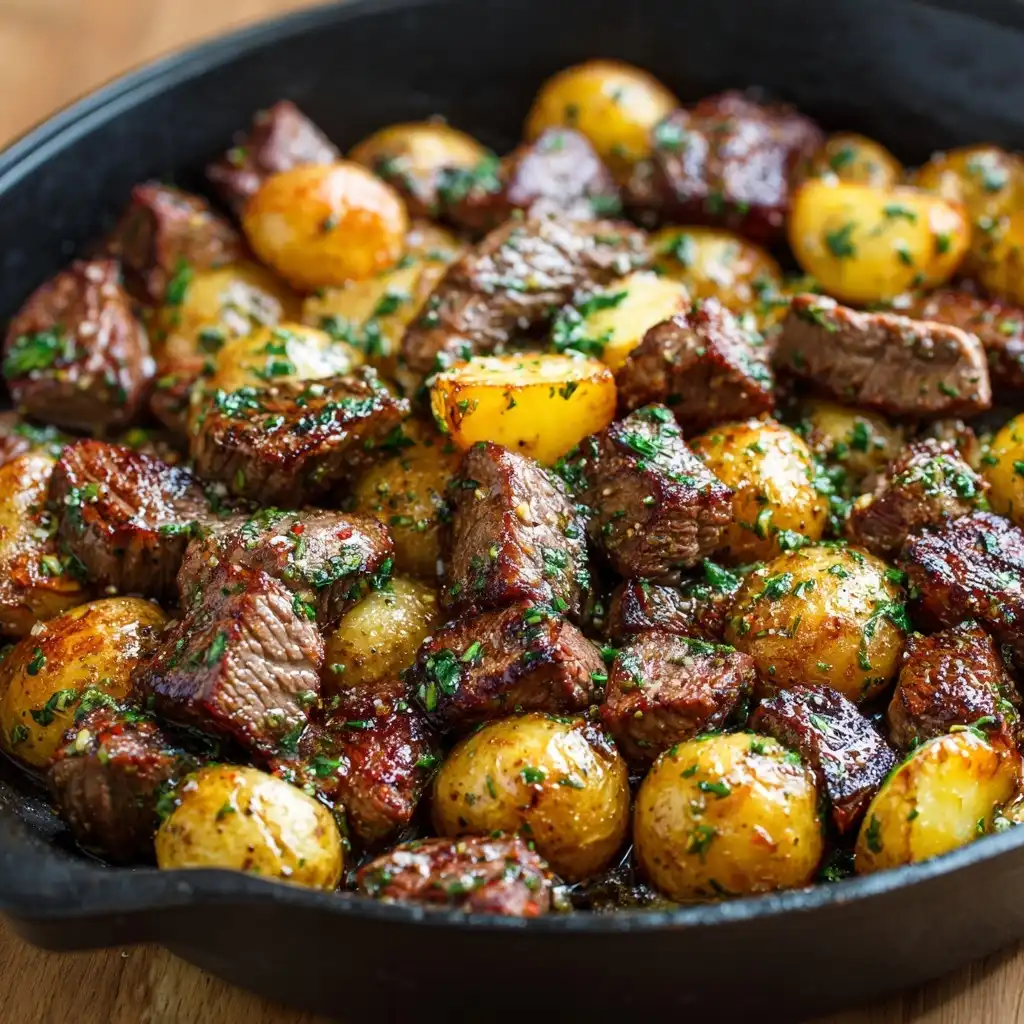
Garlic Butter Steak Bites with Potatoes is a rich, deeply satisfying, and restaurant-quality dish that brings bold flavor, tender texture, and rustic comfort to your dinner table in under 45 minutes. Unlike traditional steak preparations that demand precise timing and high-end cuts, this recipe transforms affordable, well-marbled beef—like sirloin tip, tri-tip, or even flank steak cut into uniform cubes—into succulent, caramelized morsels bathed in a luxurious, aromatic garlic-butter sauce. Roasted golden potatoes join the party, soaking up every drop of savory pan juices while delivering a crisp exterior and fluffy interior. Whether you’re preparing a cozy weeknight meal for two, impressing guests at a casual dinner party, or meal prepping for flavorful high-protein lunches, this dish delivers maximum impact with minimal fuss. Its harmonious balance of umami-rich beef, sweet-caramelized garlic, herb-flecked butter, and earthy, crispy potatoes makes it endlessly craveable—and surprisingly versatile across dietary preferences and cooking styles.
The History
While there’s no single documented “origin story” for Garlic Butter Steak Bites with Potatoes, the dish is a modern evolution of several time-honored culinary traditions. At its core lies the French technique of à la minute—cooking small cuts of meat quickly over high heat to preserve tenderness and develop deep Maillard browning—a method long used in classic dishes like boeuf à la ficelle and steak frites. The iconic garlic-butter finish traces back to beurre composé, a staple in French bistros since the 19th century, where softened butter was blended with herbs, garlic, shallots, and lemon to elevate grilled or pan-seared proteins. Meanwhile, roasted potatoes have been a beloved European side since the 18th century, when chefs in France and Germany perfected parboiling and roasting techniques to achieve shatteringly crisp exteriors. In the United States, the “steak bite” trend surged in the early 2010s through viral food blogs and social media platforms, where home cooks began sharing simplified, one-pan versions inspired by upscale steakhouse appetizers—often served skewered or tossed in sizzling garlic butter. Over time, home chefs fused these elements: marinating bite-sized beef, roasting potatoes alongside (or separately), then finishing everything in a single skillet with a glossy, herb-laced garlic butter sauce. Today, Garlic Butter Steak Bites with Potatoes stands as a testament to global technique meeting accessible, everyday ingredients—a true fusion of tradition, innovation, and unapologetic deliciousness.
Ingredients Breakdown
Every element in this dish plays a distinct, essential role—no filler, no afterthoughts. Let’s explore why each ingredient matters:
- Beef (1.5 lbs): Opt for well-marbled, moderately tender cuts such as sirloin tip steak, tri-tip, top round (when cut against the grain and not overcooked), or flat iron. Marbling ensures juiciness during quick searing; leaner cuts risk drying out. Avoid pre-cut “stew meat”—it’s often from tough, collagen-heavy muscles meant for slow cooking.
- Yukon Gold or Russet Potatoes (1 lb): Yukons offer creamy, buttery flesh and thin skins ideal for roasting without peeling; Ruses deliver superior crispness and fluffy interiors but benefit from a quick parboil. Red potatoes work too—but hold more moisture and caramelize less dramatically.
- Unsalted Butter (6 tbsp): High-fat, cultured European-style butter (82–86% fat) yields richer flavor and better emulsification. Unsalted allows full control over seasoning. Never substitute margarine or spreads—they contain water and stabilizers that break the sauce and impart off-flavors.
- Fresh Garlic (6–8 cloves, minced): Freshly minced—not jarred or powdered—is non-negotiable. Allicin, the compound responsible for garlic’s pungent aroma and health benefits, degrades rapidly in processed forms. Mincing releases enzymes that create depth when gently cooked—not burned.
- Yellow Onion (½, finely diced): Adds sweetness and aromatic backbone. Red onion offers sharper bite; shallots provide refined elegance—but yellow strikes the best balance of versatility and caramelization potential.
- Low-Sodium Soy Sauce (2 tbsp): A stealth umami booster that enhances natural beef flavor without tasting “soy-like.” Contains glutamates that synergize with meat proteins and amplify savoriness—especially critical when using leaner cuts. Tamari or coconut aminos are excellent gluten-free alternatives.
- Worcestershire Sauce (1 tbsp): Fermented anchovy, tamarind, molasses, and vinegar lend complex tang, saltiness, and depth. It’s the secret layer that makes the sauce taste “round” and restaurant-worthy.
- Smoked Paprika (1 tsp): Not hot—sweet or mild smoked paprika contributes subtle earthiness and a whisper of campfire aroma, enhancing visual appeal and balancing garlic’s sharpness.
- Fresh Herbs (2 tbsp chopped parsley + optional thyme/rosemary): Parsley adds bright, clean finish; thyme imparts woodsy nuance; rosemary (used sparingly) gives pine-like intensity. Dried herbs lack volatile oils—reserve them only if fresh aren’t available (use ⅓ the amount).
- Olive Oil (3 tbsp): High-heat stable extra-virgin olive oil (smoke point ~375°F) works perfectly here. Its fruity notes complement beef and enhance browning. Avocado oil is a neutral alternative with higher smoke point (520°F) if preferred.
- Seasonings: Kosher Salt & Freshly Ground Black Pepper: Coarse kosher salt adheres evenly and dissolves gradually during cooking; fine table salt can oversalt quickly. Freshly cracked black pepper delivers volatile aromatic compounds lost in pre-ground versions.
Step-by-Step Recipe
- Prep & Marinate (15 minutes + optional 30-min rest): Pat beef cubes *extremely* dry with paper towels—this is critical for achieving crust, not steam. Place in a bowl and toss with 1 tbsp olive oil, 1 tbsp soy sauce, 1 tsp Worcestershire, ½ tsp smoked paprika, 1 tsp black pepper, and 1 tsp kosher salt. Gently massage to coat. Let sit at room temperature for 15–30 minutes (don’t refrigerate—cold meat won’t sear properly). Meanwhile, scrub potatoes, dice into ¾-inch cubes (uniform size ensures even cooking), and toss with 1 tbsp olive oil, ½ tsp salt, and ¼ tsp black pepper.
- Roast the Potatoes (35–40 minutes): Preheat oven to 425°F (220°C). Spread potatoes in a single layer on a parchment-lined or lightly oiled rimmed baking sheet. Roast for 25 minutes. Remove, flip/stir gently, then return for 10–15 more minutes until deeply golden, crisp-edged, and fork-tender. Rotate pan halfway for even browning. Keep warm in oven at lowest setting (170°F) while cooking steak.
- Sear the Steak Bites (6–8 minutes): Heat a heavy-bottomed 12-inch stainless steel or cast-iron skillet over medium-high heat until shimmering (~375°F). Add 1 tbsp olive oil. When oil just begins to ripple, add beef in a *single layer*—do not crowd. Cook undisturbed for 2–2.5 minutes per side until deeply browned and crusty. Work in batches if needed. Transfer to a clean plate; tent loosely with foil. Rest 5 minutes—this allows juices to redistribute, ensuring tenderness.
- Build the Garlic Butter Sauce (3–4 minutes): Reduce heat to medium-low. In same skillet (do not wipe—those browned bits = flavor gold), add 1 tbsp butter. Once melted, stir in diced onion and cook 2 minutes until softened. Add minced garlic and cook 60–90 seconds—just until fragrant and pale gold (do NOT let turn brown or burn). Stir in remaining 1 tbsp soy sauce, 1 tsp Worcestershire, and any accumulated beef juices from the resting plate.
- Finish & Combine (2 minutes): Return rested steak bites to skillet. Add roasted potatoes. Tilt pan and swirl in remaining 4 tbsp cold butter, 1 tbsp at a time, letting each incorporate fully before adding the next. This creates a velvety, emulsified sauce—not greasy or broken. Stir gently to coat. Finish with fresh parsley, extra black pepper, and a pinch of flaky sea salt (like Maldon) for textural contrast.
- Serve Immediately: Spoon into warm shallow bowls or onto a large platter. Garnish with extra parsley, lemon zest, or a drizzle of truffle oil for luxury. Pair with crusty bread to mop up every last bit of sauce.
Tips
- Dry the Beef Religiously: Moisture is the enemy of sear. After cutting, lay cubes on triple-layered paper towels, press gently, then pat again. Repeat if they weep liquid. Even 30 seconds of thorough drying makes the difference between gray steamed meat and mahogany-crusted perfection.
- Cut Against the Grain—Then Cube: Identify the direction of muscle fibers on your steak. Slice *perpendicular* to those fibers first (this shortens them for tenderness), then cut those slices into uniform cubes. This step alone can transform a chewy cut into melt-in-your-mouth bites.
- Control Garlic Heat Like a Pro: Garlic burns fast. Keep heat at medium-low when sautéing—it should sizzle softly, not pop violently. If it starts browning too quickly, remove pan from heat for 10 seconds, stir, then return. Burnt garlic turns bitter and ruins the entire sauce.
- Butter Temperature Matters: Add cold, cubed butter—not melted—to the hot pan off the heat initially, then return to low flame while swirling. Cold butter melts gradually, releasing milk solids slowly and allowing proper emulsion. Warm or melted butter separates instantly.
- Don’t Skip the Rest: Cutting into steak immediately releases all precious juices onto the plate. Resting for 5 minutes lets muscle fibers relax and reabsorb moisture—resulting in juicier, more flavorful bites.
- Use the Right Pan: Stainless steel or cast iron provides superior heat retention and browning vs. nonstick, which inhibits fond development. If using nonstick, skip deglazing steps and add sauce ingredients off-heat to avoid overheating the coating.
- Rescue a Broken Sauce: If butter separates (looks oily or grainy), remove from heat, whisk in 1 tsp cold water or lemon juice, then slowly whisk in remaining butter. Alternatively, blend with an immersion blender for 10 seconds to re-emulsify.
- Maximize Crisp Potatoes: For ultra-crisp results, parboil diced potatoes in salted water for 4 minutes, drain well, shake vigorously in colander to roughen edges, then roast. The starch gelatinization creates extra crunch.
- Prevent Overcrowding: Fill skillet no more than ⅔ full when searing. Crowding drops pan temperature, steams meat, and prevents browning. Use two skillets or cook in timed batches—worth every extra minute.
- Acid Is Your Friend: A final ½ tsp fresh lemon juice or sherry vinegar stirred in at the end brightens the richness and balances fat—don’t omit it!
Variations and Customizations
This recipe is a canvas—adaptable to seasons, pantries, diets, and cravings:
- Spicy Kick: Add ¼ tsp cayenne with paprika, or stir in 1 minced jalapeño (seeds removed) with onions. For smoky heat, use chipotle powder or adobo sauce.
- Mediterranean Twist: Replace parsley with chopped oregano and mint; add ¼ cup crumbled feta, 10 pitted kalamata olives, and 2 tbsp sun-dried tomatoes (oil-packed, chopped) at the finish.
- Umami Bomb: Stir in 1 tsp white miso paste or ½ tsp mushroom powder with the garlic. Top with sautéed wild mushrooms (oyster, shiitake) for earthy depth.
- Herb-Forward: Infuse melted butter with 2 sprigs fresh rosemary or thyme before adding to pan. Finish with chives and dill instead of parsley.
- Low-Carb/Keto: Swap potatoes for roasted cauliflower florets or radish “potatoes” (diced radishes roasted with duck fat). Increase healthy fats with avocado oil and extra butter.
- Paleo/Whole30 Compliant: Omit soy sauce—substitute coconut aminos. Skip Worcestershire (most contain sugar/anchovies); use 1 tsp date paste + ½ tsp apple cider vinegar + ¼ tsp fish sauce (if approved) for similar complexity.
- Vegetarian Version: Replace beef with extra-firm marinated tofu cubes (pressed, baked until crisp), king oyster mushrooms (cut into “steak” strips), or seitan. Boost savoriness with nutritional yeast and tamari.
- Breakfast-for-Dinner: Top with fried or poached eggs. The runny yolk melds beautifully with garlic butter for decadent richness.
- Meal Prep Friendly: Roast potatoes and sear steak separately; store chilled for up to 4 days. Reheat components separately, then combine and finish with fresh garlic butter sauce to preserve texture.
- Gourmet Upgrade: Use aged ribeye cubes, finish with truffle butter, garnish with microgreens and edible flowers, and serve with a red wine reduction drizzle.
Health Considerations and Nutritional Value
A single 1.5-cup serving (approx. 450g) of Garlic Butter Steak Bites with Potatoes provides a nutritionally robust profile—when prepared mindfully:
- Protein Powerhouse: ~42g high-quality complete protein from beef supports muscle synthesis, satiety, and metabolic function. Rich in heme iron (highly bioavailable), zinc, B12, and creatine—critical for energy, immunity, and neurological health.
- Smart Fats: Grass-fed beef offers beneficial omega-3s and CLA (conjugated linoleic acid), linked to reduced inflammation and improved body composition. Butter contributes butyrate (gut-health promoting), vitamin K2 (for bone/cardiovascular health), and fat-soluble vitamins A, D, E, and K.
- Complex Carbohydrates & Fiber: Yukon Gold potatoes provide resistant starch (especially when cooled slightly), acting as prebiotic fuel for gut microbiota. With skin on, they deliver ~4g fiber, potassium (more than bananas!), vitamin C, and B6.
- Antioxidant-Rich Alliums: Garlic contains allicin (anti-inflammatory, antimicrobial, cardiovascular protective), while onions supply quercetin and anthocyanins—potent antioxidants shown to reduce oxidative stress.
- Considerations: Sodium content (~680mg/serving) is moderate—easily adjusted by reducing added salt and using low-sodium soy/Worcestershire. Saturated fat (~22g) falls within recommended limits (<10% daily calories) for most adults; swapping half the butter for olive oil reduces saturated fat while increasing heart-healthy monounsaturates. For those managing cholesterol, leaner cuts (top sirloin) and portion control (4–5 oz cooked beef) optimize benefits.
- Dietary Flexibility: Naturally gluten-free (verify soy/Worcestershire labels), dairy-free adaptable (use ghee or vegan butter), and easily modified for keto (low-carb veg swaps), paleo, or Whole30 protocols—as detailed in Variations.
- Balanced Meal Strategy: Serve with a side of steamed broccoli or arugula salad dressed in lemon-tahini to boost phytonutrients and fiber. Avoid pairing with additional refined carbs (e.g., bread, pasta) unless intentional for athletic recovery.
Ingredients
- 1.5 lbs sirloin tip steak or tri-tip, cut into 1-inch cubes (trimmed of excess fat)
- 1 lb Yukon Gold potatoes, scrubbed and diced into ¾-inch cubes
- 6 tbsp unsalted high-fat butter, divided (4 tbsp cold & cubed, 2 tbsp for roasting/searing)
- 3 tbsp extra-virgin olive oil, divided (1 tbsp for beef, 1 tbsp for potatoes, 1 tbsp for aromatics)
- 6–8 cloves garlic, finely minced
- ½ medium yellow onion, finely diced
- 2 tbsp low-sodium soy sauce (or tamari/coconut aminos)
- 1 tbsp Worcestershire sauce (or sub 1 tsp fish sauce + ½ tsp apple cider vinegar for Whole30)
- 1 tsp smoked paprika (sweet or mild)
- 1½ tsp freshly ground black pepper, divided
- 1¼ tsp kosher salt, divided
- 2 tbsp fresh flat-leaf parsley, finely chopped
- Flaky sea salt (e.g., Maldon), for finishing
- Optional: ½ tsp lemon zest or 1 tsp fresh lemon juice
Directions
- Pat beef cubes completely dry with paper towels. In a medium bowl, combine beef with 1 tbsp olive oil, 1 tbsp soy sauce, 1 tsp Worcestershire, ½ tsp smoked paprika, 1 tsp black pepper, and 1 tsp kosher salt. Toss gently to coat. Let sit at room temperature 15–30 minutes.
- Preheat oven to 425°F (220°C). On a parchment-lined rimmed baking sheet, toss potatoes with 1 tbsp olive oil, ½ tsp kosher salt, and ¼ tsp black pepper. Spread in single layer. Roast 25 minutes. Flip/stir, then roast 10–15 minutes more until golden brown and tender. Keep warm in oven on “keep warm” setting or lowest temp (170°F).
- Heat a 12-inch stainless steel or cast-iron skillet over medium-high heat until shimmering. Add 1 tbsp olive oil. When oil ripples, add beef in single layer (work in batches). Sear 2–2.5 minutes per side until deeply browned. Transfer to plate; tent with foil. Rest 5 minutes.
- Reduce heat to medium-low. In same skillet, melt 1 tbsp butter. Add onion; cook 2 minutes until soft. Add garlic; cook 60–90 seconds until fragrant and pale gold. Stir in remaining 1 tbsp soy sauce, 1 tsp Worcestershire, and all accumulated beef juices.
- Return beef and roasted potatoes to skillet. Tilt pan and swirl in remaining 4 tbsp cold, cubed butter, 1 tbsp at a time, letting each fully incorporate before adding next. Stir gently to coat. Remove from heat.
- Stir in parsley, remaining ¼ tsp black pepper, and lemon zest or juice (if using). Taste and adjust salt. Finish with flaky sea salt.
- Serve immediately in warm bowls. Optional garnishes: extra parsley, lemon wedges, microgreens, or truffle oil.
FAQ
- Can I make this in an air fryer?
- Absolutely! Roast potatoes at 400°F for 18–22 minutes (shake basket every 6 min). Sear steak in a stovetop skillet as directed, then toss with potatoes and garlic butter in a mixing bowl. Air frying yields ultra-crisp potatoes but lacks fond for sauce—so build sauce separately in skillet and combine.
- Why did my garlic burn?
- Garlic burns at just 300°F. Always reduce heat *before* adding it—and never walk away. If it darkens, discard and start fresh; burnt garlic imparts bitterness that no amount of butter can fix.
- Can I use frozen potatoes?
- Yes—but thaw completely and pat *extremely* dry. Frozen potatoes release excess water, causing steaming instead of roasting. Parboiling isn’t needed, but expect slightly less crispness.
- Is this dish freezer-friendly?
- Best enjoyed fresh—but you *can* freeze components separately: cooked steak bites (in sauce) up to 2 months; roasted potatoes up to 1 month. Thaw overnight in fridge, then reheat gently on stove with splash of broth to refresh sauce. Avoid refreezing.
- What’s the best cut of beef for budget-friendly tenderness?
- Sirloin tip is ideal—affordable, flavorful, and tender when cut small and not overcooked. Tri-tip is another excellent choice. Avoid eye of round or bottom round—they’re too lean and will toughen.
- Can I make it dairy-free?
- Yes. Substitute high-quality vegan butter (Miyoko’s or Earth Balance) for all butter. Ensure it’s “cultured” style for best flavor. Note: Emulsification may be slightly less stable—whisk vigorously and serve immediately.
- How do I reheat leftovers without drying out the beef?
- Never microwave uncovered. Instead, place in skillet over low heat with 1 tsp broth or water. Cover and warm 3–4 minutes, stirring gently. This steams gently while preserving moisture.
- Can I add vegetables?
- Yes! Add bell peppers, zucchini, or asparagus in the last 8 minutes of potato roasting—or sauté mushrooms/onions with the garlic. Just avoid watery veggies (like tomatoes) unless roasted separately to prevent sauce dilution.
- Why use soy sauce if I’m not Asian-inspired?
- Soy sauce is a universal umami enhancer—not a “flavor profile.” Its fermented depth mirrors the savory notes in seared beef and roasted potatoes, making the whole dish taste more cohesive and “complete,” regardless of cuisine.
- My sauce broke—how do I fix it?
- Remove from heat. Whisk in 1 tsp cold water or lemon juice. Then, slowly drizzle in 1 tbsp cold butter while whisking constantly until smooth. An immersion blender also works instantly.
Summary
Garlic Butter Steak Bites with Potatoes is a masterclass in simple, elevated home cooking—transforming humble ingredients into a deeply flavorful, texturally dynamic, and nutritionally balanced meal in under 45 minutes. With its crisp-golden potatoes, tender-crisp beef bites, and luxuriously emulsified garlic butter sauce infused with umami and fresh herbs, it delivers restaurant-worthy satisfaction without complexity.
Equally adaptable for weeknight efficiency, dietary customization, or special-occasion flair, this dish proves that exceptional flavor doesn’t require rare ingredients or hours of labor—it demands only intention, technique, and respect for quality, seasonal, and ethically sourced components.