Introduction
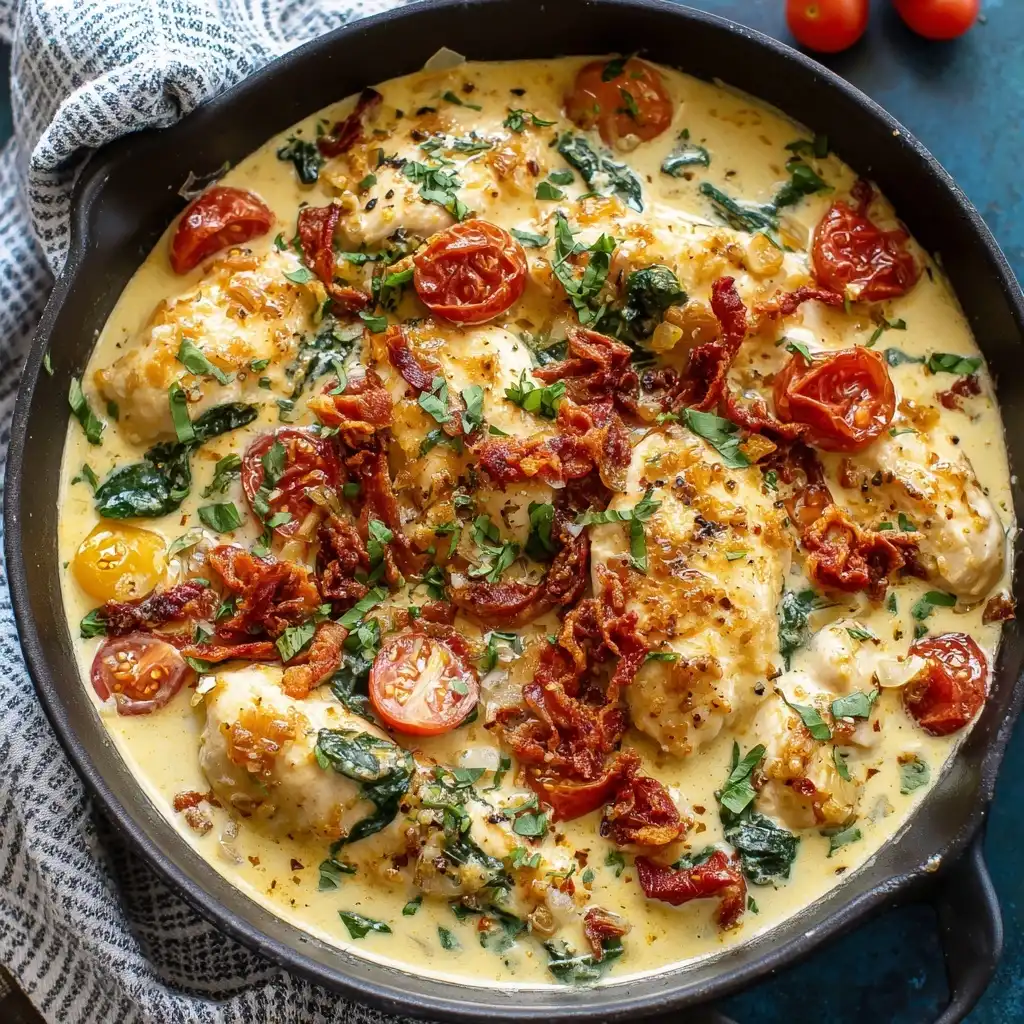
Creamy Tuscan Chicken is a beloved, restaurant-quality dish that brings the rustic elegance of Italian countryside cooking into your home kitchen. With its velvety garlic-parmesan cream sauce, tender pan-seared chicken breasts, and vibrant medley of sun-dried tomatoes, fresh spinach, and aromatic herbs, this recipe strikes the perfect balance between indulgence and approachability. It’s rich without being heavy, flavorful without being overpowering, and elegant enough for date night yet simple enough for a weeknight dinner—making it a true culinary chameleon in any home cook’s repertoire.
The History
While “Tuscan Chicken” isn’t a historically documented dish from Renaissance-era Florence or medieval Siena, it is a modern American-Italian fusion creation inspired by the foundational principles of Tuscan cuisine: simplicity, seasonality, and reverence for high-quality, minimally processed ingredients. Traditional Tuscan cooking—cucina povera, or “poor kitchen”—relies on humble staples like olive oil, beans, bread, tomatoes, garlic, rosemary, and pecorino cheese. The creamy iteration emerged in the late 20th and early 21st centuries, particularly gaining traction through food magazines, cooking shows, and early food blogs that sought to elevate weeknight meals with restaurant flair. The addition of heavy cream and Parmigiano-Reggiano reflects Italian-American adaptation—where authentic regional restraint meets comforting richness—and the inclusion of sun-dried tomatoes nods to California’s artisanal sun-dried tomato movement of the 1980s and ’90s. Today, Creamy Tuscan Chicken stands as a global comfort classic, appearing on menus from Brooklyn bistros to Sydney brunch spots, and has become a staple in meal-prep communities, keto forums, and family dinner rotation apps alike.
Ingredients Breakdown
Every element in Creamy Tuscan Chicken serves a distinct sensory and functional purpose—no ingredient is merely decorative. Below is a detailed, chef-level breakdown of each component and why it matters:
- Chicken Breasts (boneless, skinless): Preferred for their lean protein profile and neutral canvas—but crucially, they must be uniformly pounded to ½-inch thickness for even cooking and maximum tenderness. Overcooking leads to dryness; undercooking risks food safety. Using organic, air-chilled, or pasture-raised chicken enhances flavor depth and ethical alignment.
- Olive Oil & Unsalted Butter: A dual-fat approach ensures optimal browning (olive oil’s higher smoke point) and luxurious mouthfeel (butter’s milk solids and nutty aroma). Extra-virgin olive oil is used for finishing; refined or light olive oil is ideal for searing.
- Garlic (fresh, minced): Not powdered or jarred—fresh garlic delivers volatile sulfur compounds responsible for the sauce’s aromatic backbone. Minced—not pressed—to avoid bitterness from over-processing.
- Shallots (finely diced): Often mistaken for “small onions,” shallots offer a delicate sweetness and subtle allium complexity that onions can’t replicate. They caramelize beautifully and dissolve into the sauce, lending body without sharpness.
- Dry White Wine (e.g., Pinot Grigio or Sauvignon Blanc): Adds acidity, fruit notes, and deglazing power. Alcohol cooks off, leaving only nuanced brightness. Avoid “cooking wine”—its salt and preservatives dull flavor. A splash of lemon juice can substitute if avoiding alcohol.
- Heavy Cream (36–40% fat): Essential for silkiness and emulsion stability. Lower-fat alternatives (half-and-half, whole milk) risk curdling or producing a thin, watery sauce. For dairy-free versions, full-fat coconut milk (with guar gum removed) or cashew cream are viable—but require careful tempering and starch reinforcement.
- Grated Parmigiano-Reggiano (not pre-grated): Authentic, aged Italian cheese provides umami depth, natural glutamates, and a granular texture that melts into a velvety finish. Pre-grated cheeses contain anti-caking agents (e.g., cellulose) that impede smooth melting and introduce grittiness.
- Fresh Spinach (baby or mature): Added at the end to retain bright green color, crisp-tender texture, and maximal nutrient retention (especially folate and vitamin K). Baby spinach wilts instantly; mature leaves add earthier notes and hold up better in meal-prep scenarios.
- Sun-Dried Tomatoes (oil-packed, julienned): Concentrated sweetness, tang, and chewy texture contrast the cream’s richness. Oil-packed varieties impart extra fruity olive notes—reserve 1 tsp of that oil for sautéing! Dry-packed versions must be rehydrated in warm broth or wine first.
- Fresh Herbs (rosemary + thyme + basil): Rosemary adds pine-like resinous warmth; thyme contributes floral-earthy nuance; fresh basil (added off-heat) lends sweet-anise freshness. Dried herbs may be substituted—but use ⅓ the amount and bloom them in oil early to rehydrate.
- Chicken Broth (low-sodium, preferably homemade): Provides savory depth (collagen-derived gelatin), body, and moisture control. Low-sodium allows precise salt calibration. Bone broth enhances mouthfeel further with natural collagen.
- Optional Enhancements: A pinch of red pepper flakes for gentle heat; a spoonful of mascarpone for extra decadence; toasted pine nuts or slivered almonds for crunch; roasted garlic purée for mellow sweetness; white miso paste (¼ tsp) for fermented umami boost.
Step-by-Step Recipe
- Prep & Pound: Place chicken breasts between two sheets of parchment or plastic wrap. Using a meat mallet or heavy skillet, gently pound to an even ½-inch thickness. Pat *very* dry with paper towels—moisture is the enemy of golden sear. Season both sides generously with kosher salt and freshly ground black pepper.
- Sear to Perfection: Heat 1 tbsp olive oil and 1 tbsp unsalted butter in a large stainless steel or cast-iron skillet over medium-high heat until shimmering and butter foam begins to subside (~350°F). Carefully place chicken in skillet without crowding (work in batches if needed). Cook undisturbed for 5–6 minutes until deeply golden and easily releases from pan. Flip and cook 4–5 more minutes until internal temperature reaches 160°F (it will rise to 165°F while resting). Transfer to a plate, tent loosely with foil, and rest 5 minutes.
- Build the Aromatic Base: Reduce heat to medium. In same skillet, add remaining 1 tbsp olive oil. Add finely diced shallots and sauté 2 minutes until translucent. Add minced garlic and 1 tsp fresh rosemary (finely chopped), stirring constantly for 45 seconds—just until fragrant, not browned.
- Deglaze with Precision: Pour in ½ cup dry white wine, using a wooden spoon to vigorously scrape up all browned fond (those caramelized bits = flavor gold). Simmer 2–3 minutes until reduced by half and alcohol smell dissipates.
- Enrich & Emulsify: Stir in 1 cup low-sodium chicken broth and simmer 3 minutes to concentrate. Reduce heat to low. Whisk in ¾ cup heavy cream in a slow, steady stream. Simmer gently—do not boil—for 2 minutes, stirring frequently.
- Incorporate Cheese & Sun-Dried Tomatoes: Gradually whisk in ½ cup freshly grated Parmigiano-Reggiano, one tablespoon at a time, allowing each addition to fully melt before adding the next. Stir in ⅓ cup julienned sun-dried tomatoes (drained, patted dry) and 1 tsp fresh thyme leaves. Simmer 1 minute to meld flavors.
- Finish with Freshness: Return rested chicken (and any accumulated juices) to skillet. Spoon sauce over chicken. Gently fold in 3 cups fresh baby spinach until just wilted (30–60 seconds). Remove from heat. Stir in 2 tbsp fresh basil ribbons and a final drizzle of high-quality extra-virgin olive oil.
- Rest & Serve: Let sit covered for 2 minutes to allow sauce to thicken slightly and chicken to reabsorb juices. Taste and adjust seasoning—often needs a final pinch of flaky sea salt and cracked black pepper.
Tips
- Temperature Control Is Everything: Use an instant-read thermometer—not guesswork—to verify chicken doneness. Pull at 160°F for juiciest results. Overheating cream causes separation; keep sauce below 180°F after adding dairy.
- The “Fond” Factor: Never wash the skillet between steps—those browned bits (fond) are concentrated flavor. Deglazing properly unlocks layers of savory complexity you can’t achieve any other way.
- Cheese Grating Matters: Always grate Parmigiano-Reggiano fresh on a microplane. Pre-grated cheese contains cellulose, which prevents smooth emulsification and creates graininess.
- Spinach Timing: Add spinach *off-heat* or at the very end of cooking. Prolonged heat leaches color, nutrients, and turns it slimy. Wilt just until vibrant green and slightly softened.
- Sauce Consistency Rescue: If too thin: Simmer uncovered 1–2 minutes longer. If too thick: Whisk in 1 tbsp warm broth or cream, 1 tsp at a time. If broken: Remove from heat, whisk in 1 tsp cold butter or 1 tbsp cold cream while vigorously whisking.
- Make-Ahead Magic: Sauce base (steps 1–5, without chicken or spinach) can be made 3 days ahead and refrigerated. Reheat gently before adding proteins and greens. Chicken can be prepped and pounded 1 day ahead—store between parchment in an airtight container.
- Nonstick Caution: While convenient, nonstick skillets inhibit proper fond development. Opt for stainless steel or well-seasoned cast iron for best browning and sauce foundation.
- Wine Substitution Wisdom: If omitting wine, replace with equal parts broth + 1 tsp lemon juice + ½ tsp apple cider vinegar for balanced acidity and brightness.
Variations and Customizations
This recipe is inherently adaptable—here’s how to tailor it across dietary needs, seasonal availability, pantry constraints, and global flavor profiles:
- Keto/Low-Carb Version: Omit sun-dried tomatoes (high in natural sugars); substitute with 2 tbsp capers + 1 tbsp chopped kalamata olives for briny depth. Increase healthy fats with extra olive oil drizzle and 2 tbsp crumbled feta.
- Dairy-Free Adaptation: Replace butter with vegan butter (Miyoko’s or Forager), heavy cream with full-fat canned coconut milk (shake well, use only cream layer), and Parmigiano with nutritional yeast + white miso + lemon zest blend (2 tbsp nooch + ½ tsp miso + ½ tsp zest). Thicken with ½ tsp arrowroot slurry if needed.
- Paleo/Whole30 Compliant: Skip dairy entirely—use ghee instead of butter, coconut cream instead of heavy cream, and omit cheese. Boost umami with 1 tsp fish sauce (add with broth) and garnish with chopped parsley and lemon zest.
- Vegetarian Transformation: Replace chicken with 2 large portobello caps (gilled, marinated in balsamic + garlic + olive oil) or 1 block extra-firm tofu (pressed, cubed, air-fried until crisp). Use vegetable broth and add ½ cup cooked white beans for protein and creaminess.
- Spicy Arrabbiata Twist: Add ½ tsp crushed red pepper flakes with garlic; stir in 2 tbsp tomato paste after shallots and cook 1 minute before deglazing; finish with fresh oregano instead of basil.
- Herbes de Provence Infusion: Swap rosemary/thyme for 1½ tsp dried Herbes de Provence. Add 1 tbsp chopped preserved lemon rind with sun-dried tomatoes for Mediterranean brightness.
- Autumnal Variation: Substitute spinach with 2 cups chopped Swiss chard or lacinato kale (massaged with olive oil first); add ½ cup roasted butternut squash cubes and 1 tbsp maple syrup to balance earthiness.
- Meal-Prep Friendly Batch: Double the sauce base and portion into 4 containers. Cook and slice chicken separately. Assemble and reheat components individually—spinach added fresh per serving to preserve texture and nutrients.
- One-Pan Sheet Bake: Arrange pounded chicken on parchment-lined sheet pan. Roast at 400°F for 18–20 minutes. Meanwhile, prepare sauce stovetop. Combine hot chicken and sauce in skillet for final integration and spinach wilting.
Health Considerations and Nutritional Value
A single 6-ounce serving (chicken + ¾ cup sauce + 1 cup spinach) delivers approximately:
- Calories: ~520 kcal (moderate for a main course—adjust portions for calorie goals)
- Protein: ~42g (excellent complete protein source supporting muscle synthesis and satiety)
- Fat: ~32g (predominantly monounsaturated from olive oil and saturated from dairy—heart-healthy when consumed as part of balanced diet)
- Carbohydrates: ~8g (mostly from sun-dried tomatoes and spinach; low glycemic impact)
- Fiber: ~2g (from spinach and tomatoes—supports gut health and digestion)
- Vitamins & Minerals: Exceptionally high in Vitamin A (spinach), Vitamin K (spinach, kale), Calcium & Phosphorus (Parmigiano), Selenium (chicken), and B-complex vitamins (chicken breast). Contains bioactive compounds like lycopene (tomatoes), allicin (garlic), and oleocanthal (olive oil)—all linked to anti-inflammatory and antioxidant activity.
Considerations: Sodium content depends heavily on broth and cheese choices—opting for low-sodium broth and measuring cheese prevents excess. Heavy cream contributes saturated fat; those managing cholesterol may use half-and-half (though texture suffers) or emphasize portion control. Gluten-free naturally—but verify broth and wine labels for hidden gluten sources. For histamine-sensitive individuals, limit aged cheese and fermented ingredients—or substitute with young ricotta salata and skip wine.
Ingredients
- 2 boneless, skinless chicken breasts (about 1 lb total), pounded to ½-inch thickness
- 1½ tsp kosher salt, divided
- 1 tsp freshly ground black pepper, divided
- 2 tbsp extra-virgin olive oil, divided
- 2 tbsp unsalted butter, divided
- 2 large shallots, finely diced (about ½ cup)
- 4 garlic cloves, minced
- 1 tsp fresh rosemary, finely chopped (or ½ tsp dried)
- ½ cup dry white wine (e.g., Pinot Grigio)
- 1 cup low-sodium chicken broth
- ¾ cup heavy cream (36–40% fat)
- ½ cup freshly grated Parmigiano-Reggiano cheese
- ⅓ cup oil-packed sun-dried tomatoes, drained and julienned
- 1 tsp fresh thyme leaves (or ½ tsp dried)
- 3 cups fresh baby spinach
- 2 tbsp fresh basil leaves, thinly sliced (ribbons)
- Flaky sea salt and additional black pepper, for finishing
- Optional: 1 tbsp lemon juice, extra-virgin olive oil drizzle, toasted pine nuts
Directions
- Pat chicken breasts very dry with paper towels. Season both sides with 1 tsp kosher salt and ½ tsp black pepper.
- Heat 1 tbsp olive oil and 1 tbsp butter in a large skillet over medium-high heat until butter melts and foaming subsides. Add chicken and cook 5–6 minutes per side, until golden and internal temperature reaches 160°F. Transfer to plate, tent with foil, rest 5 minutes.
- Reduce heat to medium. Add remaining 1 tbsp olive oil to same skillet. Sauté shallots 2 minutes until soft. Add garlic and rosemary; cook 45 seconds until fragrant.
- Pour in wine, scraping up browned bits. Simmer 2–3 minutes until reduced by half.
- Add broth and simmer 3 minutes. Reduce heat to low. Whisk in cream gradually. Simmer gently 2 minutes.
- Whisk in Parmigiano-Reggiano, 1 tbsp at a time, until smooth and creamy. Stir in sun-dried tomatoes and thyme; simmer 1 minute.
- Return chicken (and juices) to skillet. Spoon sauce over. Fold in spinach until just wilted (30–60 sec).
- Remove from heat. Stir in basil, lemon juice (if using), and a drizzle of olive oil. Taste; adjust salt and pepper. Serve immediately.
FAQ
- Can I use chicken thighs instead of breasts?
- Absolutely—and many chefs prefer them! Thighs are more forgiving, richer in flavor, and stay juicier. Use boneless, skinless thighs; reduce sear time to 4–5 minutes per side (target 175°F internal temp). Adjust sauce simmer time slightly, as thighs release more moisture.
- Why does my sauce break or look curdled?
- Curdling usually occurs from overheating after adding dairy, acid imbalance (too much wine/vinegar), or vigorous boiling. Prevent it by keeping heat low, adding cream gradually, and never letting sauce boil once dairy is in. If it breaks, remove from heat, whisk in 1 tsp cold butter or cream, and stir vigorously until re-emulsified.
- Can I make this ahead and reheat?
- Yes—with caveats. The sauce reheats beautifully (gentle stovetop or microwave with frequent stirring). However, chicken is best reheated separately to prevent rubberiness. Add fresh spinach only when serving to retain texture and color. Store components separately for up to 3 days.
- Is there a lighter version without heavy cream?
- You can substitute with evaporated milk (lower fat, stable emulsion) or a roux-thickened broth (1 tbsp butter + 1 tbsp flour cooked 1 min, then whisk in warm broth). Note: “light” cream sauces sacrifice richness and mouth-coating quality—manage expectations!
- What should I serve with Creamy Tuscan Chicken?
- Classic pairings include: al dente pappardelle or fettuccine (sauce clings beautifully); creamy polenta (gluten-free, ultra-comforting); roasted fingerling potatoes; crusty sourdough for sopping; or a simple arugula salad with lemon vinaigrette to cut richness.
- Can I freeze this dish?
- Sauces with dairy don’t freeze well—they separate and grain upon thawing. However, you *can* freeze the uncooked chicken (marinated or plain) and sauce base *without cream or cheese*. Thaw overnight, then finish with fresh dairy and greens.
- My sauce is too thin—how do I thicken it quickly?
- Simmer uncovered 1–2 minutes, stirring constantly. Alternatively, mix 1 tsp cornstarch with 1 tbsp cold water to form slurry, then whisk into simmering sauce and cook 1 minute until glossy and thickened.
- Can I use frozen spinach?
- Yes—but squeeze *all* excess water out (use cheesecloth or clean kitchen towel). Frozen spinach adds significant liquid and can dilute sauce flavor. Fresh is strongly recommended for optimal texture and nutrition.
- How do I store leftovers safely?
- Cool completely within 2 hours. Store in airtight container in refrigerator for up to 3 days. Reheat gently on stove (add splash of broth if drying out) or in microwave at 50% power in 30-second intervals, stirring between.
- Is this dish gluten-free?
- Yes—as written—provided your broth and wine are certified gluten-free (most are, but always check labels, especially for broth thickeners or wine fining agents).
Summary
Creamy Tuscan Chicken is a masterclass in balancing rich, savory depth with fresh, herbaceous brightness—built on technique-driven fundamentals like proper searing, fond development, and gentle dairy emulsification. Its adaptability across diets, seasons, and skill levels makes it endlessly rewarding, whether you’re a novice cook seeking confidence or a seasoned chef craving comfort with character.
With minimal specialty ingredients, under 30 minutes active time, and maximum flavor return, this dish transforms humble pantry staples into something truly special—proving that elegance in cooking isn’t about complexity, but intention, quality, and care.